
Real Estate Financing and Development in the Middle East: Strategic Implications of Large-Scale Mortgage Deals for Investors
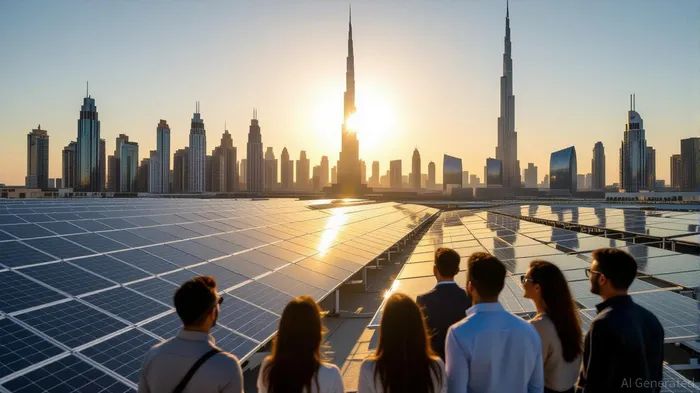
The Middle East real estate market in 2025 is a tapestry of innovation, geopolitical nuance, and strategic foresight. For investors, understanding the implications of large-scale mortgage deals is no longer optional—it's a necessity. The region's rapid urbanization, driven by initiatives like Saudi Arabia's Vision 2030 and the UAE's Centennial 2071, has created a fertile ground for real estate development. But the true story lies beneath the surface: the financial structures powering these projects are reshaping risk, reward, and long-term value for investors.
The Rise of Hybrid and Sustainable Financing
Large-scale mortgage deals in the Middle East are increasingly hybrid in nature, blending Islamic and conventional finance to tap into a broader pool of capital. For instance, Avilease's USD2.5 billion dual-tranche facility (August 2024) showcased how developers can access both Islamic and conventional markets simultaneously. This approach mitigates currency and liquidity risks while appealing to ESG (Environmental, Social, and Governance)-aligned investors.
Sustainability is another cornerstone. Aldar Properties' USD500 million Sustainable Sukuk (May 2024) and Masdar's USD1 billion green bond (July 2024) highlight a shift toward green financing. These deals are not just about compliance with global ESG standards—they're about future-proofing assets against climate risks and regulatory shifts. Investors who prioritize projects with green certifications or carbon-neutral infrastructure are likely to see stronger returns as global capital increasingly flows toward sustainable ventures.
Strategic Players and Market Dynamics
The Middle East's real estate financing ecosystem is dominated by a mix of local and global players. Public Investment Fund (PIF) and Mubadala are leading the charge in large-scale infrastructure and real estate deals, leveraging their scale to secure favorable terms. For example, PIF's USD7 billion murabaha facility (December 2024) demonstrates the power of Islamic finance in funding megaprojects like NEOM and the Red Sea Project.
Banks such as First Abu Dhabi Bank (FAB), HSBC, and Emirates NBD Capital have become linchpins in structuring these deals. Their role as bookrunners and joint lead managers (JLMs) underscores the importance of cross-border collaboration. Meanwhile, legal firms like A&O Shearman and Clifford Chance have emerged as critical partners in navigating the region's complex regulatory landscape, ensuring compliance with both local and international standards.
Geopolitical and Economic Headwinds
While the Middle East's real estate market is booming, investors must remain vigilant about external risks. Geopolitical tensions—particularly in the Israel-Iran context—could disrupt oil flows, triggering inflationary pressures and delaying rate cuts. For instance, a prolonged conflict could push U.S. Treasury yields higher, indirectly increasing borrowing costs for Middle Eastern developers reliant on dollar-denominated financing.
Additionally, affordability challenges persist. In cities like Dubai, property prices have surged to AED 2,800 per square foot, pricing out middle-income buyers. While government-backed programs like Saudi Arabia's Sakani aim to address this, investors must weigh the risks of over-leveraged markets and speculative bubbles.
Investment Advice for 2025
- Prioritize ESG-Aligned Projects: Green sukuk and green bonds are not just ethical choices—they're strategic ones. Developers with ESG certifications are better positioned to attract global capital and withstand regulatory scrutiny.
- Diversify Financing Sources: Hybrid structures (Islamic/conventional) and asset-backed securitizations (e.g., Beehive's USD140 million deal) offer flexibility. Investors should explore partnerships with regional SWFs and global banks to diversify risk.
- Monitor Geopolitical Signals: Closely track oil price volatility and U.S. Federal Reserve policy. A spike in oil prices could delay rate cuts, while a slowdown in global demand might temper real estate growth.
- Leverage Local Expertise: The Middle East's regulatory environment is complex. Partnering with local legal and financial advisors—such as those from Dentons or Emirates NBD Capital—can provide critical insights into navigating bureaucracy and securing favorable terms.
Conclusion
The Middle East's real estate market is at an inflection pointIPCX--. Large-scale mortgage deals are not just financing tools—they're strategic instruments shaping the region's economic future. For investors, the key lies in balancing ambition with prudence: capitalizing on the region's growth while hedging against geopolitical and economic uncertainties. As the UAE's Golden Visa program and Saudi Arabia's Vision 2030 continue to attract global talent and capital, the winners will be those who act now, with eyes on both the skyline and the bottom line.







Comentarios
Aún no hay comentarios