
RBNZ Rate Cut Wagers: NZD Eyes 2022 Low
Generado por agente de IAWesley Park
domingo, 24 de noviembre de 2024, 3:41 pm ET2 min de lectura
MYNZ--
The Reserve Bank of New Zealand (RBNZ) has sparked speculation and market wagers with its recent rate cut, leaving the New Zealand Dollar (NZD) vulnerable and potentially eyeing a 2022 low. As the RBNZ contemplates further reductions, investors are keeping a close eye on the currency's trajectory. This article delves into the implications of the RBNZ's rate cut on the NZD, its potential impact on the equity market, and the broader economic landscape.
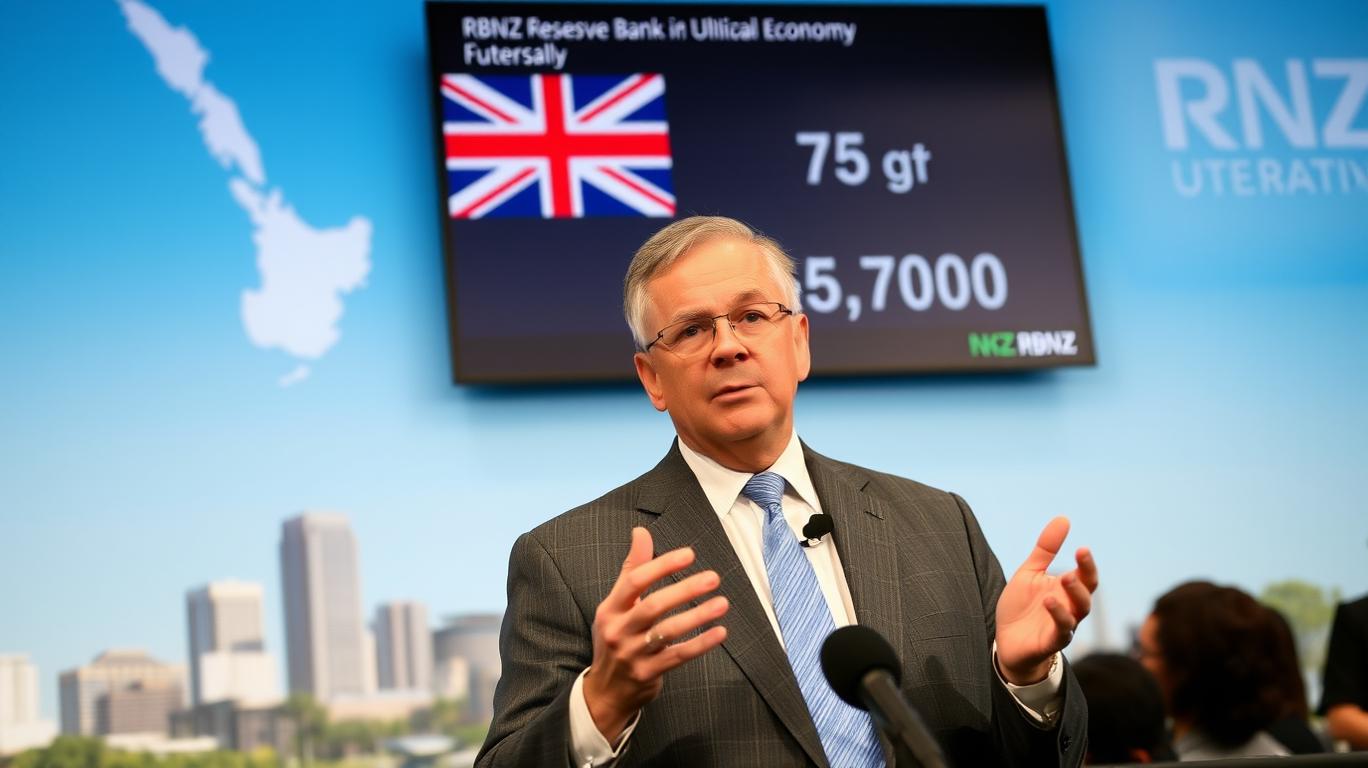
The RBNZ's decision to cut the Official Cash Rate (OCR) by 50 basis points to 4.75% has fueled speculation about a further reduction, putting downward pressure on the NZD. As of October 2024, the NZD is trading around 0.60 USD, nearing its 2022 low of 0.58771. This rate cut reflects the Committee's confidence in inflation converging to the 1-3% target band, signaling a shift towards monetary easing to promote a low-inflation economy.
The NZD's depreciation could have significant implications for the New Zealand equity market. International investors are closely watching the exchange rate, with a weaker NZD potentially boosting exporters' competitiveness and driving earnings growth. However, imports become more expensive, which could fuel inflation. The balance between growth and inflation control will be crucial in shaping the NZD's performance and international investors' decisions regarding New Zealand stocks.
Geopolitical tensions, particularly in the Middle East and Asia, could exacerbate NZD volatility. As the RBNZ contemplates a rate cut, heightened risks may influence the NZD's exchange rate. Escalating conflicts in the Middle East could drive oil prices up, strengthening the NZD against the USD due to New Zealand's energy imports. Conversely, should conflict intensify or spread, investor sentiment could deteriorate, leading to market corrections and a weaker NZD. Similarly, in Asia, geopolitical risks, such as US-China trade tensions or regional disputes, could impact the NZD through trade channels, as New Zealand's exports to China and other Asian countries account for a significant portion of its total exports.
China's economic recovery, buoyed by a rebound in manufacturing and export demand, is expected to drive up commodity prices, particularly for key New Zealand exports like dairy and logs. This could boost New Zealand's terms of trade, potentially strengthening the NZD against currencies like the AUD and USD. However, the RBNZ's rate cut expectations may keep the NZD under pressure, with the currency eyeing a 2022 low. The NZD/USD exchange rate is anticipated to trade in a range of 0.55-0.65 in 2022, influenced by global interest rate differentials and commodity price movements.
In conclusion, the RBNZ's rate cut has left the NZD vulnerable and potentially eyeing a 2022 low. The currency's depreciation could impact the New Zealand equity market, with international investors closely watching the exchange rate. Geopolitical tensions and China's economic recovery could further influence the NZD's performance and volatility. As the RBNZ contemplates further rate cuts, investors should monitor key economic indicators, such as inflation, GDP growth, and unemployment, to assess the potential implications for the New Zealand economy.
The RBNZ's decision to cut the Official Cash Rate (OCR) by 50 basis points to 4.75% has fueled speculation about a further reduction, putting downward pressure on the NZD. As of October 2024, the NZD is trading around 0.60 USD, nearing its 2022 low of 0.58771. This rate cut reflects the Committee's confidence in inflation converging to the 1-3% target band, signaling a shift towards monetary easing to promote a low-inflation economy.
The NZD's depreciation could have significant implications for the New Zealand equity market. International investors are closely watching the exchange rate, with a weaker NZD potentially boosting exporters' competitiveness and driving earnings growth. However, imports become more expensive, which could fuel inflation. The balance between growth and inflation control will be crucial in shaping the NZD's performance and international investors' decisions regarding New Zealand stocks.
Geopolitical tensions, particularly in the Middle East and Asia, could exacerbate NZD volatility. As the RBNZ contemplates a rate cut, heightened risks may influence the NZD's exchange rate. Escalating conflicts in the Middle East could drive oil prices up, strengthening the NZD against the USD due to New Zealand's energy imports. Conversely, should conflict intensify or spread, investor sentiment could deteriorate, leading to market corrections and a weaker NZD. Similarly, in Asia, geopolitical risks, such as US-China trade tensions or regional disputes, could impact the NZD through trade channels, as New Zealand's exports to China and other Asian countries account for a significant portion of its total exports.
China's economic recovery, buoyed by a rebound in manufacturing and export demand, is expected to drive up commodity prices, particularly for key New Zealand exports like dairy and logs. This could boost New Zealand's terms of trade, potentially strengthening the NZD against currencies like the AUD and USD. However, the RBNZ's rate cut expectations may keep the NZD under pressure, with the currency eyeing a 2022 low. The NZD/USD exchange rate is anticipated to trade in a range of 0.55-0.65 in 2022, influenced by global interest rate differentials and commodity price movements.
In conclusion, the RBNZ's rate cut has left the NZD vulnerable and potentially eyeing a 2022 low. The currency's depreciation could impact the New Zealand equity market, with international investors closely watching the exchange rate. Geopolitical tensions and China's economic recovery could further influence the NZD's performance and volatility. As the RBNZ contemplates further rate cuts, investors should monitor key economic indicators, such as inflation, GDP growth, and unemployment, to assess the potential implications for the New Zealand economy.

Divulgación editorial y transparencia de la IA: Ainvest News utiliza tecnología avanzada de Modelos de Lenguaje Largo (LLM) para sintetizar y analizar datos de mercado en tiempo real. Para garantizar los más altos estándares de integridad, cada artículo se somete a un riguroso proceso de verificación con participación humana.
Mientras la IA asiste en el procesamiento de datos y la redacción inicial, un miembro editorial profesional de Ainvest revisa, verifica y aprueba de forma independiente todo el contenido para garantizar su precisión y cumplimiento con los estándares editoriales de Ainvest Fintech Inc. Esta supervisión humana está diseñada para mitigar las alucinaciones de la IA y garantizar el contexto financiero.
Advertencia sobre inversiones: Este contenido se proporciona únicamente con fines informativos y no constituye asesoramiento profesional de inversión, legal o financiero. Los mercados conllevan riesgos inherentes. Se recomienda a los usuarios que realicen una investigación independiente o consulten a un asesor financiero certificado antes de tomar cualquier decisión. Ainvest Fintech Inc. se exime de toda responsabilidad por las acciones tomadas con base en esta información. ¿Encontró un error? Reportar un problema


SOBRE NOSOTROS
Nuestra historiaAutores de noticiasBase de conocimientosPolítica de privacidadTérmino de usoDescargo de responsabilidad de corretaje de tercerosTérminos de uso de AIMEDivulgaciones de riesgos de AInvest AICarrerasCONTÁCTENOS
Email: support@ainvest.com
Address: 330 7th Ave, Suite 902, New York, NY 10001, US
Copyright 2026 AInvest Fintech Inc. All rights reserved.


Comentarios
Aún no hay comentarios