
The RBNZ's Aggressive Rate Cut: A Game Changer for New Zealand's Markets?
The Reserve Bank of New Zealand (RBNZ) delivered a seismic shock to global markets on October 8, 2025, when it slashed the Official Cash Rate (OCR) by 50 basis points to 2.50%, defying expectations of a 25bps reduction, according to New Zealand 10-year yields. This bold move, driven by a 1.1% year-on-year GDP contraction in Q2 2025 and persistent inflationary pressures near the 3% upper bound of its target band, was highlighted in a Cryptopolitan report, and has sent ripples through New Zealand's equity and bond markets. For investors, the question now is whether this aggressive easing signals a buying opportunity or a deeper economic malaise.
Equity Markets: A Rally Amid Uncertainty
The NZX 50 index responded with a 0.6% surge on the day of the announcement, marking a rare bright spot in a market that had been mired in volatility, according to an interest.co.nz update. Over the preceding six months, the index had gained 14.5%, buoyed by a mix of fiscal stimulus and resilient consumer demand in key sectors like technology and healthcare. However, the RBNZ's 50bps cut has injected fresh optimism, particularly for sectors sensitive to borrowing costs.
As reported by Cryptopolitan, ANZ expects the rate cut to stimulate business investment and household spending, with construction and real estate poised to benefit from lower mortgage rates. Kiwibank analysts have already noted a 10–15 basis point drop in fixed mortgage rates at major lenders like BNZ and Kiwibank, signaling a potential uptick in housing activity. For equity investors, this means sectors tied to construction, retail, and consumer discretionary could see a near-term boost.
Yet, the rally is not without risks. The NZX 50's 0.6% gain on October 8 came after a 3.0% drop in February 2025, underscoring the market's susceptibility to macroeconomic headwinds. Investors should remain cautious about overexposure to cyclical stocks unless there's a clear sign of a sustained economic rebound, a point highlighted in the Harbour Outlook.
Bond Markets: Yields Tumble, But for How Long?
The bond market's reaction was even more pronounced. The yield on New Zealand's 10-Year Government Bonds plummeted to 4.22% by September 29, 2025, a 0.17 percentage point drop from the previous month, according to New Zealand 10-year yields. Following the RBNZ's rate cut, the two-year bond yield fell to 2.65%, reflecting a sharp decline in expectations for future interest rates. This inversion in the yield curve-a classic indicator of economic slowdown-has made existing bonds with higher coupon rates more attractive, pushing their prices upward.
However, the RBNZ's dovish stance is a double-edged sword. While lower yields have made bonds a relative safe haven, the central bank's openness to further rate cuts-potentially as much as another 50bps by mid-2026, as discussed in the Harbour Outlook-could erode returns for fixed-income investors. As Cryptopolitan notes, the RBNZ's commitment to keeping inflation near its 2% target has created a "low-for-long" rate environment, which favors long-duration bonds but penalizes short-term fixed-income strategies.
The Bottom Line: Balancing Risk and Reward
For investors, the RBNZ's rate cut is a mixed bag. Equities, particularly in sectors tied to housing and consumer spending, offer near-term upside potential, but valuations remain stretched in some segments. Bonds, meanwhile, provide a temporary haven, but their appeal is contingent on the RBNZ's ability to avoid a prolonged rate-cutting cycle.
The key takeaway? Diversification is critical. A portfolio that blends high-quality equities with a mix of long-duration bonds and inflation-linked securities could navigate the current environment more effectively. As the RBNZ's next move looms, investors should keep a close eye on inflation data and GDP revisions-both of which will dictate whether this rate cut is a one-off or the start of a deeper easing cycle.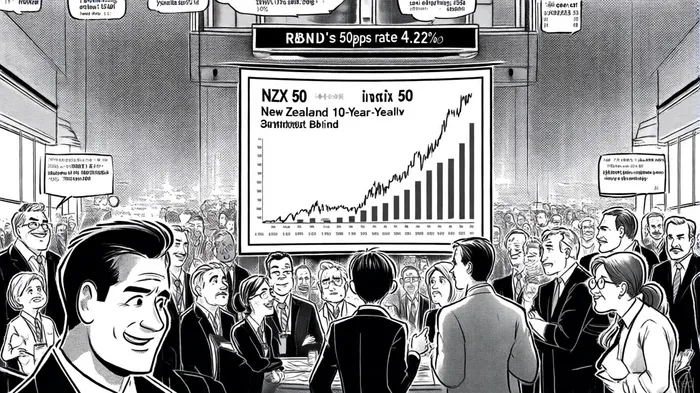







Comentarios
Aún no hay comentarios