
RBA's Cautious Tightrope: Balancing Inflation Control and Economic Growth in a High-Uncertainty Era
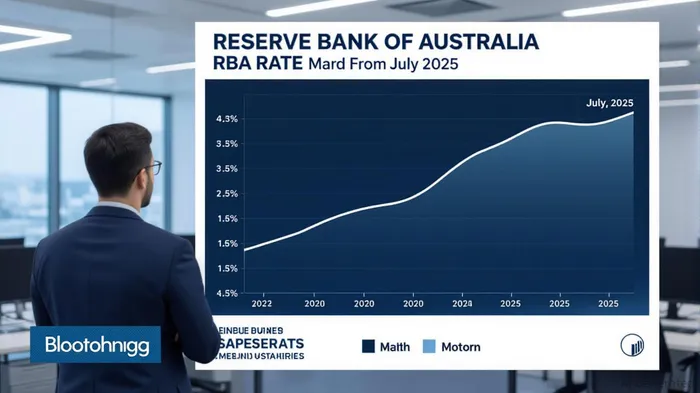
The Reserve Bank of Australia (RBA) has walked a delicate tightrope in 2025, navigating a world of global trade tensions and domestic economic fragility. Its July decision to hold the cash rate at 3.85%—defying market expectations of a cut—exposes a central bank prioritizing inflation stability over immediate growth. This cautious stance, while necessary to avoid overreacting to short-term volatility, raises critical questions for investors: How long will tight policy persist? What sectors will thrive or falter under this environment? And how should portfolios adapt to a prolonged era of uncertainty?
The RBA's Calculated Hesitation
The RBA's July 2025 meeting underscored its commitment to a data-dependent approach. By maintaining the cash rate, the board emphasized the need for “more information to confirm that inflation remains on track to reach 2.5% on a sustainable basis.” This reflects a broader tension: while Australia's labor market remains tight and growth tepid, global risks—from U.S. tariffs to delayed corporate investment—threaten to disrupt domestic demand. The RBA's 6–3 vote to hold rates highlights internal debate, with dissenting members likely concerned about stifling economic momentum.
The central bank's forward guidance remains ambiguous. While it signals eventual easing, the “cautious and gradual” approach suggests a prolonged period of modestly restrictive policy. This creates a paradox: rates are low enough to avoid recession but high enough to constrain growth. For investors, this means asset valuations must be reevaluated through the lens of both inflation discipline and growth uncertainty.
Equity Market Implications: Sectoral Winners and Losers
The RBA's policy has already reshaped Australia's equity landscape. Interest rate-sensitive sectors like utilities and real estate investment trusts (REITs) have seen renewed demand, with lower borrowing costs improving cash flows. The ASX 200 Financials Index, for instance, has surged 23% year-to-date as banks benefit from refinancing opportunities. However, these gains are not universal.
Export-oriented sectors such as mining and consumer discretionary face headwinds from U.S. tariffs and weak global demand. The RBA's own analysis notes that trade policy uncertainties could delay corporate and household spending, dampening earnings growth for these industries. Investors should overweight sectors with strong domestic cash flow profiles—such as healthcare and consumer staples—while hedging against geopolitical risks.
Housing Market Resilience and Constraints
The housing market offers a mixed picture. The February 2025 rate cut reduced variable mortgage rates by 25 basis points, easing some household financial pressure. However, the impact on broader financial conditions remains limited. Scheduled mortgage payments still account for a significant portion of disposable income, and housing credit growth has stagnated near post-2008 averages.
The RBA's policy has also influenced investor behavior in the property sector. While lower rates have spurred refinancing activity, the lack of a broader rate cut has kept demand muted. For now, the housing market remains a barometer of cautious optimism: buyers are hesitant, but sellers are reluctant to list at reduced prices.
Strategic Investing in a High-Uncertainty Environment
The RBA's cautious stance demands a nuanced investment approach. Here's how to position portfolios:
1. Overweight Rate-Sensitive Sectors: Utilities, REITs861104--, and financials are likely to benefit from eventual rate cuts. The ASX 200 Utilities Index has outperformed the broader market, reflecting its appeal in a low-growth environment.
2. Hedge Against Trade Risks: Export-dependent sectors like mining and manufacturing face volatility. Consider diversifying into domestic-oriented industries or using derivatives to mitigate geopolitical exposure.
3. Monitor Key Indicators: Keep a close eye on inflation trends, labor market data, and trade policy developments. A sustained drop in inflation could force the RBA to accelerate easing, creating opportunities in long-duration assets.
4. Rebalance Fixed Income Portfolios: The steepening yield curve (with 3-year bond yields falling 45 basis points since June 2025) suggests near-term rate cuts but lingering inflation concerns. Allocate to short-duration bonds to capitalize on near-term gains.
The Road Ahead
The RBA's July decision signals a prolonged period of tight policy, at least until global trade tensions abate and domestic inflation stabilizes. While this may delay economic recovery, it also protects against the risk of renewed inflationary shocks. For investors, the key is adaptability: sectors like utilities and financials will likely outperform, while trade-exposed industries require careful risk management.
As the RBA navigates this high-uncertainty environment, its next move will hinge on data. A September rate cut—now priced at 85%—could unlock new opportunities in equities and housing. Until then, patience and strategic positioning will be the hallmarks of successful investing.







Comentarios
Aún no hay comentarios