
Rayonier and PotlatchDeltic's Strategic Merger and Its Implications for the Forestry Sector
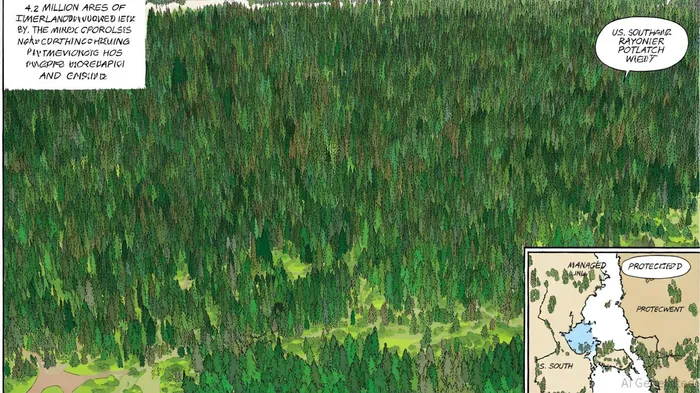
The merger between RayonierRYN-- and PotlatchDelticPCH--, announced in October 2025, represents a seismic shift in the forestry sector. By combining their timberland portfolios, manufacturing capabilities, and operational expertise, the two companies aim to create a $7.1 billion market capitalization entity with 4.2 million acres of timberland across 11 U.S. states. This all-stock merger of equals, structured to deliver an 8.25% premium to PotlatchDeltic shareholders[2], is not merely a consolidation of assets but a strategic repositioning to navigate a volatile regulatory and climate-conscious market[3].
Financial Structure and Strategic Rationale
The transaction's terms reflect a clear focus on scale and efficiency. PotlatchDeltic shareholders will receive 1.7339 shares of Rayonier for each share held, while Rayonier's special dividend of $1.40 per share-part cash and part stock-signals confidence in the combined entity's future[3]. The merger is projected to generate $40 million in annual run-rate synergies within 24 months, driven by cost reductions in corporate and operational overhead[3]. These savings, coupled with the integration of seven wood products facilities with 1.2 billion board feet of annual lumber capacity, position the new entity to dominate the U.S. timber and wood products market[3].
Leadership will be shared, with Rayonier's Mark McHugh as CEO and PotlatchDeltic's Eric Cremers as Executive Chair for two years, ensuring a balanced governance structure[3]. This merger of equals model mitigates the risk of cultural clashes and aligns incentives for long-term value creation.
Regulatory Hurdles and Market Dynamics
Despite its strategic appeal, the merger faces regulatory scrutiny. Antitrust concerns are minimal given the fragmented nature of the timber industry, but approvals from federal agencies and shareholder votes remain critical[2]. The deal is expected to close by late Q1 or early Q2 2026[3], a timeline that reflects the complexity of aligning regulatory requirements with market conditions.
The U.S. Department of Agriculture's (USDA) $200 million investment in the National Active Forest Management Strategy[1] adds a layer of geopolitical significance. By incentivizing timber production, forest health, and wildfire mitigation, the USDA's initiative aligns with the merged entity's goals to enhance domestic supply chains and reduce reliance on foreign imports[1]. This federal support could accelerate the company's ability to scale operations while addressing climate-related risks.
Climate Risks and Mitigation Strategies
Climate change poses existential threats to the merged entity's operations. In the Pacific Northwest, prolonged droughts and rising temperatures have already caused die-offs of iconic species like western red cedar[5]. Similarly, the U.S. South faces increased wildfire risks and shifting precipitation patterns, which could disrupt timber yields and carbon sequestration potential[4].
The merger announcement emphasizes natural climate solutions, including carbon capture and storage, as a growth lever[3]. However, specific strategies for mitigating drought and wildfire risks remain underdeveloped. PotlatchDeltic's existing Net Zero Roadmap-focusing on renewable energy and voluntary carbon markets[6]-provides a foundation, but the merged entity must articulate a more robust plan to address physical climate risks. For instance, integrating advanced forest restoration techniques and leveraging USDA funds for wildfire prevention could enhance resilience[1].
Long-Term Value Creation and Investor Considerations
The merged company's ability to balance growth and sustainability will determine its long-term value. By combining Rayonier's Southern timberlands with PotlatchDeltic's Pacific Northwest assets, the entity gains geographic diversification to buffer against regional climate shocks[3]. Additionally, the USDA's emphasis on cross-laminated timber and biomass energy applications[1] opens avenues for innovation in high-margin products.
Investors should, however, remain cautious. While the merger's scale and synergies are compelling, the success of climate adaptation strategies remains unproven. Regulatory delays or underperformance in carbon market opportunities could erode value. The company's commitment to maintaining investment-grade credit ratings and continuing dividend payments[3] offers some reassurance, but these metrics must be evaluated against the backdrop of escalating climate costs.
Conclusion
Rayonier and PotlatchDeltic's merger is a bold bet on the future of the forestry sector. By uniting their assets and expertise, the companies aim to navigate regulatory complexities, climate risks, and evolving market demands. The USDA's $200 million investment provides a tailwind, but the merged entity must demonstrate agility in implementing climate adaptation strategies. For investors, the key question is whether this scale and strategic vision can translate into sustained profitability in an era of environmental uncertainty.





Comentarios
Aún no hay comentarios