
Rare Earth and Strategic Metals: A 2026 Inflation-Proof Long with REMX, ALB, SGML, and LAR
The rare earth and strategic metals sector is emerging as a cornerstone of global economic and technological resilience in 2026, driven by geopolitical realignments and the exponential growth of artificial intelligence (AI). As nations race to secure supply chains for critical minerals, companies like VanEck's REMXREMX-- ETF, Aluminum Corporation of China (ALB), Shenghe Resources (SGML), and Lynas Rare Earths (LAR) are positioned to benefit from a confluence of inflationary tailwinds and structural demand shifts. This analysis examines how these entities are navigating the dual forces of geopolitical tension and AI-driven reshoring, offering compelling long-term investment opportunities.
Geopolitical Tensions and the Reshoring Imperative
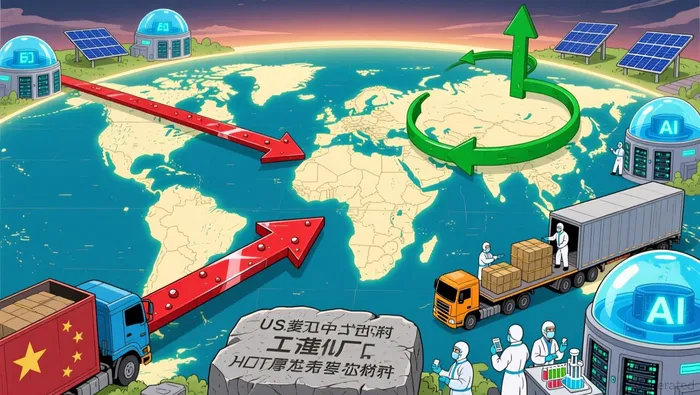
China's dominance over rare earth processing-99% of heavy rare earth element (HRE) processing and 69% of global production-has become a strategic vulnerability for Western economies. Recent export restrictions on rare earth materials, including mandatory permits for products containing Chinese-sourced elements, have exposed the fragility of global supply chains. In response, the U.S. has deployed the Defense Production Act to subsidize domestic mining and processing, while the EU's Critical Raw Materials Act aims to localize 40% of processing by 2030. These efforts are not merely economic but existential, as rare earths underpin AI infrastructure, defense systems, and clean energy technologies.
AI's Appetite for Rare Earths: A Double-Edged Sword
AI's rise has intensified demand for rare earth elements (REEs) in data centers and semiconductors. Neodymium and dysprosium are critical for high-performance magnets in servers, while erbium and ytterbium enable optical amplification in fiber networks. However, China's near-total control of HRE separation-85% of global capacity-creates a chokepoint. For instance, a 2025 CSIS report warned that even minor disruptions in Chinese exports could halt production lines for AI hardware. This has spurred innovation in recycling and AI-driven supply chain analytics, but scaling these solutions remains a multi-year endeavor.
VanEck REMX: A Liquid Gateway to the Rare Earth Boom
The VanEck Rare Earth and Strategic Metals ETF (REMX) offers investors a diversified, liquid exposure to companies pivotal to the sector. As of Q4 2025, REMX delivered a year-to-date return of 85.75%, outperforming its peers, reflecting its alignment with U.S. and EU reshoring initiatives. The ETF's holdings include MP Materials (a U.S. rare earth refiner receiving $400 million in DoD funding) and Lynas Rare Earths (LAR), which is expanding its global footprint. REMX's volatility-5-day volatility of 325.16%-reflects the sector's speculative nature but also its potential to capitalize on inflationary pressures as governments subsidize supply chain resilience.
ALB and SGML: Navigating China's Dual Role
Aluminum Corporation of China (ALB) and Shenghe Resources (SGML) remain dominant players in the rare earth industry, despite Western efforts to diversify. ALB's 2025 Q4 performance underscores its role in processing and alloy production for electric vehicles and wind turbines, while SGML's vertical integration strategies aim to mitigate single-source risks. However, their exposure to China's export policies creates a paradox: while they benefit from domestic demand, they also face scrutiny as geopolitical tensions escalate. For investors, ALBALB-- and SGMLSGML-- represent high-conviction bets on China's continued dominance but require careful hedging against regulatory shifts.
Lynas Rare Earths (LAR): The Reshoring Catalyst
Lynas Rare Earths (LAR) has emerged as a linchpin in global supply chain diversification. In Q4 2025, the company achieved a milestone by producing dysprosium and terbium oxides outside China, a critical step in reducing reliance on Chinese processing. LAR's partnership with JS Link in Malaysia-a 3,000-tonne neodymium-magnet facility-and its collaboration with Noveon Magnetics in the U.S. position it as a key player in reshoring. Additionally, LAR's vertical integration across Australia, Malaysia, and the U.S. (including a Texas-based separation facility) ensures it is well-placed to meet surging demand from AI and defense sectors.
Strategic Considerations for 2026
The rare earth sector's inflation-proof potential stems from its inelastic supply and strategic importance. Governments are unlikely to allow market forces alone to dictate access to critical minerals, ensuring sustained subsidies and protectionist policies. For investors, REMX provides broad exposure to this trend, while LAR offers a concentrated bet on reshoring. ALB and SGML, though China-centric, remain relevant due to their scale and technological expertise. However, their geopolitical risks necessitate a balanced portfolio approach.
Conclusion
As AI and geopolitical competition redefine global supply chains, rare earth and strategic metals are transitioning from niche commodities to foundational assets. The VanEck REMX ETF, ALB, SGML, and LAR are uniquely positioned to benefit from this shift, offering a mix of diversification, innovation, and geopolitical alignment. For 2026, these investments represent a compelling hedge against inflation and a strategic play on the technologies shaping the 21st century.





Comentarios
Aún no hay comentarios