
Rare Disease Therapeutics and Orphan Drug Market Expansion: Evkeeza's FDA Approval and Pediatric Hypercholesterolemia Innovation
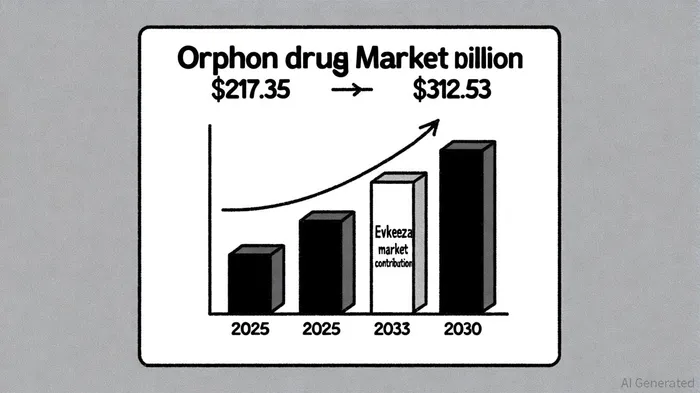
The orphan drug market is undergoing a transformative phase, driven by a confluence of regulatory incentives, technological advancements, and unmet medical needs. According to a report by Market Data Point, the global orphan drug market was valued at $217.35 billion in 2025 and is projected to grow at a compound annual growth rate (CAGR) of 6.24%, reaching $312.53 billion by 2030 [1]. This expansion is fueled by government incentives such as tax credits, expedited regulatory pathways, and seven-year market exclusivity under the U.S. Orphan Drug Act [2]. These policies have incentivized pharmaceutical innovation, with over 52% of 2024 FDA drug approvals targeting rare diseases [3].
A pivotal development in this landscape is the September 2025 FDA approval of Evkeeza (evinacumab-dgnb) for children as young as 1 year old with homozygous familial hypercholesterolemia (HoFH), an ultra-rare genetic disorder characterized by life-threatening LDL cholesterol levels. This approval extends Evkeeza's indication to the youngest pediatric population, following prior approvals for adolescents (2021) and children aged 5–11 (2023) [4]. The drug's mechanism—blocking angiopoietin-like 3 (ANGPTL3) to lower LDL-C—has demonstrated efficacy in clinical trials, with a 48% reduction in LDL-C observed in older pediatric patients [5]. The FDA's Priority Review designation underscores the drug's potential to address a critical unmet need, as HoFH patients face severe cardiovascular complications without effective treatment [6].
Market Implications and Financial Viability
The pediatric HoFH market, though small, is highly lucrative due to the disease's severity and limited treatment options. Prevalence estimates suggest 1 in 300,000 individuals are affected globally [7], translating to a niche but high-revenue segment. Evkeeza's pricing, while not explicitly disclosed in U.S. sources, is inferred to be substantial. Canadian economic evaluations estimate annual treatment costs at approximately $460,839 for a 70-kg patient [8], aligning with pricing trends for orphan drugs targeting ultra-rare conditions.
Financial data from Ultragenyx PharmaceuticalsRARE--, which licenses Evkeeza, indicates growing international revenue. In Q1 2025, the company reported $11 million in Evkeeza sales, a significant increase from $3.3 million in the same period in 2024 [9]. While standalone U.S. revenue projections remain undisclosed, the drug's inclusion in Ultragenyx's $640–$670 million 2025 revenue guidance highlights its strategic importance [10]. The broader orphan drug market's projected growth to $312.53 billion by 2030 further validates the long-term viability of therapies like Evkeeza [1].
Challenges and Opportunities
Despite its promise, the orphan drug sector faces challenges, including high per-patient costs and payer scrutiny. For instance, Evkeeza's annual cost exceeds $460,000, raising questions about affordability and reimbursement [8]. However, regulatory tailwinds—such as Priority Review and orphan drug exclusivity—and the rising adoption of gene and cell-based therapies (e.g., KEBILIDI for aromatic L-amino acid decarboxylase deficiency) suggest a resilient market [3]. Innovations like AI-driven adaptive trials are also reducing development timelines, enabling faster approvals and cost efficiencies [3].
Conclusion
Evkeeza's FDA approval for pediatric HoFH exemplifies the orphan drug market's dual focus on innovation and unmet medical needs. While financial barriers persist, the drug's efficacy, regulatory support, and alignment with market trends position it as a key player in the rare disease therapeutics space. For investors, the expansion of orphan drug pipelines—particularly therapies targeting ultra-rare conditions—offers a compelling opportunity amid a sector poised for sustained growth.







Comentarios
Aún no hay comentarios