
Rapport Therapeutics: Is RAP-219's Groundbreaking Phase II Data a Buy Signal for Long-Term Growth?
The recent topline results from RapportRAPP-- Therapeutics’ Phase 2a trial of RAP-219 have ignited significant investor interest, positioning the drug as a potential disruptor in the $4.5 billion drug-resistant epilepsy market. With 85.2% of patients achieving a ≥30% reduction in long episodes (LEs) and 72% experiencing a ≥50% reduction in clinical seizures, RAP-219’s efficacy metrics outpace many existing antiepileptic drugs (AEDs) [1]. This analysis evaluates whether these clinical milestones, combined with favorable safety data and a robust market opportunity, justify a long-term investment thesis.
Clinical Differentiation: A New Benchmark in Efficacy
RAP-219’s Phase 2a trial demonstrated unprecedented efficacy in a high-unmet-need patient population. The drug achieved a 77.8% median reduction in clinical seizure frequency (p=0.01) and 24% seizure freedom over 8 weeks, outperforming established therapies like cenobamate (Xcopri) and perampanel (Fycompa) [1]. For context, cenobamate—a top-selling AED—showed a 55.6% median reduction in seizure frequency in drug-resistant patients, while perampanel’s 50% responder rate peaks at 54% [2][3]. RAP-219’s dual validation via electrographic biomarkers and clinical seizure counts further strengthens its credibility as a first-in-class therapy [4].
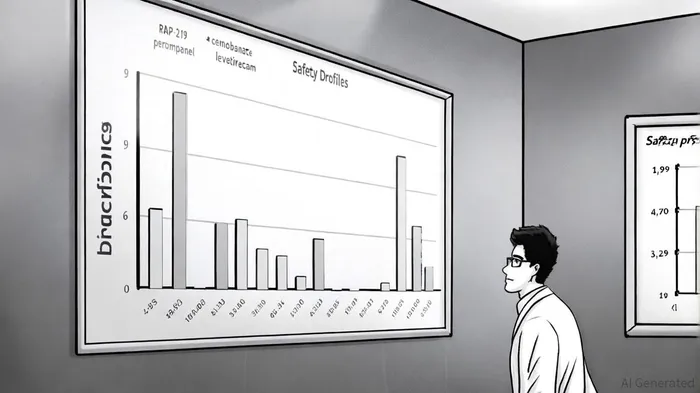
Safety is another critical differentiator. The trial reported no serious adverse events, with mild side effects (dizziness, headache) aligning with tolerability profiles of second-generation AEDs [1]. This contrasts with perampanel, where higher doses (12 mg/day) correlate with increased discontinuation rates due to adverse effects [3]. Rapport’s plans to develop a long-acting injectable formulation could further enhance adherence, a persistent challenge in chronic epilepsy management [5].
Market Scalability: Capturing a $4.5B Opportunity
The drug-resistant epilepsy market is projected to grow at a 6.5% CAGR, reaching $8.2 billion by 2034 [4]. Rapport’s target population—30–40% of the 3 million U.S. epilepsy patients—translates to 900,000–1.2 million individuals with unmet needs [1]. Assuming RAP-219 secures 10–15% market share in this segment, its peak sales potential could exceed $1 billion, assuming an average treatment cost of $30,000–$50,000 annually [4].
Competitive threats exist, but RAP-219’s clinical edge may allow it to carve out a niche. While incumbents like Pfizer’s Xcopri and UCB’s Fycompa dominate, their efficacy plateaus in refractory cases. Emerging pipeline candidates, such as Biohaven’s BHV-7000 and Praxis’ vormatrigine, remain unproven in pivotal trials [1]. Rapport’s planned Phase 3 trials, expected to initiate in Q3 2026, will be pivotal in solidifying its commercial viability.





Comentarios
Aún no hay comentarios