
Rapport Therapeutics' $250M Equity Raise: Strategic Fuel for Precision Neuroscience Pipeline Expansion
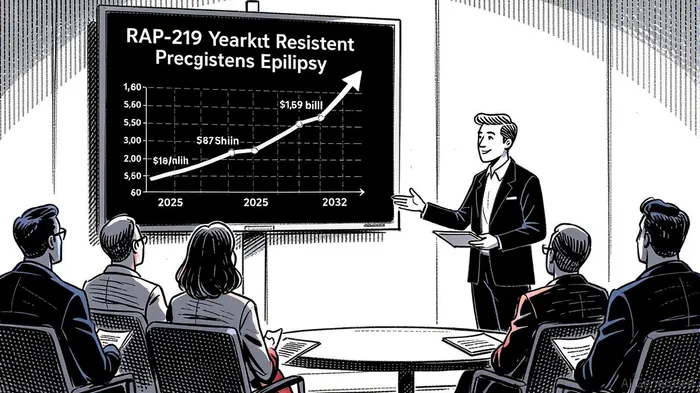
Rapport Therapeutics (NASDAQ: RAPP) has executed a $250 million equity offering, a strategic move that underscores its commitment to advancing its precision neuroscience pipeline and solidifying its position in the competitive drug-resistant epilepsy market. The public offering of 9,615,385 shares at $26.00 per share, with an additional 30-day option for 1,442,307 shares, generates a potential $287.5 million in gross proceeds[1]. This capital infusion, coupled with Rapport's existing $260.4 million cash reserves as of Q2 2025[4], provides a robust financial runway through late 2026 and beyond, enabling the company to accelerate its lead candidate, RAP-219, toward regulatory milestones and broader therapeutic applications.
Strategic Allocation: Fueling RAP-219's Path to Commercialization
RAP-219, Rapport's TARPγ8-specific AMPAR negative allosteric modulator, has emerged as a transformative candidate in the treatment of drug-resistant focal onset seizures. Recent Phase 2a trial results demonstrated a 77.8% median reduction in clinical seizures (p=0.01) and 24% seizure freedom over 8 weeks, with a favorable safety profile marked by mild adverse events and no serious complications[3]. These outcomes validate RAP-219's novel mechanism of action—targeting discrete brain regions linked to epilepsy—potentially circumventing the systemic side effects of traditional antiseizure medications[1].
The $250 million raise will directly fund the advancement of RAP-219 into Phase 3 registrational trials, slated to begin in Q3 2026[3]. This aligns with the company's end-of-Phase 2 meeting with the FDA in Q4 2025, a critical step in finalizing trial design and regulatory pathways[5]. Additionally, the capital will support the development of a long-acting injectable formulation of RAP-219, addressing adherence challenges that plague current oral therapies[3]. For investors, this strategic allocation signals a clear focus on de-risking the asset while expanding its clinical utility, positioning RAP-219 as a potential first-in-class therapy in a $1.69 billion market by 2032[6].
R&D Expansion and Diversification: Broadening the Precision Neuroscience Portfolio
Beyond RAP-219, RapportRAPP-- is leveraging the equity proceeds to expand its R&D footprint into adjacent indications. A Phase 2 trial in bipolar mania is underway, with topline data expected in mid-2027[2], while plans for a Phase 2a trial in diabetic peripheral neuropathic pain (DPNP) are in development[1]. This diversification mitigates single-asset risk and taps into the broader $700 billion branded drug market for CNS disorders[2]. The company's emphasis on precision neuroscience—targeting specific receptor pathways rather than broad mechanisms—aligns with industry trends favoring therapies with differentiated safety and efficacy profiles[5].
Financially, Rapport's Q2 2025 results highlight the urgency of this expansion. Despite a net loss of $26.7 million, driven by rising R&D costs, the company's cash reserves have grown to $260.4 million, reflecting efficient capital management[4]. The recent equity raise further insulates Rapport from near-term liquidity constraints, allowing it to allocate resources to high-impact milestones such as Phase 3 trial initiation and FDA engagement.
Competitive Landscape and Market Positioning
RAP-219's competitive edge lies in its dual validation of efficacy through both electrographic biomarkers (long episodes) and clinical seizure counts—a rarity in epilepsy trials[3]. This approach addresses a key limitation of existing therapies, where subjective seizure reporting often skews outcomes. With 85.2% of patients achieving ≥30% reduction in long episodes (p<0.0001) and 72% showing ≥50% reduction in clinical seizures[3], RAP-219 outperforms the 30–50% reductions typical of current treatments[5]. Analysts at Stifel have raised their price target for RAPPRAPP-- to $56.00, citing the drug's potential to disrupt a market dominated by older agents like lamotrigine and levetiracetam[2].
However, challenges remain. The drug-resistant epilepsy space is attracting competition from gene therapies and neurostimulation devices, which could erode market share if commercialized ahead of RAP-219[6]. Additionally, Rapport's lack of revenue and projected 2025 loss of $3.35 per share[4] underscore the need for rapid trial success to justify its valuation.
Conclusion: A Calculated Bet on Precision Neuroscience
Rapport Therapeutics' $250 million equity raise is a calculated investment in its precision neuroscience strategy, directly funding the critical path for RAP-219's commercialization while diversifying into high-value CNS indications. With a robust cash runway, a differentiated mechanism, and a clear regulatory roadmap, the company is well-positioned to capitalize on the growing demand for innovative epilepsy treatments. For biotech investors, the offering represents a high-risk, high-reward opportunity: success in Phase 3 trials could transform Rapport into a key player in a $1.69 billion market, while setbacks would test the resilience of its financial and strategic framework.





Comentarios
Aún no hay comentarios