
Why Ralph Lauren's Strong Earnings Contrast with Weak Share Price Performance: A Deep Dive into Institutional Sentiment and Macroeconomic Headwinds
Ralph Lauren (NYSE: RL) has delivered robust financial results in Q3 2025, with revenue surging 11% year-over-year to $2.1 billion and earnings per share (EPS) of $4.82, exceeding forecasts by 7.1%. Despite these stellar numbers, the stock's post-earnings rally-a 15.45% spike-has since faded, leaving the share price underperforming relative to its earnings momentum. This divergence raises a critical question: why do strong fundamentals fail to translate into sustained investor confidence? The answer lies in a confluence of macroeconomic headwinds and a fragmented institutional sentiment landscape, which we dissect below.
Macroeconomic Headwinds: Tariffs, Inflation, and Consumer Caution
Ralph Lauren's luxury apparel segment operates in a sector grappling with systemic challenges. Rising tariffs and supply chain disruptions have compressed profit margins across the Textiles, Apparel & Luxury Goods industry, with Q2 2025 profits projected to decline by 41.4%. While Ralph Lauren's diversified supply chain and cost management strategies have cushioned some of these pressures, broader macroeconomic risks-such as inflationary expectations and a cautious consumer climate-loom large.
The luxury goods market, in particular, is sensitive to global economic cycles. Affluent consumers, who form Ralph Lauren's core demographic, are increasingly prioritizing value and durability amid uncertainty. This shift has led to a "premiumization" trend, where demand for high-quality, timeless products persists, but discretionary spending on non-essentials remains constrained. For Ralph LaurenRL--, this duality is both a strength and a vulnerability: its brand equity sustains demand for premium offerings, yet macroeconomic volatility limits the scalability of growth.
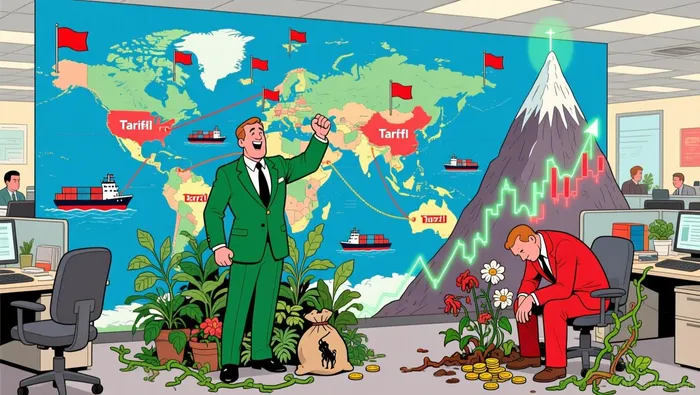
Institutional Sentiment: A Tale of Two Investors
Institutional ownership data for Q3 2025 reveals a fractured investor base. On one hand, firms like Meeder Asset Management Inc. and Nisa Investment Advisors LLC increased their stakes by 49.1% and 90.1%, respectively, signaling optimism about Ralph Lauren's global expansion and brand resilience. On the other, major players such as BlackRock, Inc. and MGO One Seven LLC reduced holdings, reflecting profit-taking or a reallocation toward sectors perceived as less cyclical.
This split sentiment is further complicated by valuation metrics. Ralph Lauren's stock currently trades at a Price-to-Earnings (PE) ratio exceeding its Fair PE Ratio, suggesting overvaluation from a traditional earnings multiple perspective. However, discounted cash flow (DCF) analysis indicates the stock is near intrinsic value, highlighting a disconnect between earnings-based and cash flow-based valuation models. Such discrepancies often arise when investors debate the sustainability of a company's growth trajectory-here, Ralph Lauren's long-term potential clashes with near-term macroeconomic risks.
Analyst Optimism vs. Sector-Wide Skepticism
Brokerage reports paint a cautiously optimistic picture. Wells Fargo and Evercore ISI Group maintain "Overweight" and "Outperform" ratings, citing Ralph Lauren's strong Q3 performance and brand momentum. The average 12-month price target of $349.63 implies a modest 4.25% upside from current levels. Yet this optimism is tempered by sector-wide pessimism. The Textiles, Apparel & Luxury Goods group's anticipated profit contraction has dampened risk appetite, leading some institutional investors to adopt a wait-and-see approach.
Conclusion: A Stock at the Crossroads
Ralph Lauren's earnings outperformance underscores its operational resilience and brand strength. However, the stock's muted price action reflects a broader tug-of-war between institutional optimism and macroeconomic caution. While the company's global expansion and premium product strategy position it well for long-term growth, near-term headwinds-including tariffs, inflation, and sector-specific profit declines-have created a valuation impasse. For investors, the key lies in balancing short-term macro risks with the company's enduring brand equity and strategic adaptability.







Comentarios
Aún no hay comentarios