
Rail Infrastructure Resilience and Market Impact: Evaluating BNSF's Post-Derailment Risks and Opportunities
The October 2023 train derailments near Mitchell, South Dakota, and Pueblo, Colorado, have intensified scrutiny on rail infrastructure resilience and safety protocols, offering critical insights for investors assessing long-term risks and opportunities in the sector. These incidents, coupled with evolving regulatory frameworks and market dynamics, underscore the delicate balance between operational efficiency and safety compliance in an industry vital to North American freight and passenger transport.
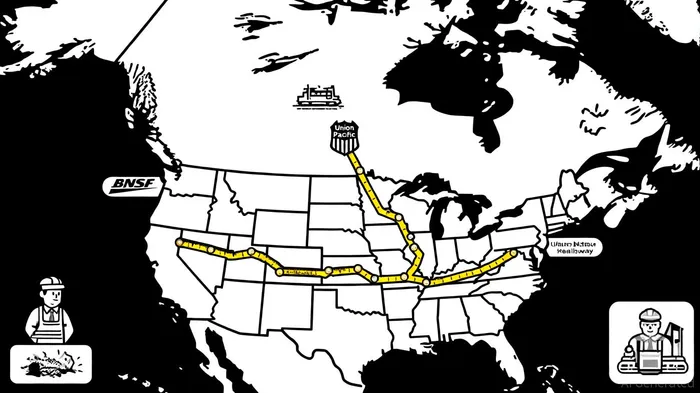
Operational Incidents and Safety Protocol Reforms
The October 14 derailment near Mitchell, South Dakota, involved seven ethanol cars, with three catching fire, though no injuries were reported [1]. While the National Transportation Safety Board (NTSB) has yet to release a preliminary report, the incident highlights vulnerabilities in rail infrastructure, particularly in regions with aging tracks. In contrast, the October 15 derailment in Pueblo, Colorado-caused by a failed thermite weld-resulted in a bridge collapse and a fatality. The NTSB attributed this to improper welding procedures, prompting BNSF to implement mandatory audits of thermite welds and retraining for welding teams [2].
These events reflect a broader trend: rail operators are increasingly prioritizing preventive maintenance. For instance, BNSF now mandates that welding supervisors conduct monthly audits of 10 random thermite welds to ensure compliance with kit selection protocols [3]. Such measures, while costly, may mitigate future derailments and reduce liability, offering a long-term benefit to operational resilience.
Regulatory Scrutiny and Compliance Costs
The Biden-Harris Administration and the Federal Railroad Administration (FRA) have accelerated safety reforms in response to recent incidents. New rules, including two-person crew requirements for Class I freight trains and emergency escape breathing apparatus mandates for hazardous material transport, aim to reduce human error and enhance crew safety [4]. Additionally, the proposed RAIL Act seeks to codify these measures into law, imposing stricter accountability on rail corporations.
For BNSF, these regulations could increase compliance costs. The company already faces a $394 million legal penalty from a pre-derailment easement dispute with the Swinomish Indian Tribal Community, illustrating the financial risks of regulatory non-compliance [5]. However, the FRA's updated safety data platform-launching in 2025-may improve transparency, enabling investors to track accident trends and company-specific safety metrics [6].
Stock Valuation Dynamics and Market Positioning
BNSF's stock performance in 2025 has shown resilience despite the October incidents. The company reported a record operating income in Q2 2025 and improved service levels, partly offsetting earlier declines in 2023 [7]. By comparison, peers like Union PacificUNP-- (UP) and Canadian National RailwayCNI-- (CNI) have underperformed, with CNI's year-to-date total return at -15.90% [8]. This divergence suggests that BNSF's strategic investments in safety and infrastructure may insulate it from some market volatility.
However, merger speculation complicates the outlook. While BNSF and Canadian Pacific have rejected Union Pacific's proposed $85 billion transcontinental merger, the company has hired Goldman Sachs to explore alternative partnerships [9]. Such strategic uncertainty could introduce short-term valuation volatility, though BNSF's dominance in western U.S. corridors provides a long-term advantage.
Investment Risks and Opportunities
The rail sector's growth is underpinned by decarbonization mandates and nearshoring trends, which are shifting freight from road to rail [10]. The global railway safety system market, valued at $12.5 billion in 2023, is projected to grow at 6% annually, driven by Positive Train Control adoption and infrastructure upgrades [11]. For BNSF, this presents opportunities to capitalize on federal infrastructure funding while managing costs through automation and predictive maintenance.
Yet, risks persist. The Mitchell derailment's unknown cause and potential regulatory penalties could strain margins. Moreover, grade crossing accidents remain a leading cause of rail fatalities, highlighting the need for continued public safety campaigns [12].
Conclusion
The October 2023 derailments serve as a catalyst for reevaluating rail infrastructure resilience. While BNSF's proactive safety reforms and strategic positioning in key corridors offer a competitive edge, investors must weigh these against regulatory costs and operational risks. For the sector as a whole, the path forward hinges on balancing innovation with accountability-a challenge that will define the long-term value of rail investments.





Comentarios
Aún no hay comentarios