
QYLG: The Strategic Buy-Write Alternative for Nasdaq 100 Investors
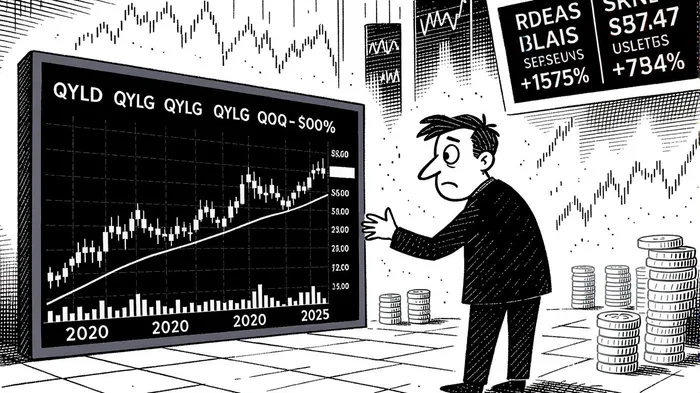
In an era marked by geopolitical tensions, inflationary pressures, and rapid technological disruption, investors in the Nasdaq 100 face a critical dilemma: how to balance income generation with capital preservation during periods of heightened volatility. The Nasdaq 100, a bellwether for global innovation, has demonstrated resilience in 2024–2025, trading above 23,300 in July 2025 despite macroeconomic headwinds [1]. Yet, as volatility remains a persistent risk, the strategic merits of structured products like the Nasdaq 100 Covered Call & Growth ETF (QYLG) warrant closer scrutiny.
The Nasdaq 100: A Volatility-Resilient Benchmark
The Nasdaq 100’s composition—anchored by disruptive technology firms—has historically insulated it from market-wide turbulence. Analysts project a 5–10% price increase in 2025, driven by AI advancements and robust earnings [1]. However, technical indicators caution that a failure to sustain levels above 23,670 could trigger a distribution phase, characterized by rangebound trading and short-term markdowns [1]. This underscores the need for strategies that mitigate downside risk while preserving upside potential.
QYLD vs. QYLG: A Tale of Two Covered Call Strategies
The Global X Nasdaq 100 Covered Call ETF (QYLD) and QYLG employ divergent approaches to capital preservation and income generation. QYLD writes covered call options on 100% of its portfolio, generating yields of 11–12% historically [2]. While this strategy enhances income during volatile periods, it caps capital appreciation. For instance, a $1 million investment in QYLD over a decade would yield $1.15 million in dividends but result in a mere $680,000 in capital value, lagging behind QQQ’s $5.2 million gain [3].
QYLG, by contrast, writes covered calls on only 50% of its portfolio, offering a more balanced risk-return profile. This structure preserves 50% of the Nasdaq 100’s upside potential while generating yields of 5–6% [2]. For investors prioritizing both income and growth, QYLG’s hybrid approach aligns with the Nasdaq 100’s long-term innovation-driven trajectory, particularly during volatile phases when QYLD’s capped gains become a liability.
Strategic Advantages in High-Volatility Environments
High-volatility periods, such as those triggered by Trump-era tariffs or geopolitical shocks, amplify the trade-offs between income and capital preservation. QYLD’s premium income can provide downside protection during market corrections, but its structural limitations become evident during sustained upswings. QYLG, however, offers a more adaptive framework. By retaining half of the portfolio’s exposure to Nasdaq 100 growth, it allows investors to participate in AI-driven and Energy Transition–related gains while still generating modest income [4].
A 2025 academic study further validates this approach. Researchers combined QYLD with leveraged Nasdaq 100 ETFs (e.g., TQQQ) using reinforcement learning, achieving positive excess returns over QQQ during volatile periods [2]. While QYLG was not directly tested, its design suggests it could serve as a less complex alternative for investors seeking similar risk-adjusted outcomes.
The Case for QYLG: Balancing Income and Growth
For Nasdaq 100 investors navigating 2024–2025 volatility, QYLG presents a compelling case. Its 50% covered call strategy mitigates the income-generation shortcomings of pure-play Nasdaq 100 ETFs like QQQ while avoiding QYLD’s restrictive upside cap. This balance is particularly valuable in a market where technical indicators suggest potential targets of 27,000 by 2026 and 45,000 by 2031 [2].
Moreover, QYLG’s alignment with disruptive technologies—64 of its holdings are actively involved in AI and Energy Transition—positions it to benefit from long-term innovation trends [4]. In contrast, QYLD’s aggressive income focus may underperform during periods of sustained growth, as demonstrated by its decade-long underperformance relative to QQQ [3].
Conclusion
The Nasdaq 100’s resilience in 2024–2025 highlights its role as a cornerstone of innovation-driven portfolios. However, the volatility inherent in this space demands strategies that harmonize income generation with capital preservation. QYLG’s hybrid approach—offering 50% of the Nasdaq 100’s growth potential while generating moderate yields—provides a strategic alternative to QYLD’s income-centric model. For investors seeking to navigate high-volatility environments without sacrificing long-term growth, QYLG represents a nuanced, well-structured solution.
**Source:[1] NASDAQ-100 Forecast & Price Predictions 2025, [https://naga.com/ae/news-and-analysis/articles/nasdaq-100-price-prediction][2] Nasdaq 100 Covered Call ETF, https://globalxetfs.co.jp/en/funds/qyld/[3] Option Income ETFs : Are covered calls ETFs any good? [https://www.piranhaprofits.com/blog/option-income-etfs][4] InvescoIVZ-- QQQ ETF Performance, [https://www.invesco.com/qqq-etf/en/performance.html]







Comentarios
Aún no hay comentarios