
QXO's 52-Week High: A $1.2B Bet on a July Acquisition Deadline
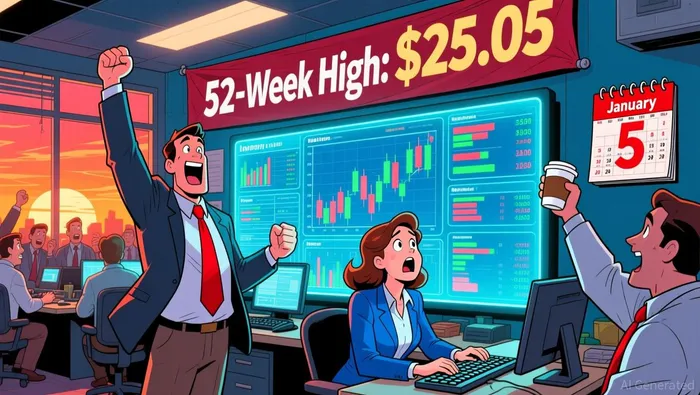
The stock's explosive move to a 52-week high of $25.05 on January 5 was a direct, tactical bet on a single event. That day, QXOQXO-- announced a $1.2 billion investment led by Apollo Global Management, structured as convertible preferred equity. This capital is not general war chest; it is a committed line of credit specifically earmarked to fund one or more qualifying acquisitions through July 15, 2026.
The setup is clear and urgent. The market is pricing in a binary outcome: QXO must execute its second major acquisition by that summer deadline to justify the valuation pop. The investment terms reinforce this timeline. The convertible preferred stock, which pays a 4.75% dividend, can be converted into common shares at an initial price of $23.25 per share. For the stock to rise meaningfully from here, QXO needs to announce a deal that validates its growth thesis and, crucially, demonstrates it can deploy this capital effectively.
The catalyst is a classic event-driven play. The $1.2 billion commitment provides the financial firepower, but the market is betting on the execution. As a source familiar with the deal noted, QXO is already in advanced stages of talks with potential targets. The stock's surge is a vote of confidence that the company will close a deal before the July clock runs out.
The Mechanics: A Pipeline of Targets and a Clear Timeline
The funding deal provides the capital, but the execution hinges on a tight timeline and a crowded pipeline. QXO is in advanced stages of talks with seven potential targets, a mix of mid-sized ($1B-$5B revenue) and transformational ($5B-$20B revenue) deals. This is a classic roll-up playbook, and the company's chief investment officer has signaled the next move: "probably select one, maybe two, between now and July". The clock is now set.
The mechanics are straightforward. The $1.2 billion commitment is tied directly to a July 15, 2026, deadline to sign a definitive acquisition agreement. If QXO hits that date, the capital is unlocked. The agreement also includes a 12-month extension option, but only if a deal is signed before the original July cutoff. This creates a binary event: a deal announcement before mid-summer would trigger the funding and likely sustain the stock's momentum. A failure to close by then would likely trigger a sharp re-rating, as the market's primary catalyst vanishes.
The company's stated target adds a layer of operational pressure. QXO aims to approximately double EBITDA within three to five years through integration and cost management. This sets a high bar for any new acquisition. The market is betting that QXO can not only find a deal but also execute the post-merger plan to deliver that kind of leverage. The pipeline of seven targets, described as being at attractive valuations amid a softer macro backdrop, provides options. Yet the selection process itself is a risk. Choosing the wrong target or overpaying could undermine the very EBITDA growth thesis the capital is meant to fund.
The bottom line is a high-stakes race against the clock. The stock's surge priced in a successful close. Now, the focus shifts to the quality of the deal QXO selects and its ability to hit the July deadline. Any stumble in the talks or a delay in signing would quickly deflate the current valuation.
The Setup: Risk/Reward at the Deadline
The stock's current price of $25.00 reflects a market that has already priced in a successful close. With a 29.6% year-to-date gain and a 55.6% rolling annual return, the momentum is significant. The recent surge to a 52-week high was the initial bet on the catalyst. Now, the setup is binary: the stock must hold its ground or climb further on the news of a deal, or it will face a sharp re-rating if the July deadline passes without one.
The mechanics of the convertible preferred stock add a layer of risk for existing shareholders. The new shares carry a 4.75% dividend and will convert into common equity at an initial price of $23.25 per share upon a qualifying acquisition. This conversion is dilutive. If QXO closes a deal, the capital is deployed, but the share count will increase, potentially capping the upside from the acquisition's synergies. The market is paying for the option to buy the stock at $23.25, which is below the current price, but that option is contingent on execution.
The primary near-term risk is simple: failure to announce a definitive acquisition agreement by the July 15, 2026 deadline. The agreement includes a 12-month extension option, but only if a deal is signed before that date. Missing the hard deadline would likely trigger a rapid reassessment of the stock's valuation, as the primary catalyst vanishes. The company's stated target to approximately double EBITDA within three to five years through integration adds pressure. The market is betting QXO can find a deal that not only fits the timeline but also delivers on that ambitious growth target.
The immediate next event is the announcement of a definitive acquisition agreement. Given the company is in advanced stages of talks with seven targets, the next few weeks will be critical for confirming which deal is selected. The clock is now set for mid-July. For the stock to sustain its momentum, QXO must move from talks to a signed deal before the deadline. Any delay or stumble in the process would quickly deflate the current valuation.





Comentarios
Aún no hay comentarios