
The Quiet Revolution in Healthcare Tech: Investing in ICU Innovation and Patient-Centric Solutions
The Market's Digital Leap: From Analog to AI
The ICU digital transformation market is no longer a niche segment but a cornerstone of global healthcare infrastructure. By 2030, the global digital transformation market is projected to reach $4.6 trillion, per the same Grand View Research report, with tele-ICU adoption alone accounting for 42.8% of the North American market, according to a tele-ICU market report. This growth is underpinned by technologies like Philips' eICU platform, which uses predictive algorithms to prioritize patient interventions, as noted in that tele-ICU market report, and Oracle's next-gen EHR system, which embeds AI-driven voice interfaces to streamline clinical workflows according to a Yahoo Finance analysis.
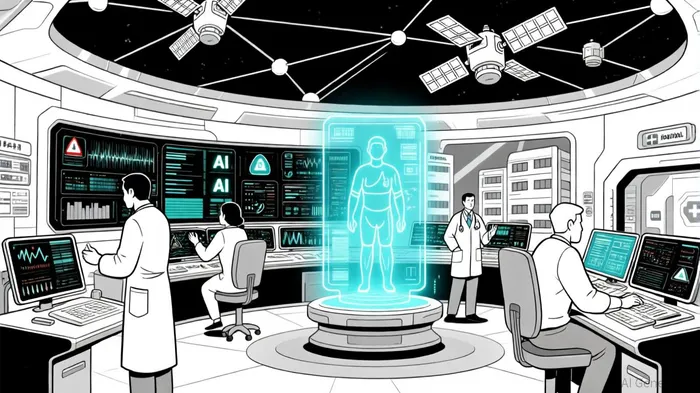
Tele-ICU solutions, in particular, have emerged as a lifeline for hospitals grappling with intensivist shortages. These systems enable real-time monitoring of ICU patients from centralized hubs, reducing mortality rates by up to 30% in rural hospitals, according to a Remote ICU post. For investors, the appeal lies in their scalability: a single tele-ICU team can oversee multiple facilities, democratizing access to high-quality critical care.
Key Players: Who's Building the Future of Critical Care?
The race to dominate this space is being led by a mix of tech giants and specialized healthcare firms. Epic Systems remains the market leader in hospital information systems, with its cloud-based platforms enabling real-time data sharing across care teams, according to that Yahoo Finance analysis. Meanwhile, Oracle is disrupting the EHR space with its voice-first, AI-enhanced system, which is expected to enter production in 2025 per the same analysis.
In the tele-ICU niche, Philips and HCA Healthcare are setting benchmarks. Philips' eICU platform combines machine learning with remote monitoring to predict sepsis and organ failure, as noted in the tele-ICU market report, while HCA's rapid adoption of AI-driven solutions has positioned it as a leader in high-acuity care according to a Research and Markets article. On the AI front, Sphere is making waves with its OrgBrain platform, which uses generative AI to optimize hospital operations while safeguarding patient data, as described in a PR Newswire release.
Regulatory Tailwinds and Capital Flows
Regulatory developments in 2023–2025 have accelerated adoption. The U.S. Centers for Medicare & Medicaid Services (CMS) has incentivized telehealth through its "digital front door" initiatives, according to a Mordor Intelligence report, while the FDA's 2025 clearance of ICU Medical's Plum Solo IV pump highlights the agency's openness to innovation, as noted in a Simply Wall Street note. However, challenges persist: data privacy concerns and high upfront costs remain barriers, particularly for rural hospitals, as outlined in a Samanvay Hospital overview.
Capital flows reflect the sector's promise. Tenet Healthcare has allocated $875–975 million in 2025 for capital expenditures, including new facilities equipped with advanced ICU tech, according to a Seeking Alpha report. Similarly, ICU Medical has outperformed earnings expectations, buoyed by its FDA-cleared IV pump and strategic cost mitigation efforts, as noted in that Simply Wall Street note.
The Investment Thesis: Balancing Risks and Rewards
While the sector's growth is undeniable, investors must navigate risks. Tariff pressures on ICU Medical's supply chain have been highlighted in an Investing.com report and the high cost of AI integration may temper short-term gains, a concern raised in the Samanvay Hospital overview. Yet, the long-term outlook is compelling:
- Scalability: Tele-ICU platforms can serve multiple facilities, creating recurring revenue streams.
- Regulatory Tailwinds: CMS and FedRAMP initiatives are reducing adoption friction, as noted in the Mordor Intelligence report.
- Demographic Drivers: By 2030, 20% of the U.S. population will be over 65, driving demand for ICU services, according to the Grand View Research report.
For those willing to weather near-term volatility, the rewards are substantial. Sphere's partnership with the National Health Council, described in the PR Newswire release, and Philips' AI-driven predictive analytics, highlighted in the tele-ICU market report, are just two examples of how innovation is translating into competitive moats.
Conclusion: A Quiet Revolution with Explosive Potential
The ICU innovation wave is not a fleeting trend but a structural shift in healthcare delivery. As AI, IoT, and telemedicine converge, the sector is creating a new paradigm where patient outcomes and operational efficiency are no longer mutually exclusive. For investors, the key is to identify companies that balance technological prowess with regulatory agility-those that can scale solutions without compromising on data security or clinical efficacy.
In this rapidly evolving landscape, the winners will be those who recognize that the future of critical care isn't just about saving lives-it's about redefining how we deliver care in the digital age.







Comentarios
Aún no hay comentarios