
The Quiet Power of Whitelists: How Early Access Drives Meme Coin Success in 2026
In 2026, the memeMEME-- coin landscape has evolved beyond viral hashtags and social media frenzy. Investors are now prioritizing strategic early positioning and structured tokenomics to capitalize on the next wave of meme-driven opportunities. At the heart of this shift lies the whitelist system, a mechanism that not only rewards early adopters but also creates a self-reinforcing cycle of FOMO (fear of missing out) and community-driven growth. Projects like APEMARS and Apeing are redefining success in the meme coin space by combining narrative-driven storytelling with engineered scarcity and high-yield incentives, outpacing traditional meme coins like Dogecoin and Pepe.
The Strategic Edge of Whitelists
Whitelists have become a cornerstone of 2026 meme coin strategies, offering early access to limited-stage token allocations at deeply discounted prices. For instance, Apeing grants whitelist participants entry to Stage 1, where tokens are priced at $0.0001, a fraction of the projected listing price of $0.001. This creates a 10× advantage for early buyers, reducing competition and amplifying scarcity-driven momentum according to Apeing's presale model. Similarly, APEMARS leverages its whitelist to secure priority access for early participants, locking in tokens at $0.00002066 during Stage 2, with a projected listing price of $0.0055-a potential 26,500% ROI as reported in their presale announcement.
These structured entry points are not mere marketing tactics; they are psychological triggers. By limiting supply and access, projects create urgency, compelling investors to act before public listings. This dynamic is particularly potent in a market where FOMO drives 70% of meme coin surges.
Tokenomics and Scarcity: A New Paradigm
Traditional meme coins like Dogecoin and Pepe rely on viral social momentum but lack the structural safeguards of newer projects. Dogecoin's inflationary model, for example, produces 14.4 million new coins daily, diluting value over time according to Bitget analysis. PepePEPE--, while leveraging deflationary burns, remains dependent on fleeting internet trends. In contrast, APEMARS and Apeing embed scarcity into their tokenomics.
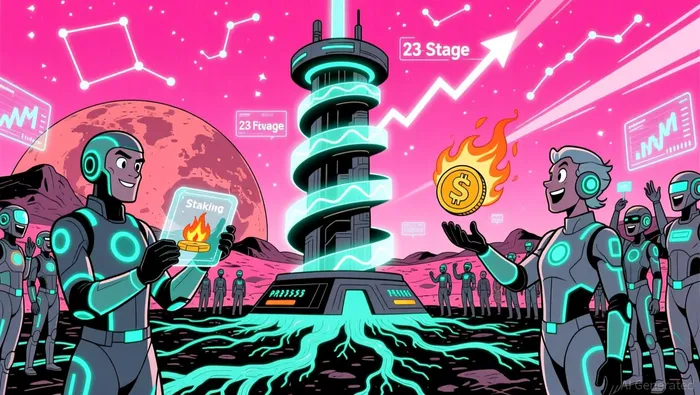
APEMARS executes burn events at Stages 6, 12, 18, and 23 of its presale, systematically reducing supply to drive scarcity as detailed in their whitepaper. It also offers 63% APY staking rewards and a 9.34% referral incentive, creating a flywheel effect where early participants are rewarded for both holding and promoting the token according to their presale terms. Apeing, meanwhile, structures its token allocation to ensure early-stage participants receive a disproportionate share of gains, with Stage 1 tokens priced at $0.0001 versus later-stage prices that could reach $0.001 as noted in their presale details.
These mechanisms contrast sharply with the speculative nature of DogecoinDOGE-- and Pepe, where value is dictated by unpredictable social trends rather than engineered scarcity.
Community Momentum vs. Viral Hype
Community growth metrics further highlight the divide between structured projects and traditional meme coins. APEMARS and Apeing foster engaged, incentive-aligned communities through staking programs, referral systems, and narrative-driven storytelling. APEMARS, for instance, frames its presale as a 23-stage mission to Mars, with each stage unlocking new milestones and burn events according to their presale announcement. This narrative not only attracts early adopters but also sustains long-term interest.
In contrast, Dogecoin and Pepe rely on viral social media engagement, which is volatile and hard to sustain. While Pepe saw a 70% surge in early 2026, its gains were concentrated in a narrow window, leaving latecomers with missed opportunities as reported by MEXC. APEMARS and Apeing, by contrast, offer predictable growth pathways through their structured presales and staking rewards, reducing reliance on speculative timing according to their presale roadmap.
FOMO and the Psychology of Early Positioning
The psychological impact of FOMO is amplified by the limited availability of early-stage tokens. APEMARS's 23-stage presale, for example, creates a sense of urgency as each stage raises the token price, incentivizing early participation according to market analysis. Similarly, Apeing's 10× advantage in Stage 1 ensures that latecomers face higher entry costs and reduced ROI potential as detailed in their presale terms.
This dynamic is particularly evident in Q4 2025, where Dogecoin's consolidation phase highlighted the risks of FOMO-driven buying at peak frenzy according to MEXC reporting. Investors who missed early-stage opportunities in Apeing or APEMARS are now left scrambling for access, a pattern that has historically defined meme coin cycles as noted in OpenPR analysis.
Conclusion: Why Whitelists Matter for 2026 Investors
The 2026 meme coin market is no longer a game of luck. Success hinges on strategic early positioning through whitelists, structured tokenomics, and community-driven incentives. Projects like APEMARS and Apeing demonstrate how these elements can create predictable, high-ROI opportunities, outperforming traditional meme coins that rely on viral hype. For investors, the lesson is clear: securing whitelist access is not just about getting in early-it's about locking in the structural advantages that define the next generation of meme coin success.






Comentarios
Aún no hay comentarios