
Quantum-Ready Hardware Wallets: A Strategic Bet on Crypto Security and Self-Custody
The Quantum Threat: A Timely Wake-Up Call
Quantum computing's ability to solve complex mathematical problems exponentially faster than classical systems poses a direct risk to elliptic curve cryptography (ECC), the backbone of Bitcoin's security. According to a 2017 Bitcoin Quantum Paper, as few as 2,300 logical qubits could crack Bitcoin's encryption. While large-scale quantum computers remain aspirational, the "harvest now, decrypt later" threat is already real: adversaries are stockpiling encrypted data today, waiting for the quantum breakthrough to exploit it, according to a Silicon Trust analysis.
The timeline is tightening. Charles Edwards, a leading crypto analyst, warns that quantum-resistant upgrades could take 6–12 months to implement, urging action by 2026, as reported by CoinPedia. Meanwhile, global investment in quantum research is surging, with China outpacing the U.S. by a 2:1 ratio, according to the same CoinPedia report. This arms race underscores the need for proactive infrastructure investment.
Post-Quantum Standards: A New Cryptographic Era
The National Institute of Standards and Technology (NIST) has delivered a critical milestone in this transition. By August 2024, NIST finalized three post-quantum cryptographic (PQC) algorithms-CRYSTALS-Kyber (ML-KEM), CRYSTALS-Dilithium (ML-DSA), and SPHINCS+ (SLH-DSA)-as FIPS 203, FIPS 204, and FIPS 205, as noted in the Silicon Trust analysis. These algorithms, based on lattice and hash mathematics, are designed to resist quantum attacks. Microsoft has already integrated ML-KEM and XMSS into its SymCrypt library, with plans to expand support for ML-DSA and SLH-DSA, as described in a Microsoft blog post.
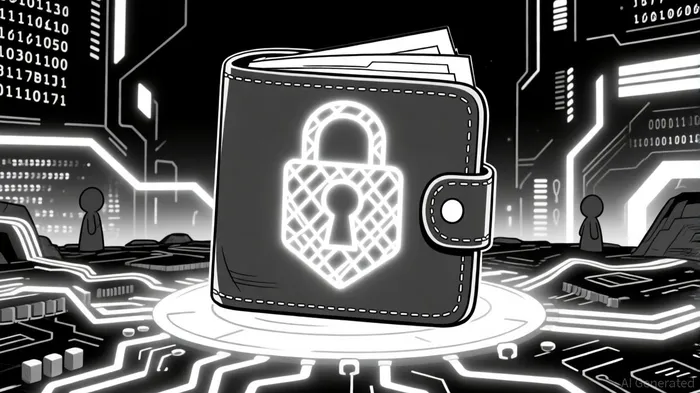
Trezor Safe 7: The Quantum-Ready Vanguard
Trezor Safe 7, launched in 2025, is a quantum-resistant hardware wallet that exemplifies this new era. Its hybrid bootloader allows seamless integration of post-quantum algorithms as standards evolve, ensuring long-term compatibility, as noted in coinotag's coverage. The device's open-source TROPIC01 secure element-a first in the industry-enables community audits, addressing long-standing trust issues in proprietary hardware, according to a Cryptopolitan article.
The market is responding. With crypto thefts reaching $2.17 billion by mid-2025 (23% from personal wallet compromises), demand for quantum-ready tools is surging. Trezor reports a 20–30% annual growth in hardware wallet adoption, driven by both individual users and institutional players seeking privacy and control. The Safe 7's global expansion into markets like India and Brazil further highlights its strategic positioning.
Bitcoin's Maturity and the Self-Custody Paradox
Bitcoin's maturation has created a paradox. While whales are increasingly moving assets into regulated ETFs for tax efficiency and convenience, a Cointelegraph article reports, retail investors are doubling down on self-custody. This shift is fueled by rising privacy concerns and the realization that quantum threats could invalidate centralized custodial models. Trezor Safe 7's focus on auditable security and open-source transparency aligns perfectly with this trend, according to a FinanceFeeds article.
Strategic Investment Thesis: Infrastructure for the Quantum Age
For long-term investors, quantum-ready hardware wallets represent a dual opportunity:
1. Security Premium: As quantum threats materialize, early adopters of PQC infrastructure will command a premium for future-proofing assets.
2. Network Effects: Hardware wallets like Safe 7 are building ecosystems (e.g., partnerships with IETF for TLS protocols, as noted by Microsoft) that could become critical nodes in the post-quantum internet.
The risks are non-trivial-performance trade-offs and legacy system integration challenges remain, as outlined in the Silicon Trust analysis. However, the cost of inaction is higher. As a Morningstar article shows, Google's Willow quantum chip demonstrates 13,000x speed advantages in specific algorithms, and the window to act is closing.
Conclusion: A Quantum Leap in Crypto Infrastructure
Quantum computing is no longer a speculative threat but an imminent reality. Trezor Safe 7 and similar innovations are not just products-they are infrastructure bets against a future where quantum-safe cryptography is the norm. For investors, the lesson is clear: securing digital assets in the quantum age requires more than vigilance; it demands strategic investment in the tools that will define the next decade of crypto.






Comentarios
Aún no hay comentarios