
Quantum-Proof Finance: Early-Mover Advantages in Quantum-Resistant Asset Classes
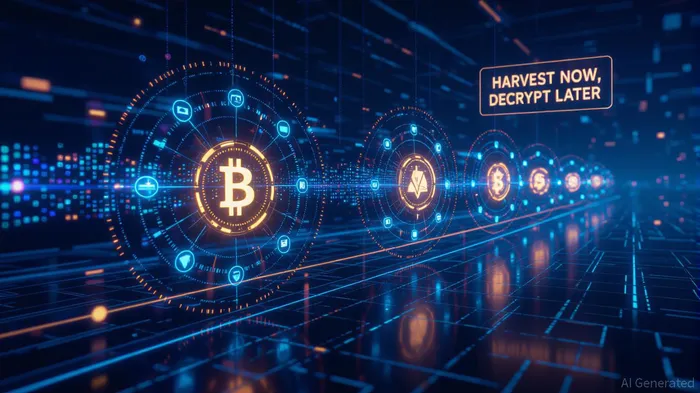
The financial sector stands at a crossroads. Quantum computingQUBT--, once a theoretical marvel, is now a tangible force reshaping risk modeling, fraud detection, and encryption. Yet, this same technology threatens to unravel the cryptographic foundations of modern finance. For investors, the race to adopt quantum-resistant solutions is no longer hypothetical—it is a strategic imperative. Early movers in quantum-safe finance are not only mitigating existential risks but also unlocking unprecedented opportunities in asset classes designed to thrive in the quantum era.
The Dual Edge of Quantum Computing
Quantum computing's potential to revolutionize finance is already being realized. Turkish bank Yapı Kredi, for instance, leveraged D-Wave's quantum systems to analyze systemic risks among small- and medium-sized enterprises in just seven seconds—a task that would traditionally take years[1]. Similarly, Italian bank Intesa Sanpaolo improved fraud detection accuracy using IBM's variational quantum circuit (VQC)-based classifiers[1]. These applications highlight quantum computing's power to optimize financial operations.
However, the same technology poses a dire threat. Algorithms like Shor's could render RSA, DSA, and ECC obsolete, exposing sensitive data to the “harvest now, decrypt later” strategy, where adversaries store encrypted information today to decrypt it when quantum capabilities mature[2]. The U.S. and EU governments have recognized this risk, mandating transitions to post-quantum cryptography (PQC) standards[2]. For investors, the message is clear: quantum resistance is no longer optional—it is a survival mechanism.
Quantum-Resistant Asset Classes: The New Frontier
The urgency of quantum threats has spurred innovation in quantum-resistant asset classes. Tokenized gold, for example, is being secured with post-quantum cryptography (PQC) and quantum random number generators (QRNG), as demonstrated by HSBC's quantum-safe transactions[1]. Beyond commodities, intellectual property (IP) platforms like Kaleido are tokenizing patents, democratizing access to quantum-protected innovations[3]. Carbon credits, infrastructure projects, and even fractional ownership of luxury assets (e.g., rare watches) are being tokenized on quantum-resistant blockchains, offering investors diversified exposure to a post-quantum economy[3].
The market for these assets is growing rapidly. By 2025, the quantum-resistant blockchain market is projected to outperform traditional blockchains, with quantum-ready projects showing a 40% better retention rate during market downturns[4]. Venture capital funding for non-quantum-resistant Layer 1 blockchains has declined by 23%, signaling a shift toward crypto-agile ecosystems[4]. Projects like QANplatform, IOTAIOTA--, and AlgorandALGO--, which have adopted lattice-based or hash-based cryptographic methods, are leading this transition[4].
Regulatory Tailwinds and Market Dynamics
Regulatory developments further amplify the investment case. The U.S. National Institute of Standards and Technology (NIST) has finalized quantum-resistant standards, including CRYSTALS-Kyber and SPHINCS+, and is urging federal agencies to adopt hybrid cryptographic models during the transition[5]. These standards are expected to drive global adoption, with the quantum cryptography market projected to grow from $170.46 million in 2024 to $778.87 million by 2033[6].
Investors must act swiftly. The “harvest now, decrypt later” threat model means that data encrypted today could be compromised in the future[2]. Early adopters, such as HSBCHSBC-- and Intesa Sanpaolo, are already integrating quantum-safe protocols, securing their positions in a market where compliance and security will soon be non-negotiable[1].
Strategic Investment Imperatives
For investors, the path forward is clear: prioritize quantum-resistant assets with proven implementations over theoretical roadmaps. Projects like QANplatform and Algorand, which have already integrated NIST-standardized algorithms, offer tangible exposure to the quantum-safe future[4]. Diversification across cryptographic methods (e.g., lattice-based, hash-based) and asset classes (e.g., tokenized gold, carbon credits) can mitigate risks while capitalizing on sector-specific growth.
Moreover, regulatory alignment is critical. The U.S. government's mandate for PQC adoption in national security systems[5] and the EU's push for quantum-safe infrastructure[2] signal a global shift. Investors who align with these frameworks will not only future-proof their portfolios but also gain a first-mover advantage in a market poised for exponential growth.
Conclusion
Quantum computing is a double-edged sword for finance. While it unlocks transformative capabilities, it also threatens to destabilize the cryptographic systems underpinning global markets. For investors, the solution lies in quantum-resistant asset classes—innovative, secure, and future-proof. Early adopters are already reaping rewards, from enhanced security to regulatory compliance and market resilience. As the quantum era accelerates, the window for strategic entry is narrowing. The question is no longer if to invest in quantum-safe finance—but how soon.





Comentarios
Aún no hay comentarios