
The Quantum Leap: High-Conviction Investment Opportunities in QUBIT Semiconductors and Quantum Computing
The QUBIT semiconductor market is on the cusp of a seismic shift, with its value projected to surge from , fueled by a blistering according to market analysis. This isn't just another tech trend-it's a foundational shift in computing power, driven by quantum semiconductors that promise to revolutionize industries from artificial intelligence to aerospace. For investors, the question isn't whether to get involved, but how to position early in a sector where the winners could deliver exponential returns.
The Quantum Catalyst: Market Drivers and Breakthroughs
The growth of QUBIT semiconductors is being turbocharged by three pillars: 's rise in AI, aerospace's demand for high-speed data processing, and government-backed R&D. According to a report by ResearchAndMarkets, quantum semiconductors-built using nanotechnology to create ultra-thin chips-are enabling quantum computers to process complex datasets with minimal circuitry, making them indispensable for advanced automation in aerospace and scientific research.
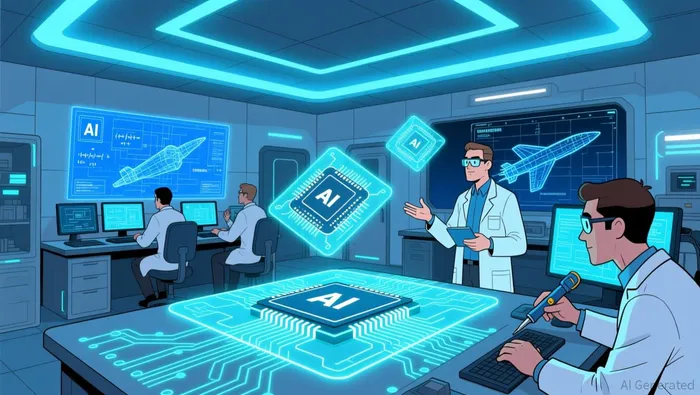 Recent advancements in qubit technologies are equally compelling. , , and are now pushing the boundaries of coherence times and error correction, with companies like IBM and Google leading the charge. IBM's roadmap to a 1,000-qubit system and Google's Willow chip (with 105 physical qubits) underscore the industry's commitment to scalable quantum computingQUBT--. Meanwhile, the U.S. and the EU's are injecting billions into R&D, ensuring that innovation doesn't stall according to industry analysis.
High-Conviction Plays: Xanadu, IBMIBM--, and the Startup Ecosystem
While giants like IBM dominate headlines, the real fireworks are happening in the startup arena. Xanadu, a pioneer, has emerged as a standout. Its collaboration with HyperLight to develop photonic chips using (TFLN) has set new benchmarks: . These chips operate at room temperature, eliminating the need for costly cryogenic infrastructure-a game-changer for scalability. Xanadu's recent advancement to Stage B of DARPA's , , further validates its potential according to HPC Wire.
But Xanadu isn't alone. Startups like Cerebras Systems SandboxAQ (combining AI and quantum tech for life sciences and cybersecurity) are redefining the landscape according to industry reports. In the semiconductor space, and are addressing critical pain points: Qiskit's open-source platform democratizes quantum computing, while Q-Ctrl's error-correction tools are vital for aerospace applications.
Applications: From AI to Aerospace and Beyond
The real-world applications of QUBIT semiconductors are staggering. In AI, quantum computing could accelerate machine learning models by orders of magnitude, enabling real-time decision-making in fields like finance and healthcare. For aerospace, quantum simulations are already optimizing fuel efficiency and material testing, according to market forecasts, with companies like Boeing and Lockheed Martin investing heavily. Even for smartphones and industrial panels are benefiting from quantum semiconductors' ability to process light at unprecedented speeds according to market analysis.
Risks and Rewards: Navigating the Hype
No sector this nascent is without risks. High development costs, technical hurdles in , and the reliance on rare materials like germanium are real challenges. However, the post-COVID-19 resurgence in quantum R&D and the influx of venture capital (and government funding) suggest these barriers are surmountable. For investors, the key is to focus on companies with clear roadmaps (like Xanadu's 2029 utility-scale quantum computer goal) and diverse applications across AI, aerospace, and materials science.
Conclusion: The Time to Act Is Now
The QUBIT semiconductor market is a high-stakes, high-reward arena. , this isn't a speculative bet-it's a calculated move into the future of computing. For those willing to navigate the technical complexities and invest in pioneers like Xanadu, IBM, and the next-gen startups, the upside is nothing short of transformative.





Comentarios
Aún no hay comentarios