
Quantum Corporation's Securities Lawsuit: A Risk Assessment and Strategic Outlook for Long-Term Investors
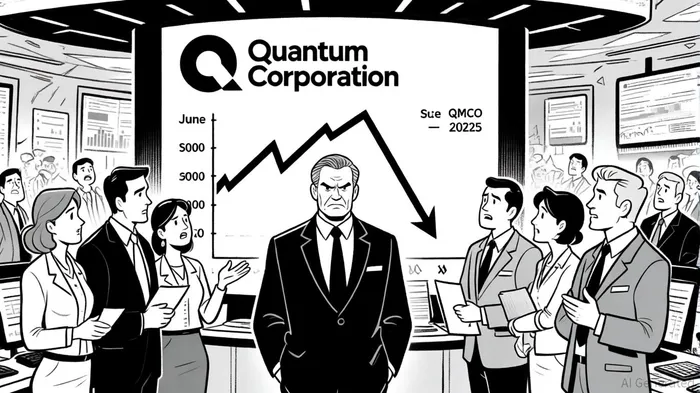
Quantum Corporation (NASDAQ: QMCO) has become a focal point for investor scrutiny following a cascade of legal, financial, and governance crises in 2025. A securities class action lawsuit alleges systemic misstatements in its financial reporting, including improper revenue recognition during the fiscal year ending March 31, 2025, which necessitated restating its Q3 2024 financials by $3.9 million [1]. These revelations, coupled with delayed SEC filings and a CEO resignation, have triggered significant stock price declines and raised urgent questions about the company's long-term viability. For long-term investors, the challenge lies in balancing the risks of ongoing litigation and operational instability against potential strategic pivots.
Risk Assessment: Legal, Financial, and Governance Vulnerabilities
Quantum's legal exposure is substantial. Multiple law firms, including Faruqi & Faruqi and Glancy Prongay & Murray LLP, are pursuing class-action lawsuits on behalf of investors who purchased QMCOQMCO-- securities between November 15, 2024, and August 18, 2025 [2]. The lead plaintiff deadline of November 3, 2025, underscores the urgency for shareholders to evaluate their legal recourse. The lawsuits hinge on allegations that QuantumQMCO-- inflated revenue figures and failed to disclose internal control deficiencies, misleading investors about its financial health [3].
Financially, the company's Q3 2025 results reveal a mixed picture. While revenue rose to $72.6 million and adjusted EBITDA turned positive at $4.7 million, a GAAP net loss of $71.4 million—driven by a $61.6 million non-cash charge for warrant liability adjustments—exposes structural weaknesses [4]. Quantum's liabilities now exceed its assets, with $105.9 million in term debt and $37.5 million in revolver debt, despite holding only $20.6 million in cash [4]. This liquidity crunch, combined with Nasdaq compliance issues stemming from delayed 10-Q filings, raises concerns about its ability to meet regulatory and operational obligations [5].
Governance risks further compound these challenges. The abrupt resignation of CEO Lewis W. Moorehead in August 2025, following an internal financial review, triggered an 8.2% stock price drop and eroded investor confidence [1]. The lack of a clear succession plan and ongoing legal scrutiny suggest a leadership vacuum that could hinder strategic execution.
Strategic Response: Pathways to Recovery
Quantum's management has outlined several initiatives to address these crises. A Standby Equity Purchase Agreement with Yorkville, a private equity firm, aims to reduce debt and secure capital for operations [4]. While this partnership could stabilize liquidity, it also risks diluting existing shareholders. Additionally, the company's focus on subscription-based revenue—up 29% year-over-year to $21.3 million—signals a pivot toward recurring income streams, which may provide long-term resilience [4].
However, the success of these strategies depends on resolving the legal and regulatory hurdles. Quantum must file its delayed 10-Q for Q2 2025 by September 15, 2025, to avoid Nasdaq delisting [5]. Failure to do so could trigger further stock price declines and limit access to capital markets. Investors should monitor the company's compliance progress and the outcomes of the ongoing lawsuits, which could result in substantial penalties or restructuring mandates.
Implications for Long-Term Investors
For long-term investors, Quantum presents a high-risk, high-reward scenario. The company's technological strengths in data storage and its pivot to subscription models offer growth potential, but these must be weighed against the immediate threats of litigation, debt burdens, and governance instability. Diversification and hedging strategies—such as short-term options or legal claims participation—could mitigate downside risks while the company navigates its challenges.
In conclusion, Quantum's securities lawsuit and financial turmoil demand a cautious, informed approach. While the company's strategic initiatives and subscription revenue growth are promising, the path to recovery hinges on resolving legal disputes, restoring governance credibility, and demonstrating sustainable profitability. Investors who retain shares should closely track these developments and consider legal consultation to protect their interests.





Comentarios
Aún no hay comentarios