
Quanex Building Products and the Risks of Securities Misconduct: How Class-Action Lawsuits Signal Governance and Financial Instability for Investors
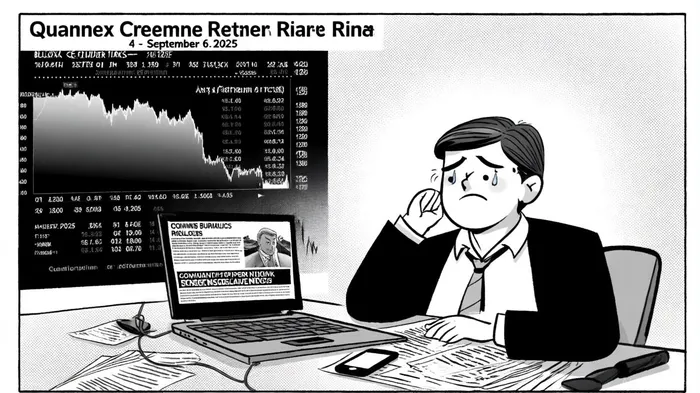
The recent class-action lawsuit against QuanexNX-- Building Products Corporation (NYSE: NX) underscores a critical warning for investors: securities misconduct and governance failures often manifest through legal challenges that signal deeper operational and financial instability. According to a report by the Law Offices of Frank R. Cruz, a securities fraud lawsuit was filed in the U.S. District Court for the District of Connecticut on September 5, 2025, alleging that Quanex and its executives misled investors about the company's financial health during the period of December 12, 2024, to September 5, 2025 [1]. The lawsuit specifically highlights operational failures at Quanex's Tyman window and door hardware facility in Mexico, which were described as “underinvested” and had degraded to “near catastrophic” levels [1].
The Governance Red Flags in Quanex's Case
Class-action lawsuits are not merely legal events; they are often symptoms of systemic governance flaws. Academic research indicates that securities class actions typically reveal issues such as accounting fraud, mismanagement, and lack of transparency, particularly in sectors like manufacturing and construction [2]. In Quanex's case, the company's delayed disclosure of operational challenges at Tyman—until its September 4, 2025, financial report—exposes a failure in executive oversight and risk communication. The report noted that Quanex's diluted earnings per share (EPS) plummeted to ($6.04) in Q3 2025, a stark contrast to the $0.77 EPS in the prior year [1]. This discrepancy, coupled with the CEO's admission that Tyman's issues reduced EBITDA by nearly $5 million, highlights a breakdown in internal controls and accountability.
The market reacted swiftly to these revelations. Quanex's stock price dropped 13.1% to $18.18 per share on September 5, 2025, and fell further by 10.9% the following day [1]. Such volatility aligns with empirical data showing that securities class actions trigger an average abnormal return drop of 12.3% in the 40-day window around filing [2]. This pattern suggests that investors are increasingly attuned to governance risks, punishing companies that fail to meet transparency standards.
Broader Implications for Corporate Governance
Quanex's situation mirrors broader trends in corporate governance failures. For instance, a 2024 class-action lawsuit against 40 top private universities and the College Board alleged price-fixing in financial aid policies, raising tuition costs by $6,200 for students from divorced or separated families [3]. Similarly, corporate scandals like Wirecard's $2 billion fraud and Volkswagen's emissions deception demonstrate how weak oversight and ethical lapses can erode investor trust and trigger financial instability [4]. These cases emphasize that governance failures are not isolated incidents but systemic risks that require proactive mitigation.
For Quanex, the legal scrutiny extends beyond the initial lawsuit. Glancy Prongay & Murray LLP and the Pomerantz Law Firm are separately investigating the company for potential securities fraud, signaling a growing consensus among plaintiffs' attorneys about the severity of the misconduct [1]. This multiplicity of lawsuits increases the likelihood of reputational damage, which, as noted in governance studies, often persists even if cases are dismissed [2].
Financial and Strategic Risks for Investors
The financial consequences of class-action lawsuits are profound. In 2024, the top 10 settlements in class-action litigation totaled $42 billion, with PFAS-related cases dominating the landscape [5]. While Quanex's legal exposure is not yet quantified, the company's operational shortfall and declining stock price suggest immediate financial strain. Additionally, the costs of defending multiple lawsuits, potential settlements, and reputational harm could further destabilize Quanex's balance sheet.
Investors should also consider the long-term strategic risks. Governance failures often lead to reduced profitability and increased operational expenses, as firms divert resources to legal and PR efforts [2]. For Quanex, the Tyman facility's operational degradation—attributed to underinvestment—raises questions about management's ability to execute its business strategy. If the company cannot address these issues, its competitive position in the building products sector may weaken, compounding financial risks.
A Call for Vigilance in Investment Decisions
The Quanex case serves as a cautionary tale for investors. Securities class actions are not just legal hurdles; they are signals of governance weaknesses that can precipitate financial instability. As highlighted by corporate governance experts, boards must prioritize compliance programs, risk assessments, and transparency to mitigate such risks [2]. For Quanex, the path forward will require not only resolving the legal challenges but also rebuilding investor confidence through demonstrable governance reforms.





Comentarios
Aún no hay comentarios