
QUAI INVOLVED IN RUSSIAN-FRENCH PRISONER EXCHANGE OVER ESPIONAGE CHARGES
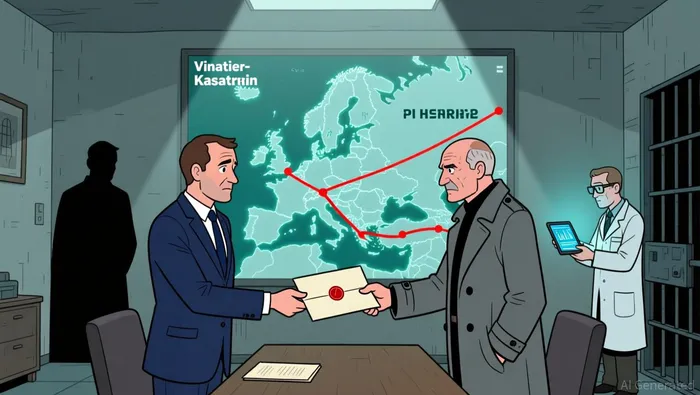
Laurent Vinatier, associated with Quai Network, was released from Russian custody in a prisoner exchange for Russian basketball player Daniil Kasatkin. Vinatier was arrested in June 2024 for failing to register as a foreign agent and espionage-related charges involving military data collection. The exchange occurred after French President Emmanuel Macron confirmed Vinatier's release, highlighting the role of diplomatic efforts in securing such outcomes.
Laurent Vinatier, a French political scholar, served a three-year sentence in Russia and faced additional espionage charges before his release. The prisoner exchange for Russian basketball player Daniil Kasatkin was confirmed by French President Emmanuel Macron, who expressed relief for Vinatier's return to France.
Vinatier's case is significant as it underscores the intersection of digital research and geopolitical tensions, particularly in countries with strict information control policies. The prisoner swap reflects broader patterns of diplomatic efforts between Russia and Western nations.
What Were the Charges Against Laurent Vinatier?
Vinatier was initially charged with failing to register as a foreign agent, a legal requirement for foreign nationals working in Russia. He was later accused of espionage, a criminal offense punishable by 10 to 20 years in prison. These charges were brought by Russian authorities under the premise of national security concerns.
The charges were based on Vinatier's work with the Centre for Humanitarian Dialogue, an organization focused on conflict resolution. Russian authorities reportedly deemed his research on military activities as a threat to national security. His case was reviewed by Russian President Vladimir Putin, who ultimately pardoned him.
How Did the Prisoner Exchange Occur?
The prisoner exchange was facilitated by Russia's Federal Security Service and took place on January 8, 2026, after 19 months of Vinatier's detention. The exchange involved Russian basketball player Daniil Kasatkin, who was being held in France under a U.S. extradition request.
French President Emmanuel Macron confirmed the release of Vinatier and the return of Kasatkin to Russia. The negotiations reportedly intensified after Russian President Vladimir Putin addressed the case during a press conference in late 2025. The prisoner swap marked a rare diplomatic move amid broader tensions between Russia and Western nations.
Kasatkin was arrested in 2022 by French authorities for allegedly hacking into a sports organization's systems. His lawyer claimed he had purchased a second-hand computer that had been used remotely by hackers without his knowledge. The exchange highlights the use of prisoner swaps as a tool for de-escalation in international relations.
What Are the Broader Implications of the Exchange?
The Vinatier-Kasatkin prisoner exchange is emblematic of the broader geopolitical tensions between France and Russia. The case reflects the strategic value of such diplomatic efforts in easing international conflicts. It also underscores the risks faced by international researchers and organizations operating in countries with strict information control policies.
For investors, the case is a reminder of how geopolitical events can impact global markets and international collaborations. While Quai Network is not a tradable asset, the organization's involvement highlights the intersection of digital research and national security concerns.
The prisoner exchange also demonstrates the ongoing use of diplomatic tools in managing international conflicts, particularly in regions where tensions remain high. The outcome of this exchange could influence future interactions between France and Russia, especially in the context of digital and academic research collaborations.







Comentarios
Aún no hay comentarios