
QNB and Mastercard's Expansion in Syria: A Strategic Bet on Emerging Financial Infrastructure Markets
The partnership between QNB Group, the largest financial institution in the Middle East and Africa, and MastercardMA-- to expand payment services in Syria represents a high-stakes gamble in a market poised for transformation. As Syria emerges from a decade of conflict, the collaboration aims to modernize its digital payments infrastructure, aligning with the country's broader economic recovery agenda. However, the long-term investment potential of this venture hinges on navigating a complex interplay of geopolitical risks, financial underdevelopment, and evolving regulatory frameworks.
Strategic Alignment and Market Access
QNB's granting of a Mastercard license to operate in Syria follows a memorandum of understanding (MoU) between Mastercard and the Central BankBANK-- of Syria in September 2025. This partnership enables QNB to offer Mastercard payment solutions-both locally and internationally-to individuals and businesses, positioning the bank as a key player in Syria's digital financial ecosystem. The initiative is framed as a catalyst for financial inclusion and economic modernization, with QNB emphasizing its commitment to "spearheading digital innovation" in the region.
Syria's financial infrastructure, however, remains underdeveloped. The country's banking sector faces liquidity shortages, outdated systems, and limited access to global capital markets according to the IMF. Despite these challenges, the Central Bank of Syria has prioritized digital transformation, partnering with entities like Visa to rebuild its payment systems. This creates a unique opportunity for QNB and Mastercard to capture market share in a sector where demand for secure, cross-border transactions is growing.
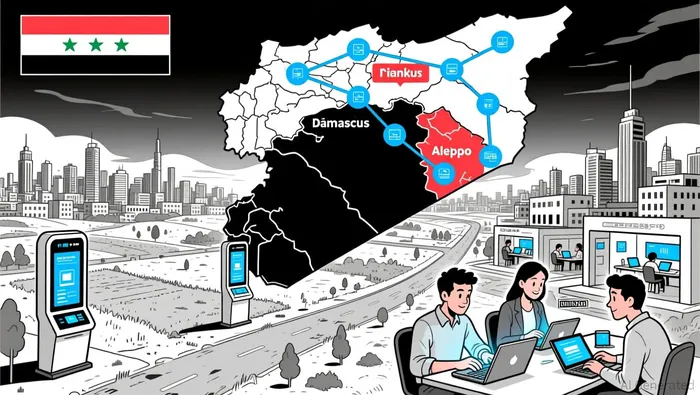
Economic Recovery and Structural Challenges
Syria's economy is projected to grow by 1% in 2025, a modest but significant recovery after years of decline. The government estimates that $216 billion is required to rebuild the country's infrastructure, far exceeding traditional donor aid capacity according to Arab Progress. This has shifted the focus toward private investment, with sectors like financial services seen as critical to economic reintegration.
Yet, structural risks persist. Currency depreciation, sanctions, and banking restrictions continue to hinder access to international finance. The IMF has noted that Syria's fiscal and monetary policies remain tight to maintain stability, but liquidity constraints and weak institutional capacity pose long-term challenges. For QNB and Mastercard, this means their success will depend on the government's ability to implement reforms that attract foreign capital while mitigating operational risks.
Digital Payment Adoption and Regional Trends
The expansion of digital payments in Syria is still in its early stages but shows promise. The easing of U.S. sanctions has enabled Syrians to access blockchain-based platforms like Binance Pay and engage in cross-border transactions. Additionally, the Central Bank of Syria's collaboration with Mastercard and Visa signals a strategic push to integrate the country into global financial networks.
Comparatively, Syria's digital payment adoption lags behind other emerging markets. In regions like Southeast Asia and Africa, mobile wallets and government-backed systems have driven rapid adoption. However, Syria's post-sanctions environment presents a unique case where digital finance could serve as a backbone for remittances and foreign investment according to ATMI. The challenge lies in scaling infrastructure while addressing security concerns and low consumer trust.
Investor Sentiment and Risk Mitigation
Investor confidence in Syria remains cautious. The World Bank highlights that sanctions, frozen assets, and restricted banking access continue to stifle trade and investment. Meanwhile, the UNCTAD 2025 report notes a global decline in foreign direct investment, compounding Syria's struggles to attract capital.
For QNB and Mastercard, the partnership's viability depends on mitigating these risks through strategic patience and regulatory alignment. The Syrian government's recent investment law and efforts to streamline regulatory frameworks are positive steps. However, sustained progress will require addressing liquidity issues and fostering regional cooperation, particularly with Türkiye and Gulf states according to Reuters.
Conclusion: A Calculated Long-Term Play
QNB and Mastercard's expansion into Syria is a calculated bet on a market with significant but uncertain potential. While the partnership aligns with Syria's economic modernization goals, the long-term success of this venture will depend on overcoming structural challenges, including sanctions, liquidity constraints, and underdeveloped infrastructure. For investors, the key takeaway is that Syria's financial infrastructure represents a high-risk, high-reward opportunity-one that requires a nuanced understanding of geopolitical dynamics and a commitment to long-term engagement.
As the country continues its path toward reintegration, the collaboration between QNB and Mastercard could serve as a blueprint for how global financial institutions navigate emerging markets in post-conflict environments.







Comentarios
Aún no hay comentarios