
Qatar's Surging Imports Signal Strengthening Economic Momentum
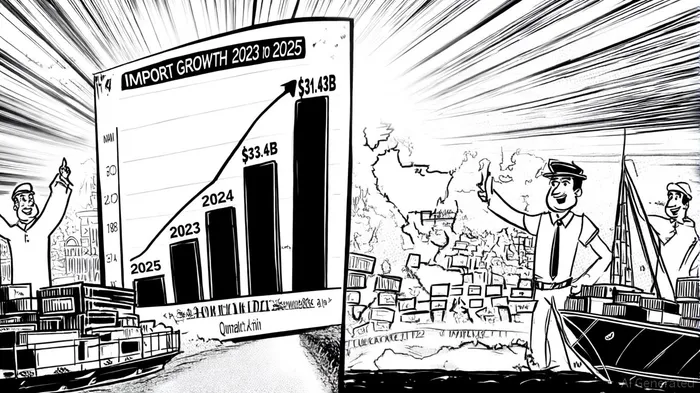
Qatar's import growth in 2024, reaching $33.4 billion, underscores a strategic shift toward economic diversification and global integration. According to data from Qatar Import Data 2023–2024, the emirate's import portfolio now includes critical sectors such as machinery (19.3%), electrical equipment (8.89%), and vehicles (6.03%) [1]. This surge reflects not only rising domestic demand but also the government's deliberate efforts to reduce reliance on hydrocarbons. For instance, India emerged as Qatar's largest import partner in 2024, contributing $4.56 billion in goods, followed by Italy ($4.4 billion) and Germany ($4.16 billion) [2]. These trends signal a broader realignment of trade relationships, with Asia accounting for 40.2% of total imports [3].
The economic diversification agenda, formalized under Qatar's Third National Development Strategy (2024–2025), is gaining traction. Foreign trade volume increased by 1.3% in 2024, with imports rising to QR130.319 billion (approximately $35.7 billion) from QR114.409 billion in 2023 [4]. This growth is driven by investments in non-oil sectors such as tourism, logistics, and financial services. The Qatar FinTech Strategy 2023 and the Qatar Investment Authority's $1 billion-plus venture capital fund of funds are pivotal in attracting global capital to emerging industries [5]. However, the mining and quarrying sector still dominates GDP at 37.1%, highlighting the need for sustained progress in diversification [6].
From an investment perspective, Qatar's import patterns reveal opportunities in infrastructure and technology. The demand for machinery and vehicles aligns with the expansion of logistics hubs like Hamad Port and the Doha Metro. Similarly, the procurement of arms and nuclear reactors ($2.93 billion in 2024) [2] suggests long-term investments in energy security and defense capabilities. For foreign investors, sectors such as renewable energy, smart infrastructure, and digital finance—supported by the National FinTech Strategy—present high-growth potential.
Challenges remain, however. While non-oil sectors are expanding, hydrocarbons still anchor the economy. To mitigate this, Qatar must accelerate private-sector participation and streamline regulatory frameworks. The government's focus on sustainable growth, as outlined in its 2025 strategy, provides a roadmap for balancing short-term stability with long-term resilience.
In conclusion, Qatar's surging imports are a barometer of its economic momentum and diversification ambitions. For investors, the country's strategic investments in infrastructure, technology, and global trade partnerships offer a compelling case for long-term engagement. As the Gulf's economic landscape evolves, Qatar's ability to leverage import-driven growth will be critical to its post-oil future.







Comentarios
Aún no hay comentarios