
Qatar's Strategic Geopolitical Role and Its Impact on Global Energy Markets
In a world where energy markets are as volatile as a stock tip on a hot summer day, Qatar has emerged as a linchpin of stability. The tiny Gulf nation isn't just pumping gas-it's orchestrating a masterclass in geopolitical strategy, economic foresight, and market dominance. Let's break down how Qatar's liquefied natural gas (LNG) juggernaut is reshaping energy security and diversification, and why investors should pay attention.
The LNG Expansion: A Game of Scale and Timing
Qatar isn't just playing the long game-it's rewriting the rules. By 2030, the country aims to nearly double its LNG production capacity to 142 million metric tons per annum (MTPA), a leap from 77 MTPA in 2024, according to a Baker Institute report. This isn't just about size; it's about timing. With the U.S. pausing new LNG export permits and Europe scrambling to replace Russian gas, Qatar's North Field East (NFE), North Field South (NFS), and North Field West (NFW) projects are positioning the nation to capture nearly 25% of the global LNG market by the end of the decade, according to a Modern Diplomacy analysis.
But here's the kicker: Qatar isn't just building capacity-it's locking in buyers. In December 2024, QatarEnergy inked a 27-year, 3.5 MTPA deal with Shell to supply the Netherlands via the Gate LNG terminal in Rotterdam, The Energy Year reported. Meanwhile, China's CNPC secured a 4 MTPA, 27-year contract with equity stakes in the NFE project, according to Columbia's Energy Policy Center. These long-term, oil-indexed deals are the bedrock of Qatar's strategy, ensuring stable revenue streams even as spot markets fluctuate.
Energy Security: Qatar's Global Partnerships in Action
Let's talk case studies. Europe's energy crisis post-2022 became Qatar's golden opportunity. Germany, the Netherlands, and France now rely on Qatari LNG to wean themselves off Russian imports, an OilPrice analysis warned. For example, Germany's long-term LNG deals with Qatar have provided a buffer against geopolitical shocks, while the Netherlands' ShellSHEL-- partnership ensures a steady flow of gas to its industrial heartland, Reuters reported.
Then there's India, a rising star in the LNG world. By 2025, India is projected to import 14–15 million metric tons of LNG from Qatar, bolstered by a 20-year contract extension for 7.5 MTPA, according to Pecos Operating. With India's demand set to surge as its economy grows, Qatar's proximity and low-cost production make it an ideal partner.
Even China, the world's largest LNG importer, is doubling down. A 27-year, 4 MTPA deal with CNPC isn't just about energy-it's a geopolitical chess move. China's appetite for cleaner energy and its desire to diversify away from coal make Qatari LNG a strategic asset, a Columbia report notes.
Navigating Risks: Oversupply and the Green Transition
Of course, no investment is without risks. Global LNG capacity is set to grow by 45% by 2030, with the U.S. and Qatar leading the charge, MEI research finds. This could lead to oversupply, squeezing prices and profitability. But Qatar isn't blind to this. It's diversifying its approach: while 75% of its new capacity remains uncontracted, the country is experimenting with medium-term and spot sales to stay agile, Natural Gas Intel reports.
And let's not ignore the green transition. While LNG is cleaner than coal, it's still fossil fuel. Qatar, however, is hedging its bets. The country is investing in carbon capture and storage (CCS), aiming to sequester 5 million tons of CO2 annually by 2025, Enkiai's analysis says. Plus, QatarEnergy's foray into solar projects-like a 1.25 GW plant in Iraq-shows it's not ignoring renewables, the ME Council reports.
The Bottom Line: A Strategic Bet for Investors
Qatar's strategy is a masterclass in balancing short-term gains with long-term vision. For investors, this means:
1. Energy Security Play: As Europe and Asia seek stable supplies, Qatar's LNG is a hedge against geopolitical volatility.
2. Market Dominance: With 142 MTPA by 2030, Qatar could outpace the U.S. and Australia, becoming the de facto global LNG leader.
3. Diversification: From oil-indexed contracts to spot sales and renewables, Qatar's multi-pronged approach mitigates risk.
But don't just take it from me. As Baker Institute notes, Qatar's expansion "redefines global energy dynamics," while Reuters highlights its "critical role in Europe's energy security." The numbers speak for themselves: Qatar's LNG exports hit 79 MTPA in 2024, already exceeding its 77 MTPA capacity, Gulf Times reports. 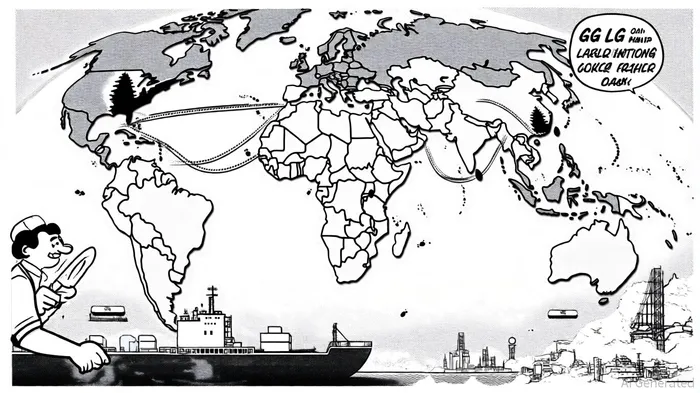





Comentarios
Aún no hay comentarios