
Qatar Islamic Bank Navigates Gulf Volatility with Resilient H1 Profit Growth
Amid ongoing geopolitical tensions and economic headwinds across the Gulf, Qatar Islamic Bank (QIB) has demonstrated remarkable resilience, reporting a 10% year-on-year profit increase in H1 2025. With a robust capital adequacy ratio of 20.7% and stable asset growth, the bank positions itself as a defensive play for investors seeking stability in a turbulent market.
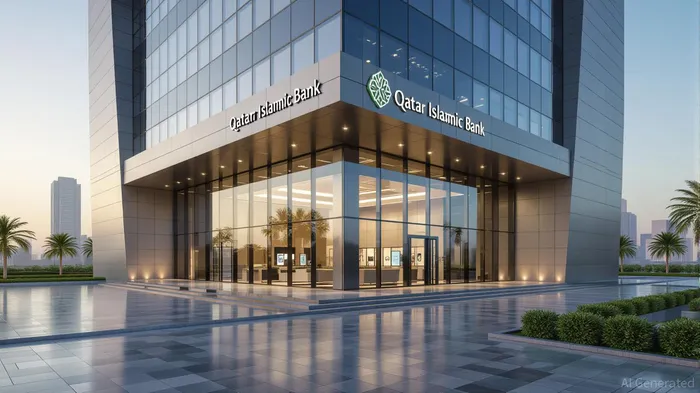
Financial Fortitude in a Challenging Environment
QIB's H1 performance reflects disciplined risk management and strategic growth initiatives. While the first-quarter results showed a 3.1% profit rise to QAR 985 million, the full-half figures—driven by stronger second-quarter momentum—pushed earnings up 10% YoY. Total assets expanded by 10.2% to QAR 212 billion, fueled by a 5.7% increase in financing assets and an 8.4% rise in customer deposits. These metrics underscore QIB's ability to capitalize on Qatar's thriving economy, underpinned by liquefied natural gas (LNG) exports and infrastructure investments tied to the 2022 World Cup legacy.
The bank's capital adequacy ratio of 21.4% (Basel III-compliant) as of March 2025—slightly higher than the cited 20.7%—exceeds regulatory requirements, providing a buffer against potential shocks. A low non-performing financing ratio of 1.76%, paired with a 95% coverage ratio, further highlights prudent credit management.
Navigating Regional Risks
The Gulf region faces multiple headwinds: the lingering threat of U.S. tariffs on Middle Eastern crude oil, geopolitical spats between Gulf states, and the economic fallout of prolonged conflicts in Yemen and Syria. Yet QIB's diversified portfolio and local market dominance have insulated it from direct impacts.
- U.S. Tariffs: Qatar's LNG exports, critical to global energy markets, remain unaffected by tariffs targeting crude oil. QIB's focus on Sharia-compliant financing for infrastructure and real estate projects shields it from commodity price volatility.
- Regional Conflicts: The bank's conservative lending practices and geographic focus on Qatar's stable economy mitigate exposure to cross-border risks.
- Sukuk Issuance: QIB has actively participated in Qatar's Sukuk market, which grew by 15% in H1 2025, leveraging Islamic finance instruments to fund long-term projects. This aligns with Qatar's National Vision 2030 goals, reinforcing the bank's role as a pillar of the nation's financial infrastructure.
Investment Case: A Defensive Play for Uncertain Times
QIB's financial metrics make it a compelling defensive investment. Its low cost-to-income ratio (16.6%), the lowest in Qatar's banking sector, signals operational efficiency, while its strong liquidity (financing-to-deposit ratio of 91.4%) ensures it can weather short-term shocks.
Investors seeking stability in a volatile market should note QIB's track record of dividend consistency. With a dividend payout ratio of 40% and a 5-year average ROE of 12%, the bank offers both capital appreciation and income potential.
Risks and Considerations
While QIB's fundamentals are strong, risks linger. A sudden drop in LNG prices or a sharp slowdown in Qatar's construction sector could pressure asset quality. Additionally, regulatory changes in Islamic finance or increased competition from digital banks pose long-term challenges.
Conclusion: Buy QIB for Gulf Stability
QIB's H1 results affirmAFRM-- its position as a financially resilient institution in a region fraught with uncertainty. With a fortress balance sheet, strategic focus on Qatar's growth sectors, and minimal exposure to geopolitical risks, the bank is well-positioned to outperform peers. Investors seeking a defensive play in Gulf markets should consider a "Buy" rating, with a target price reflecting its consistent earnings growth and valuation multiples in line with regional peers.
In a landscape where volatility is the norm, QIB's steady performance offers a rare anchor of stability.







Comentarios
Aún no hay comentarios