
Q4 Earnings Season Begins: A Tactical Look at the 2026 Catalyst
The opening bell for the fourth-quarter earnings season has just runged. Goldman SachsGS-- will report its results at approximately 7:30 am ET today, setting the tone for what promises to be a pivotal period for market sentiment.
This first report arrives after a resilient but modest Q3 backdrop. While the early wave of earnings saw 86% of companies beat earnings estimates, the average surprise was a relatively modest 5.9%. That context is crucial. It suggests underlying strength, but not overwhelming force. The market's forward-looking valuation, as measured by the S&P 500's forward P/E ratio, has already begun to reflect this tempered outlook, having narrowed from 22.8 at the end of Q3 to 22.4.
The test now is sustainability. Can the momentum from a nine-quarter streak of year-over-year earnings growth carry forward into 2026? Goldman's financials report will be a key early data point. Its performance will be watched not just for its own numbers, but as a signal of whether the broader market can maintain its earnings resilience in the face of persistent macroeconomic questions.
The 2026 Forward Look: Earnings, Valuation, and the Macro Backdrop
The path forward for the market hinges on a delicate balance. On one side, corporate earnings are showing resilience, but with clear signs of deceleration. On the other, valuations are elevated, leaving little room for error. The macro environment adds a layer of instability that could disrupt this setup.
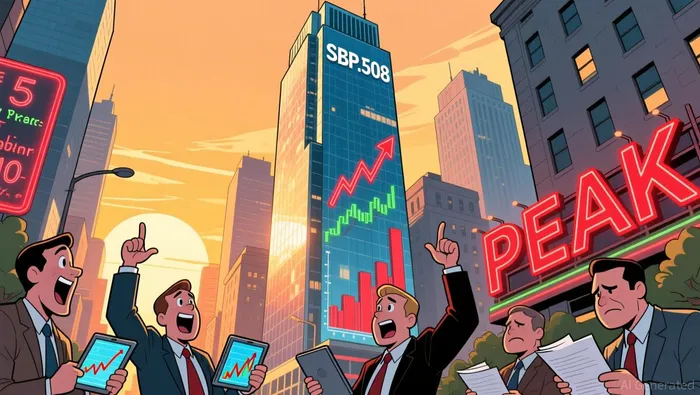
The earnings trajectory for 2026 is projected to slow. Analysts are calling for a sequential deceleration in growth, with the Q4 2025 earnings growth rate forecast at 7.5%, down from the Q3 rate of 8.5%. This cooling trend suggests the robust expansion seen over the past year is beginning to moderate. While the S&P 500 has now reported year-over-year earnings growth for nine straight quarters, the magnitude of positive surprises is below historical averages, indicating that companies are meeting expectations but not exceeding them by much. This creates a baseline of steady but not spectacular performance.
This steady growth is priced into a market that is already richly valued. The forward 12-month price-to-earnings ratio sits at 22.4, a premium to both the 5-year average of 19.9 and the 10-year average of 18.6. This valuation context is critical. It means the market is already assuming a certain level of future success. Any stumble in the projected earnings growth for the coming quarters could easily trigger a multiple compression, pressuring stock prices even if profits still expand.
The backdrop for this earnings and valuation dynamic is one of macroeconomic instability. As noted by market strategists, the environment is characterized by "unstable" conditions, with sticky inflation and a wobbly labor market creating a volatile mix. Inflation, while showing some signs of cooling, remains above the Federal Reserve's target, with upside risks persisting. This instability is not just uncertainty-it's a system in flux, with shifting inputs that make reliable forecasts difficult. For investors, this means the "climb a wall of worry" narrative may continue, but with heightened volatility and ongoing sector rotation. The combination of a slowing growth trajectory priced at a premium, against a backdrop of instability, sets up a market that is vulnerable to disappointment.
Catalysts and Risks: What to Watch for Momentum Shifts
The immediate test for the market's resilience is the next wave of corporate results. This upcoming week, 90 S&P 500 companies, including 5 Dow 30 firms, are scheduled to report for the third quarter. This is the next major data point that will confirm or challenge the current earnings narrative. The early signs from the first 12% of the index were mixed: while a high percentage of companies beat earnings estimates, the magnitude of those beats was below historical averages. The real story was the Financials sector, where positive surprises were the largest contributor to the index's improved earnings growth rate. The key watchpoint is whether this sector can repeat its performance in Q4, potentially offsetting declines in areas like Energy.
The broader market's stability hinges on earnings continuing to outpace expectations. The forward P/E ratio sits at 22.4, a premium valuation that demands continued profit growth. If the current backdrop of sector rotation and economic instability persists, the market's ability to "climb a wall of worry" will depend on a firm earnings foundation. Any failure of the Financials-led earnings driver to hold up could quickly shift sentiment, especially given the high bar set by recent gains.
The primary risk to this setup is a policy-driven cap on monetary easing. Analysts see upside risks to inflation and a labor market that remains under pressure, which could limit the Federal Reserve to just two or three rate cuts in 2026. This slower pace of easing would keep borrowing costs elevated, capping the tailwind that has supported high valuations. For the market to sustain its momentum, earnings growth must not only continue but accelerate enough to justify the current price levels in a higher-rate environment.





Comentarios
Aún no hay comentarios