
The Q1 2026 Crypto Rally: A Structural Reset with Institutional Catalysts
The Q1 2026 crypto rally is not a fleeting market surge but a structural reset driven by institutional re-entry and macroeconomic tailwinds. As the Federal Reserve pivots toward liquidity expansion and institutional demand for BitcoinBTC-- ETFs accelerates, the crypto market is poised for a fundamental shift. This analysis dissects the interplay of institutional flows, Fed policy, and whale behavior to argue that the current rally is underpinned by durable, systemic forces-despite short-term bearish volatility forecasts.
Institutional Re-Entry: ETF Inflows as a Structural Signal
The resurgence of U.S. spot Bitcoin ETFs in Q1 2026 marks a pivotal institutional re-entry. BlackRock's iShares Bitcoin TrustIBIT-- (IBIT) alone recorded a $695 million net inflow on January 5, 2026-the largest single-day inflow since October 2025. Over the first two trading days of 2026, total ETF inflows reached $1.2 billion, signaling deliberate capital allocation rather than speculative frenzy. These flows reflect a broader institutional narrative: crypto is no longer a niche asset but a core component of global financial infrastructure, as BlackRock itself has reframed it for settlements, liquidity rails, and tokenization.
The structural significance of these inflows is amplified by the ETFs' existing holdings. As of December 2025, U.S. spot Bitcoin ETFs held 1.4 million BTC with $85 billion in assets under management. This scale of institutional demand- projected to outstrip Bitcoin's annual production by 300-500%-creates a supply deficit that could drive price appreciation. Unlike retail-driven cycles, institutional participation is characterized by long-term horizons and systemic integration, making it a more reliable catalyst for sustained growth.
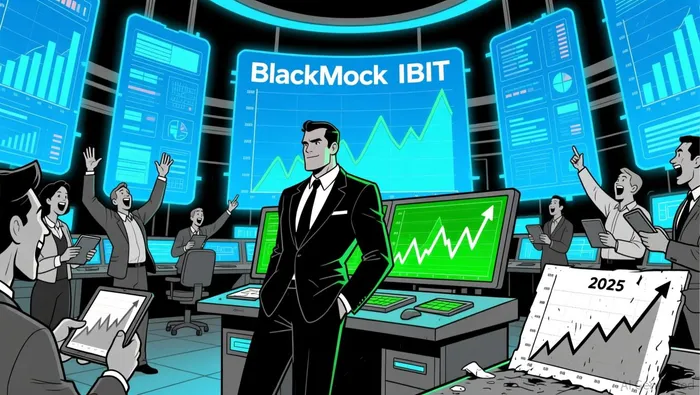
Fed liquidity shifts are a critical tailwind for Bitcoin, reinforcing the structural signals from institutional flows.
Fed Liquidity Shifts: A Tailwind for Bitcoin
The Federal Reserve's policy trajectory in 2025 laid the groundwork for Q1 2026's crypto rally. After three rate cuts in 2025, liquidity is expected to play a more dominant role than rate adjustments in shaping Bitcoin's direction. Analysts highlight that the Fed's shift from quantitative tightening to balance sheet expansion could inject fresh liquidity into financial markets, indirectly supporting Bitcoin's price action.
This liquidity tailwind is critical in a market still recovering from 2025's deleveraging. While reduced leverage and tighter retail participation have created a fragile environment, institutional flows and Fed-driven liquidity are countering these headwinds. As one report notes, "Bitcoin's price performance is increasingly influenced by institutional flows and macroeconomic signals such as Fed policy." This dynamic suggests that Bitcoin's trajectory in Q1 2026 is less about speculative fervor and more about macroeconomic alignment.
Whale Positioning: Mixed Signals in a Range-Bound Market
Bitcoin whale activity in Q1 2026 presents a nuanced picture. Data from Q1 2026 shows that whales increased inflows to exchanges, with the All Exchanges Whale Ratio (EMA14) hitting a ten-month high. This behavior could indicate selling pressure, particularly in a low-volume environment where even moderate whale activity might trigger sharp downside moves. However, this bearish signal must be contextualized alongside institutional inflows and Fed liquidity.
While whale selling could exacerbate short-term volatility, the broader structural backdrop-driven by ETF inflows and macroeconomic tailwinds-suggests that such pressure is unlikely to derail the long-term trend. In fact, the interplay between whale activity and institutional demand creates a self-reinforcing cycle: as ETFs absorb Bitcoin supply, whales face reduced opportunities to offload large positions, potentially stabilizing the market over time.
Contrasting Bearish Volatility with Structural Bullishness
Short-term bearish forecasts for Q1 2026 are rooted in declining retail participation and a CBOE Bitcoin options fear index hitting an extremely low level of 10. Analysts warn of a potential drop below $80,000, supported by the 100-week moving average at $85.5k. These predictions, however, overlook the structural forces at play.
The Grayscale 2026 Digital Asset Outlook projects Bitcoin reaching a new all-time high in the first half of the year, driven by macro demand and institutional adoption. This divergence between short-term volatility and long-term structural trends underscores the importance of positioning for the latter. While Bitcoin may oscillate within a range-bound $80k–$93k bracket, the cumulative effect of ETF inflows, Fed liquidity, and institutional demand is a floor that becomes increasingly difficult to breach.
Strategic Entry Points and Positioning for Q1 2026
For investors, the Q1 2026 rally offers strategic entry points. The $80k level, historically a psychological and technical support, could serve as a high-probability entry if institutional inflows continue to absorb selling pressure. Additionally, altcoins may benefit from Bitcoin's structural strength, particularly those with strong institutional adoption narratives (e.g., XRPXRP--, as highlighted by European Business Magazine).
Positioning should prioritize assets with clear macroeconomic tailwinds and institutional backing. Bitcoin's ETF-driven demand and the Fed's liquidity pivot create a "flight to quality" dynamic, where Bitcoin acts as a hedge against fiat debasement. Altcoins with utility in tokenization, cross-border settlements, or institutional-grade infrastructure are likely to outperform in this environment.
Conclusion
The Q1 2026 crypto rally is not a speculative bubble but a structural reset. Institutional re-entry via ETFs, Fed liquidity expansion, and the maturation of Bitcoin's role in global finance form a durable foundation for growth. While short-term volatility and whale activity may create noise, the long-term trajectory is clear: crypto is no longer a fringe asset but a core component of the financial system. For investors, the challenge lies in distinguishing transient volatility from enduring structural change-and positioning accordingly.





Comentarios
Aún no hay comentarios