
PYUSD Expansion Across New Blockchains and Its Implications for Stablecoin Markets
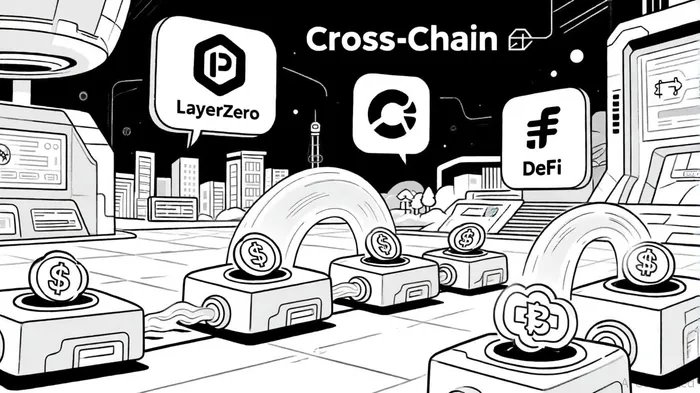
PayPal's dollar-backed stablecoin, PayPalPYPL-- USD (PYUSD), has emerged as a pivotal player in the evolving stablecoin landscape, driven by its strategic integration with LayerZero's cross-chain infrastructure. This collaboration has enabled PYUSD to expand its footprint across 13 blockchain networks, including EthereumETH--, SolanaSOL--, TronTRX--, AvalancheAVAX--, and SeiSEI--, through the deployment of a permissionless variant called PYUSD0[1]. The move notNOT-- only enhances liquidity and accessibility but also positions PYUSD as a formidable contender in a market dominated by TetherUSDT-- (USDT) and Circle's USD Coin (USDC).
LayerZero's Role in Enabling Institutional Adoption
LayerZero's Stargate Hydra bridge and Omnichain Fungible Token (OFT) standard have been instrumental in PYUSD's expansion. By leveraging these tools, PayPal has eliminated intermediaries in cross-chain transfers, allowing users to move PYUSD seamlessly between ecosystems without sacrificing fungibility or security[2]. This infrastructure is underpinned by Diverse Validator Networks (DVNs), which include trusted entities like Paxos and GoogleGOOGL-- Cloud, ensuring robust transaction verification and regulatory compliance[3]. Such measures address institutional concerns around custody and governance, fostering trust among enterprise users.
The integration also introduces PYUSD0, a permissionless token that operates across nine new blockchains, including Tron—a network with over $28 billion in total value locked (TVL) and 332 million accounts[4]. This expansion taps into Tron's high-volume, low-cost transaction environment, amplifying PYUSD's utility for cross-border payments and decentralized finance (DeFi) applications. As of September 2025, PYUSD's supply has surged to $1.3 billion, up from $520 million at the start of the year, reflecting growing institutional and retail adoption[5].
Market Implications and Competitive Positioning
While PYUSD trails behind USDTUSDT-- ($171.2 billion market cap) and USDCUSDC-- ($74.3 billion), its multi-chain strategy and regulatory alignment position it as a unique asset in the stablecoin ecosystem[6]. Unlike its peers, PYUSD is fully backed by U.S. dollar deposits and short-term Treasuries, with 90% of its supply held by institutions and whales, signaling strong enterprise confidence[7]. Furthermore, its inclusion in New York DFS's “Green List” framework and compliance with the GENIUS Act underscore its appeal to institutional investors seeking regulatory clarity[8].
The broader stablecoin market has seen a 53% increase in total market capitalization from $160 billion in June 2024 to $245 billion in May 2025, driven by cross-chain interoperability and institutional demand[9]. LayerZero's role in this growth is critical: 25.4% of major stablecoin issuers have adopted its OFT standard, enabling seamless token transfers across fragmented ecosystems[10]. For PYUSD, this infrastructure reduces liquidity fragmentation and enhances its viability for use cases like supply chain finance and tokenized asset trading.
Future Outlook and Strategic Challenges
Despite its progress, PYUSD faces challenges in competing with market leaders. Its 0.38% share of the stablecoin market highlights the dominance of USDT and USDC, which operate on 12 and 25 networks, respectively[11]. However, PayPal's partnerships with platforms like VisaV--, CoinbaseCOIN--, and MastercardMA--, combined with its 20+ million merchant integrations, provide a unique value proposition for real-world adoption[12].
LayerZero's ongoing developments, including the proposed $110 million acquisition of Stargate and potential protocol fee activation, could further bolster PYUSD's infrastructure by creating deflationary mechanisms and reducing supply volatility[13]. If successful, these moves may attract additional institutional capital, accelerating PYUSD's ascent in the stablecoin hierarchy.
Conclusion
PayPal's collaboration with LayerZeroZRO-- represents a paradigm shift in stablecoin adoption, demonstrating how cross-chain interoperability can bridge traditional finance and decentralized systems. By addressing liquidity, security, and regulatory compliance, PYUSD is carving a niche for itself in a crowded market. As institutional demand for programmable, multi-chain stablecoins grows, the partnership between PayPal and LayerZero may well define the next phase of stablecoin innovation.





Comentarios
Aún no hay comentarios