
PyroGenesis Canada's Q2 2025 Earnings and Strategic Momentum: Navigating Near-Term Challenges for Long-Term Energy Transition Gains
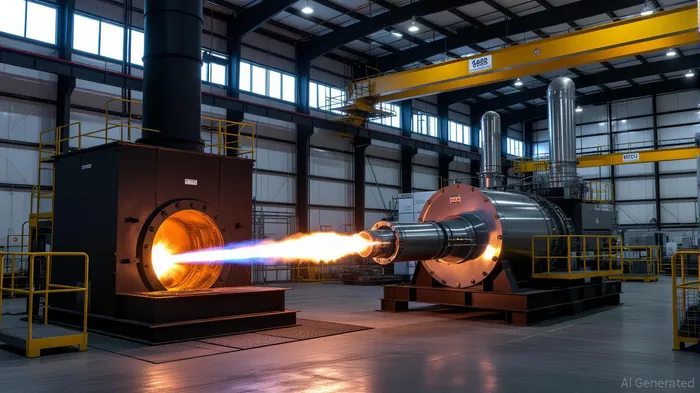
PyroGenesis Canada Inc. (TSE:PYR) has long positioned itself at the intersection of industrial decarbonization and materials innovation. Its Q2 2025 results, while marked by a 23.6% year-over-year revenue decline to $3 million, reveal a company in the throes of strategic transformation. The key question for investors is whether PyroGenesis can leverage its operational progress and expanding backlog to overcome near-term financial headwinds and capitalize on the global energy transition.
Operational Progress: Gross Margin Gains and Commercialization Breakthroughs
Despite the revenue dip, PyroGenesis achieved a 56% gross margin in Q2 2025, up from 29% in Q2 2024. This improvement, driven by a favorable sales mix and operational efficiencies, signals progress in scaling its plasma-based technologies. The company's ability to reduce costs while maintaining high-value project execution is critical for long-term sustainability.
Commercialization milestones underscore PyroGenesis' strategic momentum:
- Aluminum Sector Expansion: The sale of a plasma torch to Constellium—a leader in aluminum recycling—marks a pivotal step in electrifying aluminum furnace operations. This deal aligns with the sector's urgent need to cut emissions, as primary aluminum production accounts for 16 tonnes of CO2e per tonne of output.
- Hydrogen Production Leadership: The $9.3 million project with Tata Steel to produce 99.999% pure hydrogen from coke-oven gas demonstrates PyroGenesis' capability to deliver scalable decarbonization solutions. Hydrogen's role in hard-to-abate industries is expected to grow exponentially, with the global green hydrogen market projected to exceed $250 billion annually by 2030.
- Aerospace Validation: Approved supplier status with BoeingBA-- for titanium metal powder production validates PyroGenesis' NexGen™ plasma atomization technology. This opens access to the aerospace sector, where additive manufacturing demand is surging.
Expanding Backlog and Market Positioning
As of August 6, 2025, PyroGenesis reported a $51.1 million backlog, with 83% denominated in U.S. dollars. This pipeline includes contracts with ConstelliumCSTM--, Tata Steel, and a European environmental services firm for plastic waste management. The backlog's geographic and sectoral diversification reduces execution risk and provides visibility into future revenue streams.
The company's focus on three verticals—energy transition, commodity security, and waste remediation—positions it to benefit from overlapping megatrends. For instance, its fumed silica reactor (FSR) pilot plant has attracted interest from chemical giants like Evonik, while its SPARC™ technology for destroying ozone-depleting substances has secured a European patent. These innovations align with regulatory tailwinds, such as the EU's Carbon Border Adjustment Mechanism, which is reshaping industrial decarbonization from a cost center to a strategic imperative.
Financial Challenges and Strategic Resilience
PyroGenesis' Q2 net loss of $2.9 million and modified EBITDA loss of $2.1 million highlight the challenges of scaling a capital-intensive industrial tech play. However, the company has taken steps to mitigate these risks:
- Cost Optimization: A $3–$5 million annual savings target in 2025, building on $3 million in 2024 reductions, is critical for improving margins.
- Capital Access: A $5.75 million private placement led by CEO Peter Pascali provides liquidity, while the backlog ensures cash flow from project milestones.
- Execution Focus: Delays in project starts impacted Q2 revenue recognition, but the company's emphasis on operational efficiency and innovation suggests a path to breakeven as projects ramp.
Investment Thesis: Balancing Risk and Reward
PyroGenesis operates in a high-growth, high-risk niche. Its plasma-based technologies are well-positioned to benefit from the $250+ billion annual investment expected in industrial decarbonization by 2030. However, the company's path to profitability hinges on executing its backlog and maintaining technological differentiation.
Key Risks:
- Execution Risk: Delays in large projects could strain cash flow.
- Market Competition: Established players in hydrogen and materials innovation may accelerate their own offerings.
- Regulatory Uncertainty: Policy shifts in decarbonization incentives could impact demand.
Catalysts for Growth:
- Backlog Conversion: Successful delivery of $51.1 million in contracts.
- Technology Commercialization: Scaling fumed silica and titanium powder production.
- Strategic Partnerships: Expanding collaborations with GE VernovaGEV-- and Norsk Hydro.
Conclusion: A High-Volatility Play in a Transformative Sector
For investors with a long-term horizon and appetite for volatility, PyroGenesis represents an intriguing opportunity. The company's alignment with decarbonization megatrends, combined with its expanding backlog and technological milestones, suggests it could emerge as a key player in industrial electrification. However, near-term financial metrics demand caution. A prudent approach would involve monitoring Q3 2025 results for signs of margin improvement and project execution, while tracking broader industry trends via .
In the end, PyroGenesis' story is one of balancing today's losses with tomorrow's potential—a narrative that resonates in the high-stakes arena of energy transition. For those willing to navigate the risks, the rewards could be substantial.







Comentarios
Aún no hay comentarios