
U.S. Pushes for Drug Supply Chain Resilience Amid China Concerns
The U.S. Congress is raising urgent concerns over China's growing influence on the American pharmaceutical supply chain, warning that the country's reliance on Chinese-sourced ingredients is creating a critical vulnerability. A recent report from the U.S.-China Economic and Security Review Commission revealed that roughly one in four generic medicines in the US depends on key ingredients from China, which produces nearly all of the components for vital drugs like blood thinners, antibiotics, and cancer treatments. With China's past control over rare earth minerals in mind, the report warns that similar supply shocks in drug ingredients could lead to severe disruptions in healthcare delivery.
The commission highlighted that the extent of China's role in drug manufacturing remains unclear, as the FDA does not systematically track where essential pharmaceutical ingredients are produced. This lack of data makes it difficult to assess the true scale of the vulnerability, according to commission member Leland Miller, who emphasized that the government lacks the authority to collect the necessary information. The report recommends new legislation to require pharmaceutical companies to disclose their supply chain origins to the FDA.
In response, the Trump administration has taken steps to strengthen domestic drug production, including offering reduced fees for drug approvals if early-stage research is conducted in the US. Meanwhile, efforts are underway to restrict partnerships with Chinese companies, particularly in biotechnology and synthetic biology, where China is gaining a competitive edge. These developments signal a growing urgency to address supply chain risks as part of broader national security strategy.
A Complex Global Supply Chain
China's dominance in the pharmaceutical supply chain is not limited to the US. It also plays a critical role in global drug production, particularly in synthetic biology and the creation of amino acids and other essential components. The report notes that China's leadership in this field makes it a key player in every stage of pharmaceutical manufacturing, from basic ingredients to cutting-edge innovations. This deep integration poses a strategic challenge for countries seeking to reduce their dependence on Chinese supply lines.
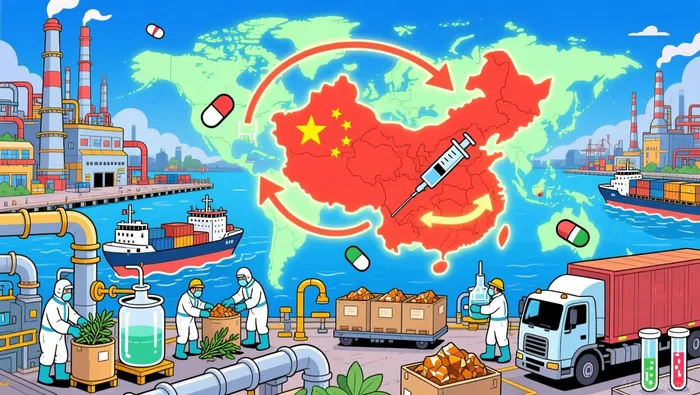
India is another major player in the global drug supply chain, producing a significant portion of the world's generic medications. However, much of the raw materials required for Indian drug production still come from China, adding another layer of complexity to the issue. European pharmaceutical companies are also heavily reliant on China, with more than half of their key ingredients sourced from the country. This interdependence complicates efforts to build a more resilient and diversified global supply chain.
Policy Responses and Industry Challenges
Addressing the vulnerabilities in the pharmaceutical supply chain will require long-term, systemic changes, according to the report. These include bolstering domestic manufacturing, securing data transparency, and implementing new regulations to ensure supply chain resilience. The Trump administration has already begun pushing for these changes, with policies aimed at incentivizing domestic production and reducing reliance on foreign suppliers. However, many small and generic drugmakers lack the financial resources to shift production back to the US, making progress difficult.
The pharmaceutical industry is also grappling with the need for greater innovation in quality management and compliance. The pharmaceutical quality management software market, for example, is projected to grow significantly in the coming years as companies seek to meet increasingly stringent regulatory standards. Software solutions are helping pharmaceutical firms improve traceability, documentation, and compliance across global operations, particularly in the US and Europe.
Looking Ahead
The situation highlights the broader tensions between global economic interdependence and national security concerns. As China continues to expand its influence in pharmaceutical and biotech industries, the US faces a difficult balancing act: ensuring access to affordable medicines while minimizing strategic risks. The coming months will be critical in determining how policymakers address these challenges, with potential legislative and regulatory changes expected to shape the future of the pharmaceutical supply chain.







Comentarios
Aún no hay comentarios