
The Pump.fun Scandal: A Wake-Up Call for DeFi Governance and Security
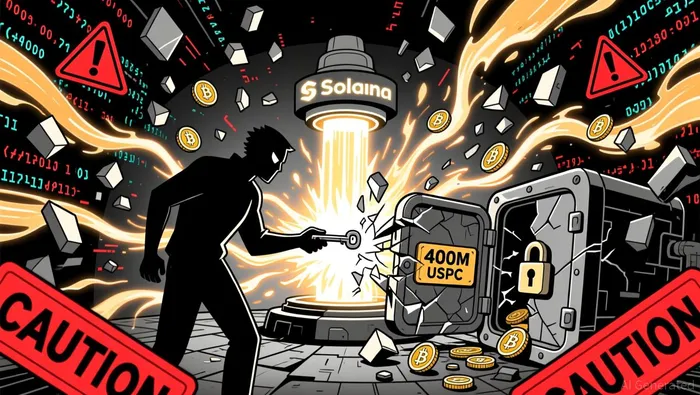
The decentralized finance (DeFi) ecosystem has long prided itself on its promise of trustlessness and transparency. Yet, the Pump.fun scandal-centered on a $400 million USDCUSDC-- cash-out denial, security breaches, and developer misconduct-has exposed critical vulnerabilities in how DeFi platforms manage governance, accountability, and risk. As the crypto industry matures, this case study underscores the urgent need for robust frameworks to prevent exploitation, protect user capital, and restore trust in decentralized systems.
The Pump.fun Scandal: A Case of Broken Trust
Pump.fun, a Solana-based memeMEME-- coin launchpad, rose to prominence by democratizing token creation through its bonding curve mechanism. However, its rapid growth was shadowed by a series of scandals. In 2025, on-chain analytics firm Lookonchain alleged that wallets linked to Pump.fun transferred $436 million in USDC to Kraken, sparking accusations of a mass cash-out. The platform denied the claims, attributing the transfers to routine treasury management. Meanwhile, a former senior developer, Jarett Dunn, was sentenced to six years in prison for draining $2 million in SOL and distributing it to thousands of random wallets. According to reports, the platform's bonding curve became a focal point for exploitation.
These incidents highlight a paradox: platforms that automate pricing and reduce entry barriers for users can simultaneously create systemic risks when governance is lax. Pump.fun's bonding curve, designed to democratize token creation, became a focal point for exploitation. Critics argue that the mechanism amplified insider advantages, enabling early buyers to profit while ordinary users faced losses.
Security Flaws and the Illusion of Trustlessness
The Pump.fun scandal reveals inherent flaws in DeFi's "trustless" ethos. While blockchain technology ensures immutableIMX-- transaction records, it does not inherently secure smart contracts or prevent malicious actor behavior. The platform's bonding curve, for instance, was criticized for its lack of safeguards against insider manipulation. A class-action lawsuit alleges collusion between Pump.fun and SolanaSOL-- Labs, claiming insiders gained unfair access to token launches via Solana's validator system.
Moreover, the theft by Jarett Dunn exposed gaps in developer accountability. Despite Pump.fun's decentralized structure, the platform's codebase and treasury were vulnerable to internal abuse. This raises a critical question: Can a project truly be "trustless" if its developers hold unchecked power over critical systems?
Legal and Regulatory Reckoning
Pump.fun's legal battles have further complicated its narrative. A RICO-based class-action lawsuit, expanded in July 2025, implicated not only Pump.fun but also Solana and JitoJTO--, key infrastructure providers in the Solana ecosystem. The lawsuit frames the platform as part of a "coordinated racketeering enterprise," applying traditional legal frameworks to decentralized systems. Pump.fun's legal defense argues the platform is a neutral tool and not liable for user actions. However, the case could set a precedent for holding DeFi platforms accountable for facilitating unregistered securities or enabling fraudulent schemes.
Regulatory scrutiny has also intensified. The EU's Markets in Crypto-Assets (MiCA) regulation, which imposes whitepaper obligations and market integrity requirements, has forced Pump.fun to adapt its compliance strategies. These challenges underscore the tension between DeFi's anti-establishment ethos and the growing demand for regulatory clarity.
Lessons for DeFi Governance
The Pump.fun sagaSAGA-- offers three key lessons for the DeFi ecosystem:
1. Transparency is not enough: On-chain visibility cannot replace proactive governance. Platforms must implement multi-signature wallets, time-locked treasury mechanisms, and community-driven audits to prevent unilateral decisions. According to experts, this is essential for long-term stability.
2. Developer accountability is non-negotiable: Projects must establish clear roles and responsibilities for core contributors. Pump.fun's failure to monitor Dunn's activities highlights the risks of opaque developer hierarchies.
3. Regulatory alignment is inevitable: As seen with Pump.fun's compliance efforts under MiCA, DeFi platforms must engage with regulators rather than resist them.
The Path Forward
Pump.fun's response to the scandal-$100 million in token buybacks, the Project Ascend upgrade to incentivize creators, and a Binance listing-demonstrates a strategic pivot toward rebuilding trust. However, these measures are reactive. True resilience requires embedding accountability into DeFi's DNA.
For investors, the Pump.fun case is a cautionary tale. While innovation in tokenomics and accessibility is vital, it must be paired with governance frameworks that prioritize security and transparency. As the industry evolves, projects that fail to adapt will face not only legal and financial risks but also reputational collapse.
In the end, DeFi's promise hinges on its ability to balance decentralization with accountability. Pump.fun's struggles are a wake-up call: without robust governance, even the most innovative platforms risk becoming cautionary tales.






Comentarios
Aún no hay comentarios