
Puerto Rico’s Manufacturing Gamble: Betting on Tariffs to Turn the Tide
The escalating U.S.-China trade war has turned Puerto Rico into an unexpected beneficiary of Washington’s protectionist policies. With tariffs on Chinese imports now hitting 125%, U.S. manufacturers are scrambling to avoid costs that have crippled sectors like automotive and pharmaceuticals. Enter Puerto Rico—a U.S. territory offering tariff-free access, tax breaks, and a skilled workforce—positioning itself as the “Made in America” alternative to offshore production.
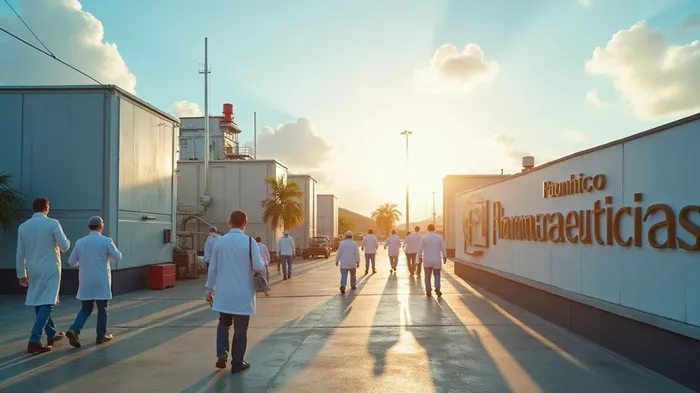
The Incentive Playbook: Tax Breaks and Tariff-Free Access
Puerto Rico’s strategy is straightforward: leverage its U.S. jurisdiction status to offer zero federal income tax on eligible manufacturing income, paired with 50% tax credits on R&D expenditures and exemptions on capital gains. For industries like pharmaceuticals—where Puerto Rico already produces $11 billion in vaccines annually—this is a game-changer.
The island’s 8 of the world’s top 15 best-selling drugs and 12 of the top 20 global pharma companies (including PfizerPFE-- and AbbVie) are now joined by new entrants seeking to avoid the 34% tariffs on Chinese imports. ****
The Tariff Arithmetic: Why Puerto Rico Wins
Consider a U.S. company making medical devices in Vietnam. Under Trump’s 2025 tariffs, those goods now face a 46% import tax. By relocating to Puerto Rico, the same company can cut costs by $1.2 billion annually (based on average tariff rates and production volumes).
The math is compelling, but Puerto Rico isn’t just a tax haven. Its FDA-approved facilities (70+ for medical devices) and bilingual STEM workforce—educated in U.S.-aligned curricula—add to its appeal.
The Risks: Blackouts and the Jones Act
Yet Puerto Rico’s ambitions face hurdles. Chronic energy instability, with two island-wide blackouts in early 2025, threatens production. While solar and battery storage projects aim to resolve this, investors remain wary.
Then there’s the Jones Act, which mandates U.S.-flagged ships for Puerto Rico mainland trade, raising shipping costs by 20–30% compared to foreign competitors. For bulk industries like agriculture, this offsets tariff savings.
The Investment Thesis: Where to Bet
Pharmaceuticals & Medical Devices:
Puerto Rico’s $25 billion in annual exports are dominated by these sectors. Companies like Medtronic and Stryker are expanding FDA-approved facilities. Investors might track firms like Johnson & Johnson (JNJ), which recently announced a $500 million Puerto Rico plant.Advanced Manufacturing:
The island’s push into aerospace and defense—fueled by its proximity to U.S. military bases—could see growth. Lockheed Martin (LMT)’s collaboration with local universities hints at potential here.Infrastructure Plays:
The $2 billion public-private port modernization fund could benefit construction firms like Bechtel, while renewable energy projects (targeting 40% renewables by 2025) favor NextEra Energy (NEE).
Conclusion: A High-Reward, High-Risk Bet
Puerto Rico’s strategy is a bold response to the trade war, but success hinges on resolving its infrastructure gaps and outpacing rivals like Vietnam and Mexico. With over 50% of its budget tied to federal funding, fiscal stability is critical.
The numbers tell the story: U.S. pharmaceutical imports from China fell 40% in 2025 as reshoring accelerated, while Puerto Rico’s exports rose 18%. For investors, the island represents a $100 billion opportunity to capitalize on U.S. protectionism—if the lights stay on and the ships keep sailing.
In a world of trade wars, Puerto Rico is betting it can turn isolation into advantage. The stakes? Nothing less than its economic survival.







Comentarios
Aún no hay comentarios