
Pudgy Penguins Launches Visa Pengu Card to Bridge NFTs and Global Payments
Pudgy Penguins has officially launched the PenguPENGU-- Card, a Visa-backed crypto debit product designed for international use according to reports. Announced on March 24, 2026, this new offering enables users to spend stablecoins at over 150 million merchants across more than 170 countries as detailed. This move marks a significant shift for the brand, moving beyond NFT trading to deliver real-world payment functionality according to analysis. The card connects directly to the global VisaV-- infrastructure, allowing digital assets to be used just like traditional money as reported. Cardholders can make purchases in-store or online by tapping, swiping, or entering their card details according to sources. Balances are debited in crypto while merchants receive settlement in their usual currency, allowing retailers to accept payments without changing existing infrastructure according to data.
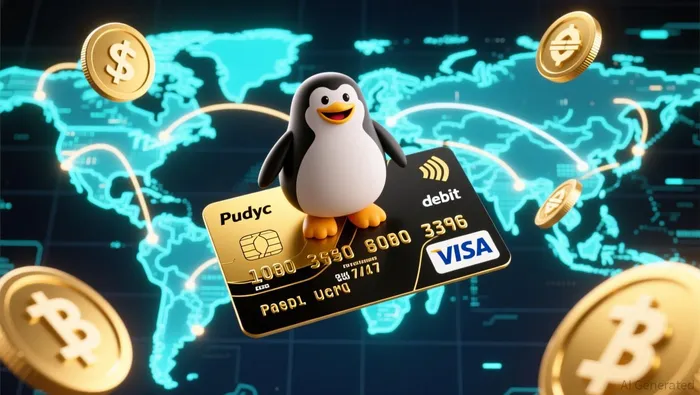
The Pengu Card is developed in collaboration with KAST and is available in three variants: Standard, Black, and Gold as stated. Each tier is tailored to different user needs and offers varying reward rates, ranging from 2% up to 12% cashback on purchases according to reports. Additionally, users can earn up to 7% annual yield on qualifying crypto holdings according to analysis. Supported currencies include USDC, USDT, USDe, the PENGU token, and more than 25 other cryptocurrencies as detailed. This dual structure blends payments and savings within a single product, competing with conventional bank products according to industry observers.
The launch coincides with a filing by Canary Capital for a U.S. ETF that would include Pudgy PenguinsPENGU-- NFTs and the PENGU token according to filings. This filing marks a potential structural shift in institutional access to digital collectibles, moving beyond retail speculation into regulated investment products as noted. The project has also integrated with the Amazon online marketplace, allowing users to purchase licensed wearable items as reported. Despite the expansion, the ecosystem faces security challenges, including sophisticated phishing campaigns targeting users according to security reports. Cybersecurity firm Malwarebytes has warned of a targeted operation mimicking the game's wallet connection interface to steal user credentials as detailed. Market metrics indicate the PENGU token has a volume-to-market-cap ratio of 22.7%, suggesting genuine market interest according to analysis. However, structural risks remain as the top 100 holders control 67.3% of the circulating supply as reported.
How does the Pengu Card integrate with existing Web3 ecosystems?
The initiative represents Pudgy Penguins' evolution from a well-known NFT avatar collection to a broader financial platform as detailed. The card's debut follows a period of increased attention for the PENGU token, which saw a 10% price jump in February 2026 after news of the payment initiative broke according to market data. Industry analysts view this development as a strategic effort by an NFT brand to ensure longevity by offering tangible benefits as observed. The collaboration with Visa enhances trust and signals the crypto sector's growing integration with mainstream finance according to reports. However, long-term success will rely on continued user participation and overcoming regulatory challenges, as crypto card rules vary by country as noted.
The project has also introduced Pudgy World, a browser-accessible game designed to lower barriers to entry for Web3 adoption according to development updates. The platform eliminates the need for downloads, allowing users to explore 12 distinct towns and complete quests directly from a web browser as described. A key feature is the integration of QR codes, enabling physical toy owners to unlock digital content, thereby bridging tangible and virtual experiences according to game design details. The game incorporates the PENGU token for both gameplay mechanics and governance, aiming to increase ecosystem engagement and generate new revenue streams as reported. However, the launch has encountered immediate security hurdles, with fraudulent websites mimicking Pudgy World's onboarding process emerging to steal wallet information according to security alerts.
What are the primary risks associated with this financial pivot?
The NFT market is undergoing a fundamental shift where value is defined by community engagement and participation rather than price and hype alone as observed. Pudgy Penguins leads this trend, generating approximately 815,000 engagements within a 24-hour window, significantly outperforming competitors according to analytics. This phygital model keeps the brand top-of-mind globally, insulating it from pure crypto market fluctuations as reported. However, recent analysis reveals a disconnect between successful product launches and immediate token price performance according to market data. The PENGU token experienced significant volatility, dropping over 20% in August 2025 despite the successful launch of the Pudgy Party game as documented. This divergence highlights a broader trend where utility and engagement do not immediately translate into price appreciation during market corrections according to analysis.
Sophisticated phishing attacks continue to target Pudgy Penguins users by mimicking the Reown WalletConnect interface to steal credentials as reported. Attackers employ advanced evasion techniques to avoid detection, using VM detection to prevent security researchers from analyzing the content according to security reports. They also hide malicious code within custom fonts and CSS, effectively bypassing AI security assistants like ChatGPT and Claude as detailed. The broader implication is that as Web3 adoption grows, the attack surface expands, requiring constant vigilance from both users and platform developers to maintain ecosystem trust according to experts. To mitigate these risks, users are advised to strictly verify URLs before connecting wallets and enable multi-factor authentication as recommended.
While the SEC's delay in deciding on crypto ETFs involving PENGU continues to impact market uncertainty, the project demonstrates resilience in utility and engagement according to market analysis. These events underscore that while the project is gaining traction, its token price remains sensitive to broader market sentiment and regulatory developments as noted. The success of this financial expansion will depend on sustained user engagement beyond initial curiosity according to industry reports. The card's debut follows a period of increased attention for the PENGU token, which saw a 10% price jump in February 2026 after news of the payment initiative broke according to market data. Industry analysts view this development as a strategic effort by an NFT brand to ensure longevity by offering tangible benefits as observed.
The fundamental value drivers in the NFT market are evolving from traditional price-based metrics to community engagement and participation according to analysis. Recent analytics indicate that projects capturing significant digital attention through social interactions are outperforming others as reported. Pudgy Penguins has emerged as a leader in this shift, achieving approximately 815,000 engagements in a 24-hour window according to engagement data. Its success is attributed to a unique phygital model that connects Web2 with Web3 by launching tangible products at major retailers like Walmart and Target as detailed. This transition underscores a growing investor preference for projects offering utility beyond digital imagery according to market trends.
The move is intended to increase demand for the PENGU token by embedding it in a seamless, user-friendly experience that appeals to audiences outside traditional crypto communities according to project updates. While the launch represents a significant milestone in mainstream adoption, it faces challenges regarding long-term user retention and increasing regulatory scrutiny as noted. The integration of a custom network supports high performance and low fees, differentiating it from other DeFi and gaming projects that may offer fragmented experiences according to technical reports. Despite a slight token price decrease of 1.08% post-launch, the market capitalization remains substantial at $445.69 million, supported by the brand's cultural momentum and diversified revenue model as reported.
As 2026 progresses, the gap between static NFT collections and dynamic social communities continues to widen, with social activity becoming the primary driver for digital asset value as observed. The broader landscape, including projects like Pixel and Gala, shows a clear correlation between user interaction and participant benefits in decentralized economies according to market analysis. Ultimately, the data suggests that long-term value preservation in NFTs is increasingly dependent on fostering active, dynamic social communities rather than static collections according to research. The project demonstrates that community engagement is central to fostering growth and sustaining value in a decentralized environment as noted. Other projects like Floki and platforms like SuperRare are also seeing high interaction levels, indicating a broader investor preference for projects offering utility, gaming narratives, and digital ownership infrastructure according to market data.





Comentarios
Aún no hay comentarios