
Public Transit Safety: A Strategic Investment in Brand Value, Efficiency, and Investor Trust
In an era where public transit systems are under increasing pressure to balance safety, efficiency, and fiscal responsibility, a quiet revolution is unfolding. Agencies that prioritize safety are not only enhancing passenger trust but also unlocking tangible financial and operational benefits. From APTA awards to FTA-backed innovations, the evidence is clear: safety recognition is becoming a cornerstone of competitive advantage in the transit sector.
Safety as a Branding Catalyst
Public transit agencies that earn safety accolades often see a direct boost in brand equity. The 2025 APTA Bus Safety and Security Awards, for instance, spotlighted agencies like the San Joaquin Regional Transportation District and Jacksonville Transportation Authority for their innovative programs, as noted in the APTA announcement. These recognitions act as third-party validations of an agency's commitment to excellence, which in turn attracts riders and strengthens community ties.
Consider the case of Metro, which won the 2025 Outstanding Public Transit Agency of the Year award. Its achievements-ranging from a 20% drop in crime to a 15% increase in customer satisfaction-were directly tied to safety investments like enhanced lighting, fare inspections, and community outreach, according to a GovFacts explainer. Such metrics not only improve public perception but also differentiate agencies in markets where private mobility options are proliferating.
Operational Efficiency Gains
Safety and efficiency are inextricably linked. Agencies that reduce incidents and delays through proactive measures often see cascading benefits in service reliability and cost management. For example, Los Angeles Metro's rollout of protective barriers for bus operators by December 2024 reduced workplace injuries and minimized service disruptions, as detailed in a Trapeze Group report. Similarly, the use of CCTV cameras-now adopted by 80% of transit agencies-has cut crime rates by up to 30%, enabling faster emergency responses and smoother operations, according to a transit safety report.
The Federal Transit Administration's National Public Transportation Safety Plan further underscores this synergy. By standardizing risk-reduction protocols, the plan aims to create a baseline for agencies to optimize resource allocation while maintaining high safety standards. This dual focus on safety and efficiency is critical for agencies seeking to maximize limited budgets without compromising service quality.
Investor Trust and Economic Returns
Investor confidence in public transit is increasingly tied to safety performance. According to a report by the American Public Transportation Association, public transit is 10 times safer than traveling by car. This statistic, combined with data showing that every $1 invested in transit generates $5 in economic returns, paints a compelling case for long-term investment.
The Metropolitan Council's 2025 budget, which allocated $10.75 million to expand security services and fare inspections, exemplifies this logic. The initiative led to an 8.4% decline in crime compared to 2023, directly correlating with increased ridership and reduced operational costs, as reported by GovFacts. Such outcomes reassure investors that safety investments are not just ethical but economically prudent.
The Road Ahead
As transit agencies continue to innovate in safety, the financial and reputational rewards are becoming harder to ignore. From AI-driven surveillance systems to collaborative partnerships with law enforcement and community groups, the tools for enhancing safety are evolving rapidly, a trend reflected in the FTA's National Public Transportation Safety Plan. For investors, the message is clear: agencies that lead in safety today are likely to dominate in brand value, efficiency, and trust tomorrow.
In a world where trust is a scarce commodity, public transit safety is no longer just a regulatory requirement-it's a strategic asset.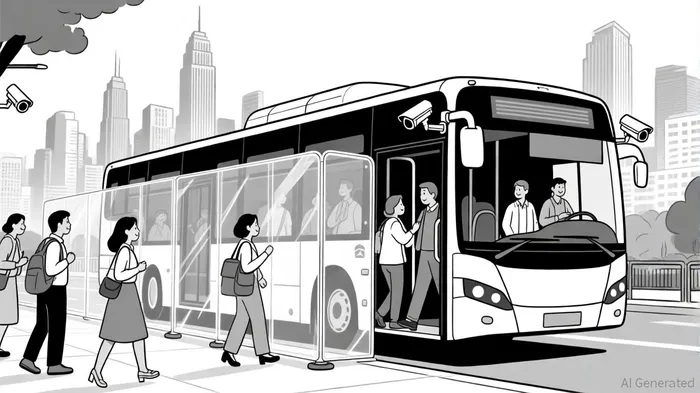







Comentarios
Aún no hay comentarios