
Public Health Policy Turbulence: Biotech and Pharma Sector Volatility in 2025
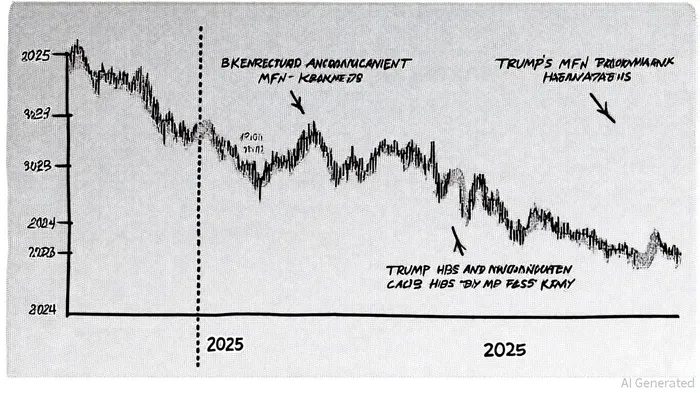
The biotech and pharmaceutical sectors have endured a rollercoaster of investor sentiment and market volatility in 2023–2025, driven by high-profile public health policy debates under the Trump administration. From aggressive drug pricing reforms to the controversial nomination of Robert F. Kennedy Jr. to lead the Department of Health and Human Services (HHS), the industry faces a landscape of regulatory uncertainty, shifting capital flows, and recalibrated risk assessments.
Policy Shocks and Immediate Market Reactions
The administration's implementation of a “Most-Favored-Nation” (MFN) pricing policy in May 2025, which ties U.S. Medicare drug prices to those in other high-income countries, triggered an immediate sell-off in biopharma stocks. Major firms like AstraZenecaAZN-- and GSKGSK-- saw their shares plummet as investors grappled with the potential erosion of profit margins. According to a report by CEO Today, the policy could reduce drug prices by 30% to 80% for certain medications, though industry experts warn of legal challenges and global price adjustments[3]. The uncertainty surrounding enforcement mechanisms and voluntary compliance further exacerbated volatility, with Moderna's stock dropping 7.3% in a single day following the announcement[1].
The nomination of RFK Jr. to head HHS in November 2024 compounded these concerns. His well-documented skepticism about vaccines and pharmaceutical pricing led to a sharp decline in shares of vaccine developers like ModernaMRNA-- (down 6.5%) and BioNTech (down 2.2%)[2]. The iShares U.S. Pharmaceuticals ETF (IHE) fell 3.4% in the wake of the Senate Finance Committee's approval of his nomination, reflecting broader investor anxiety over potential regulatory overhauls[5].
Investor Sentiment: Between Cautious Optimism and Dystopian Fears
Despite the turbulence, pockets of optimism persist. The biotech XBI index rose 15% year-to-date in 2025, driven by a renewed appetite for M&A activity and early Federal Reserve rate cuts[4]. Investors are increasingly focusing on niche areas like rare diseases and targeted oncology, where innovation pipelines remain robust. However, the sector's resilience is tempered by structural challenges. Biotech funding plummeted 57% in May 2025 compared to the same period in 2024, as Trump's policies—including FDA budget cuts and NIH funding reductions—discouraged long-term investment[5].
Short interest in key biotech stocks also surged, with Moderna's short interest reaching its highest level of the year. This reflects a bearish outlook among some investors, who anticipate regulatory crackdowns on drug pricing and potential delays in FDA approvals due to staffing cuts and restructured priorities[1].
Strategic Adaptations and Future Outlook
Biopharma companies are recalibrating their strategies to navigate the new policy environment. Major firms are prioritizing domestic manufacturing, spurred by Trump's tariffs and reshoring incentives, while smaller players explore alternative funding models like royalty deals to sustain operations[2]. The EY 2025 Biotech Beyond Borders report highlights a shift toward operational efficiency and scientific milestones as critical for maintaining valuation growth[2].
M&A activity, though subdued in 2024 due to high borrowing costs, is showing signs of recovery in 2025. Deals like AbbVie's $10.1B acquisition of ImmunoGen and Thermo Fisher's $4.1B purchase of Solventum's purification business underscore a focus on innovation in oncology and gene therapy[3]. However, regulatory scrutiny under the Inflation Reduction Act (IRA) and potential antitrust enforcement under a new FTC leadership add layers of complexity[1].
Conclusion
The biotech and pharmaceutical sectors stand at a crossroads in 2025, with public health policy debates shaping both risks and opportunities. While Trump's MFN policy and Kennedy's HHS nomination have introduced significant volatility, the sector's long-term trajectory hinges on its ability to adapt to regulatory shifts, maintain R&D momentum, and capitalize on emerging markets in rare diseases and preventive care. Investors must balance caution with strategic foresight, monitoring policy developments while prioritizing companies with robust pipelines and operational agility.





Comentarios
Aún no hay comentarios