
PTT Exploration and Production’s Strategic Position in 2025 Energy Markets
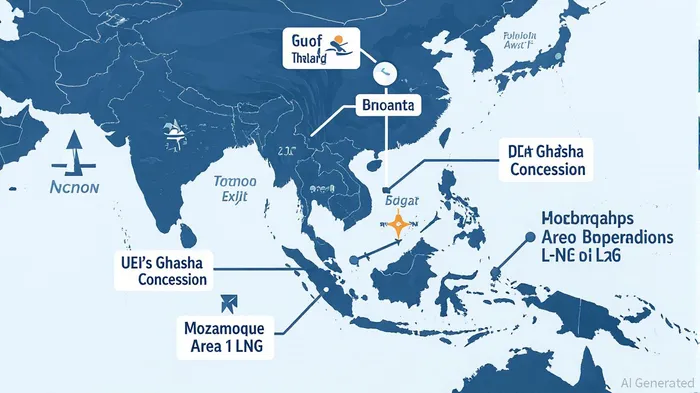
In 2025, PTT Exploration and Production (PTTEP) stands at a pivotal crossroads of energy transition and regional growth, leveraging its dual mandate to secure energy supply while advancing decarbonization. As global energy markets grapple with the dual pressures of climate policy and rising demand, PTTEP’s strategic investments and partnerships position it as a key player in Southeast Asia’s evolving energy landscape—and a bridge to global LNG markets.
Energy Transition: Balancing Fossil Fuels and Low-Carbon Innovation
PTTEP’s 2025 operational plan allocates THB 261 billion (USD 7,819 million) to petroleum exploration, field development, and production, underscoring its commitment to maintaining Thailand’s energy security [1]. However, the company is not resting on its traditional strengths. A provisional budget of USD 1,747 million over five years is earmarked for energy transition initiatives, with USD 77 million dedicated to 2025 alone [2]. These funds target offshore wind, hydrogen, and carbon capture and storage (CCS) technologies, aligning with PTTEP’s “drive, decarbonize, and diversify” strategyMSTR-- [5].
A notable example is PTTEP’s 20% stake in Oman’s green hydrogen project, a move that diversifies its energy portfolio while tapping into the Gulf’s growing hydrogen economy [3]. Additionally, the company has already reduced greenhouse gas emissions by 4.08 million tonnes of CO₂ equivalent since 2020 through flare gas recovery and efficiency improvements [1]. These efforts are critical to achieving its net-zero target by 2050, a goal that resonates with Thailand’s National Energy Plan 2024, which seeks to reduce fossil fuel dependence [4].
Regional Growth: Strategic Partnerships and Market Expansion
PTTEP’s regional strategy in 2025 is anchored in partnerships that amplify its footprint in high-potential markets. A landmark deal with Valeura Energy Inc. in the Gulf of Thailand exemplifies this approach. Under a farm-in agreement, PTTEP retains operatorship of Blocks G1/65 and G3/65 while granting Valeura a 40% working interest, expanding Valeura’s acreage from 2,623 km² to 22,757 km² [1]. These blocks, adjacent to major gas fields and infrastructure, are already known for 15 oil and gas discoveries, with 3D seismic acquisition set to begin soon [3]. This collaboration not only secures PTTEP’s domestic energy supply but also positions it to capitalize on Southeast Asia’s projected energy demand surge, expected to reach 1,300 million tons of oil equivalent (Mtoe) in the coming years [4].
Beyond Southeast Asia, PTTEP is deepening its presence in the Middle East and Africa. In the UAE, it is advancing the Ghasha concession and Sharjah Onshore projects, while its 8.5% stake in Mozambique’s Area 1 LNG project reinforces its role in the global LNG supply chain [2]. In Africa, PTTEP’s acquisition of a 22.1% interest in Algeria’s Touat gas project, set to close in Q2 2025, underscores its focus on gas production to meet regional energy security needs [2]. These moves align with PTTEP’s broader vision to balance upstream growth with low-carbon innovation, ensuring resilience amid global energy market volatility.
Strategic Alignment with Global and Regional Trends
PTTEP’s 2025 strategy reflects a nuanced understanding of regional and global energy dynamics. In Southeast Asia, where energy demand is rising due to industrialization and population growth, PTTEP’s emphasis on gas and LNG infrastructure addresses both immediate energy needs and long-term decarbonization goals. Meanwhile, its investments in hydrogen and offshore wind—such as its participation in Thailand’s renewable energy initiatives—position it to benefit from the region’s shift toward cleaner energy [4].
Globally, PTTEP’s LNG projects in the Middle East and Africa align with the International Energy Agency’s (IEA) projections of LNG demand growth, driven by Asia’s transition from coal to gas. By securing key assets in the UAE and Mozambique, PTTEP is not only diversifying its revenue streams but also strengthening its role in the global energy transition.
Conclusion: A Model for Sustainable Energy Leadership
PTTEP’s 2025 strategy exemplifies how traditional energy firms can navigate the transition to a low-carbon future without sacrificing growth. By balancing upstream investments with energy transition initiatives, the company is addressing both the urgency of energy security and the long-term imperative of decarbonization. For investors, PTTEP’s strategic partnerships, regional expansion, and alignment with global energy trends make it a compelling case study in adaptive energy leadership.
Source:
[1] PTTEP announces 2024 performance and 2025 operational plan investing over THB 261 billion to continuously ensure national energy security [https://www.pttep.com/en/newsroom/press-releases/1039/pttep-announces-2024-performance-and-2025-operational-plan-investing-over-thb-261-billion-to-continuously-ensure-national-energy-security]
[2] Thailand's PTTEP to Invest $21.25 Billion in 2025 to 2029 [https://www.rigzone.com/news/thailands_pttep_to_invest_2125_billion_in_2025_to_2029-24-dec-2024-179118-article/]
[3] PTTEP 2025 Capex Targets Upstream Gas, LNG Projects [https://jpt.spe.org/pttep-2025-capex-targets-upstream-gas-lng-projects]
[4] Thailand Energy Sector in 2025: Clean Energy Growth [https://eosglobalexpansion.com/thailand-energy-sector-greener-future/]
[5] Thailand's PTTEP to Invest $21.25 Billion in 2025 to 2029 [https://finance.yahoo.com/news/thailands-pttep-invest-21-25-113633377.html]







Comentarios
Aún no hay comentarios