
Protocol-Level Fund Freezing: A Double-Edged Sword for Blockchain Security and Decentralization
The Mechanics of Fund Freezing: A Security Lifeline
The Bybit Lazarus Security Lab report reveals that 16 major blockchains already have protocol-level capabilities to freeze user funds, while another 19 could implement such features with minor changes. These mechanisms fall into three categories:
1. Hardcoded (e.g., BNBBNB-- Chain, VeChain),
2. Configuration-based (e.g., SuiSUI--, Aptos),
3. On-chain contract-based (e.g., HECO).
The report highlights real-world use cases, such as Sui's freeze of $162 million in stolen assets after the Cetus hack and BNB Chain's use of hardcoded blacklists during a $570 million bridge exploit. These examples underscore the value of freezing mechanisms as emergency tools to mitigate catastrophic losses.
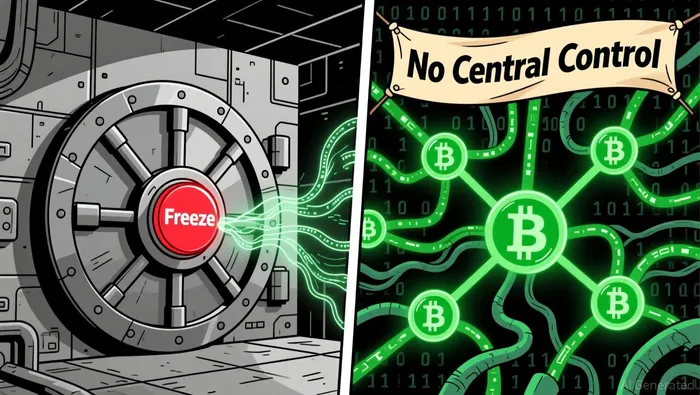
The Centralization Conundrum
While freezing mechanisms offer clear security benefits, they introduce a significant trade-off: centralization. The report warns that these tools grant control over transactions to a small group of validators or foundation members, undermining the decentralized ethos of blockchain. For instance, hardcoded mechanisms like those on BNB Chain require manual intervention by a centralized authority, while configuration-based systems on Sui and AptosAPT-- rely on governance votes that may favor majority stakeholders.
This centralization risk is not theoretical. The report notes that such mechanisms could be abused for censorship or regulatory compliance, eroding user trust. As one analyst put it, "If a blockchain can freeze funds at will, it's no longer a trustless system-it's a permissioned one."
Institutional Investor Due Diligence: Balancing the Scales
For institutional investors, the challenge lies in evaluating whether the security benefits of freezing mechanisms outweigh their centralization risks. Recent data shows that 72% of institutional crypto investors have enhanced risk management frameworks specifically for crypto assets, and 60% now use AI-driven tools to assess protocol-level risks, according to a CoinLaw report. These frameworks often prioritize transparency and governance clarity.
A key consideration is trust metrics. Institutions are increasingly scrutinizing how blockchain projects disclose and govern freezing capabilities. For example, protocols that publish detailed emergency response plans or require multi-signature approvals for freezes are viewed more favorably. Conversely, chains with opaque governance or centralized control structures face higher scrutiny.
Portfolio Allocation: The New Risk Matrix
The presence of freezing mechanisms directly influences institutional portfolio decisions. According to a 2025 report, 59% of surveyed institutions plan to allocate over 5% of their assets under management (AUM) to cryptocurrencies, but this allocation is contingent on robust risk frameworks. Chains with transparent, democratically governed freezing protocols-like Sui's configuration-based model-are gaining traction, while those with hardcoded, opaque systems face skepticism.
Moreover, the SEC's evolving custody rules and emphasis on proof-of-solvency are pushing institutions to favor exchanges and protocols with additional reserves (6–14%) to withstand stress events, as noted in a ScienceDirect article. This aligns with the post-FTX and Celsius caution, where trust in centralized entities has eroded.
The Path Forward: Governance as a Competitive Advantage
The Bybit Lazarus Security Lab report concludes with a call for greater transparency in how freezing mechanisms are implemented and governed. For institutional investors, this means prioritizing projects that:
- Disclose when and how freezes can be triggered,
- Decentralize governance (e.g., multi-signature or DAO-driven approvals),
- Audit their protocols regularly for vulnerabilities.
As the crypto market matures, the ability to balance security with decentralization will become a defining factor in institutional adoption. Chains that treat freezing mechanisms as a last-resort tool-rather than a default feature-will likely attract more capital.
Conclusion
Protocol-level fund freezing is a double-edged sword. It offers a critical safety net for blockchain ecosystems but risks undermining their foundational principles. For institutional investors, the key lies in rigorous due diligence: assessing not just the existence of freezing capabilities, but the governance behind them. In a world where trust is both a commodity and a liability, the future of crypto investing will be shaped by those who can navigate this delicate balance.






Comentarios
Aún no hay comentarios