
Proteomics Breakthrough: Why SCIEX and Evosep's Partnership Could Supercharge Biopharma R&D
The proteomics revolution is no longer just a distant promise. On June 2, 2025, SCIEX—a global leader in mass spectrometry—and Evosep Biosystems announced a reseller agreement that could fundamentally reshape how biopharma companies approach drug discovery, clinical trials, and translational medicine. By combining SCIEX's cutting-edge mass spectrometry systems with Evosep's ultra-high-throughput chromatography (UHPLC) platform, the partnership is poised to address one of the industry's most persistent bottlenecks: the scalability and efficiency of proteomics workflows.
For investors, this is no incremental upgrade. It's a strategic move that could unlock billions in value by accelerating timelines, reducing costs, and enabling breakthroughs in personalized medicine. Here's why this partnership demands attention—and why now is the time to position for its upside.
The Proteomics Imperative: A $10B+ Market on the Cusp of Transformation
Proteomics—the large-scale study of proteins—has long been a holy grail for biopharma. By mapping proteins, their interactions, and modifications, researchers can identify drug targets, biomarkers, and diagnostic tools with unprecedented precision. Yet, the field has been hamstrung by two challenges: speed and cost. Traditional proteomics workflows are slow, expensive, and often require specialized expertise, making large-scale studies prohibitively complex.
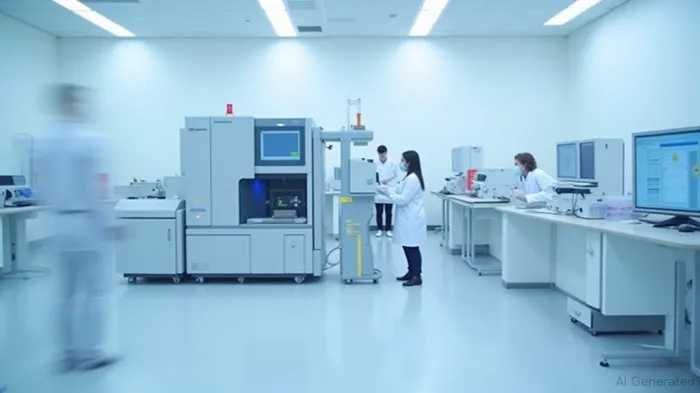
SCIEX and Evosep's collaboration aims to solve this. Their integrated system pairs SCIEX's ZenoTOF 8600 mass spectrometer—a 2025 launch featuring breakthroughs like the OptiFlow Pro source and ZT Scan DIA 2.0—with Evosep's newly announced Eno platform. The results? A 5-fold increase in peptide identifications and a 3-fold rise in protein group identifications at 500 spectra per second. For biopharma, this means:
- Faster drug discovery: Identifying protein targets in days, not weeks.
- Cost-efficient large-scale studies: Affordable proteomics for cohort analyses, accelerating biomarker validation.
- Standardized workflows: Reducing errors and variability, critical for regulatory approvals.
The Reseller Agreement: A Masterstroke in Market Penetration
SCIEX's decision to resell the Evosep Eno through its channels is a strategic masterstroke. By bundling Evosep's UHPLC with their own mass spectrometers, SCIEX can:
1. Expand its addressable market: Target not just existing customers but also researchers new to proteomics.
2. Capture the “total workflow” value: Charge premium pricing for an end-to-end solution, reducing the risk of customers piecing together alternatives.
3. Leverage Danaher's infrastructure: As a subsidiary of Danaher (DHR), SCIEX can scale support and distribution globally, particularly in high-growth regions like Europe and North America.
SCIEX's parent, Danaher, has a history of acquiring and scaling life sciences tools (e.g., Pall, Leica). Its backing ensures this partnership isn't just a tech collaboration but a full-scale market assault. Meanwhile, Evosep, a smaller but innovative player, gains instant credibility and distribution in 20+ key markets, from the U.S. to Germany.
Implications for Biopharma R&D: Faster, Cheaper, Better
The implications are profound. Consider the $100 billion biopharma R&D market, where inefficiencies in preclinical and clinical stages eat into margins. SCIEX-Evosep's platform could:
- Accelerate clinical trials: By enabling rapid proteomic profiling of patient samples, biotechs can stratify cohorts more effectively, reducing trial failures.
- Lower development costs: High-throughput workflows reduce reliance on costly, slow manual processes.
- Enable precision medicine: Deeper proteome coverage means identifying patient-specific protein markers for targeted therapies.
The partnership also aligns with a $2.5B global proteomics market expected to grow at 14% CAGR through 2030 (Grand View Research). Early adopters—such as pharma giants investing in cancer immunotherapy or rare disease research—are already queuing up for access.
Risks, but Not Showstoppers
Skeptics may point to competition from rivals like Thermo Fisher or Bruker, or the risk of overhyping unproven tech. But SCIEX-Evosep's data speaks for itself: their system outperforms competitors in throughput and sensitivity. Plus, the reseller model minimizes sales friction, while Danaher's resources ensure global reach.
Investment Thesis: Buy the Disruption
This is a “buy the dip” opportunity for investors. Key catalysts ahead include:
1. ASMS 2025 Conference Momentum: The June event showcased their tech to 5,000+ scientists—orders are likely flooding in.
2. Danaher's Balance Sheet: With $3.4B in cash, Danaher can fund scaling without dilution.
3. Software Synergy: Their alliances with tools like PEAKS Studio 13 and MS-Dial create a sticky ecosystem, locking in long-term revenue.
For portfolio construction:
- Long Danaher (DHR): A proxy for SCIEX's growth.
- Biopharma ETFs (IBB): Benefit from accelerated R&D timelines.
- Evosep's eventual IPO? Keep an eye on the smaller partner's valuation.
Conclusion: The Proteomics Era Begins Now
SCIEX and Evosep's partnership isn't just a tech upgrade—it's the foundation of a new era in biopharma R&D. With proteomics finally becoming scalable and affordable, the stage is set for breakthroughs in oncology, neurodegenerative diseases, and beyond. Investors who act now can capitalize on a structural shift in an industry ripe for disruption.
The clock is ticking. This isn't just a stock pick—it's a bet on the future of medicine.
Disclosure: The author holds no positions in the mentioned companies. Always conduct independent research before making investment decisions.







Comentarios
Aún no hay comentarios