
PROREIT's Q3 2025 Performance and Strategic Position in the Evolving REIT Landscape
Operational Resilience: A Closer Look
PROREIT's Q3 performance was driven by its industrial segment, which accounted for 88% of gross leasable area (GLA) and 83.5% of base rent as of June 30, 2025, according to a Yahoo Finance report. The REIT's focus on high-growth secondary markets-such as Halifax, Ottawa, and Winnipeg-has paid dividends, with industrial same-property NOI rising 10.5% year-over-year. This growth reflects embedded rent increases, strong lease-up activity, and favorable renewal spreads. For instance, 74.8% of its 2025 GLA was renewed at an average spread of 34.9%, while 54.8% of 2026 GLA was secured at 33.4% spreads, as reported in the Q3 2025 results release.
The company's occupancy rate of 95.5% (98.1% excluding a single vacancy) further highlights its demand-driven positioning. This resilience contrasts with broader retail REIT struggles, as PROREIT accelerates its transition to a pure-play industrial model. The sale of 12 non-core retail properties for $51.3 million in Q3 exemplifies its capital recycling strategy, enabling reinvestment into industrial assets with stronger cash flow potential, as noted in the Q3 2025 results release.
Strategic Positioning in a Shifting Landscape
PROREIT's long-term strategy aligns with macroeconomic trends reshaping the REIT sector. As e-commerce and nearshoring drive demand for logistics infrastructure, the company's emphasis on small- and mid-bay properties in secondary markets positions it to outperform peers. Secondary markets like Winnipeg and Halifax, which rank among Canada's top five for rent growth, offer a balance of affordability and accessibility for industrial tenants, as Yahoo Finance reported.
The REIT's debt-to-asset ratio of 49.0% as of Q3 2025-down from 49.9% a year earlier-also signals prudent financial management, according to the Q3 2025 results release. This stability is critical in an environment where rising interest rates have pressured REIT valuations. By maintaining a conservative leverage profile, PROREIT preserves flexibility to acquire assets at attractive prices, particularly as competitors face liquidity constraints.
Future Growth: Challenges and Opportunities
While PROREIT's trajectory appears strong, risks persist. A slowdown in industrial demand due to economic contraction or trade policy shifts could pressure occupancy rates. However, the company's proactive approach-selling non-core assets and targeting markets with demographic and economic tailwinds-mitigates these risks. For example, its recent acquisition of properties in Ottawa, a hub for tech and logistics firms, aligns with long-term population and employment growth trends, as noted in the Q3 2025 results release.
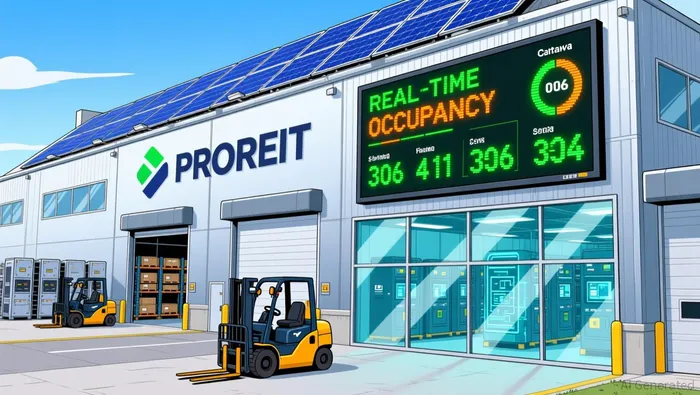
Moreover, PROREIT's focus on sustainability-a growing priority for investors-could enhance its appeal. Energy-efficient industrial properties, such as those with solar installations or smart grid technology, are likely to attract tenants seeking to reduce carbon footprints, further differentiating PROREIT in a competitive market.
Conclusion
PROREIT's Q3 2025 results and strategic clarity position it as a compelling investment in the evolving REIT landscape. By leveraging industrial demand, optimizing its portfolio, and maintaining financial discipline, the company is well-equipped to deliver consistent returns even in a challenging economic climate. For investors seeking exposure to a sector poised for structural growth, PROREIT's execution and vision offer a compelling case.







Comentarios
Aún no hay comentarios