
Project Eleven Launches Q-Day Prize to Test Quantum Threat to Bitcoin
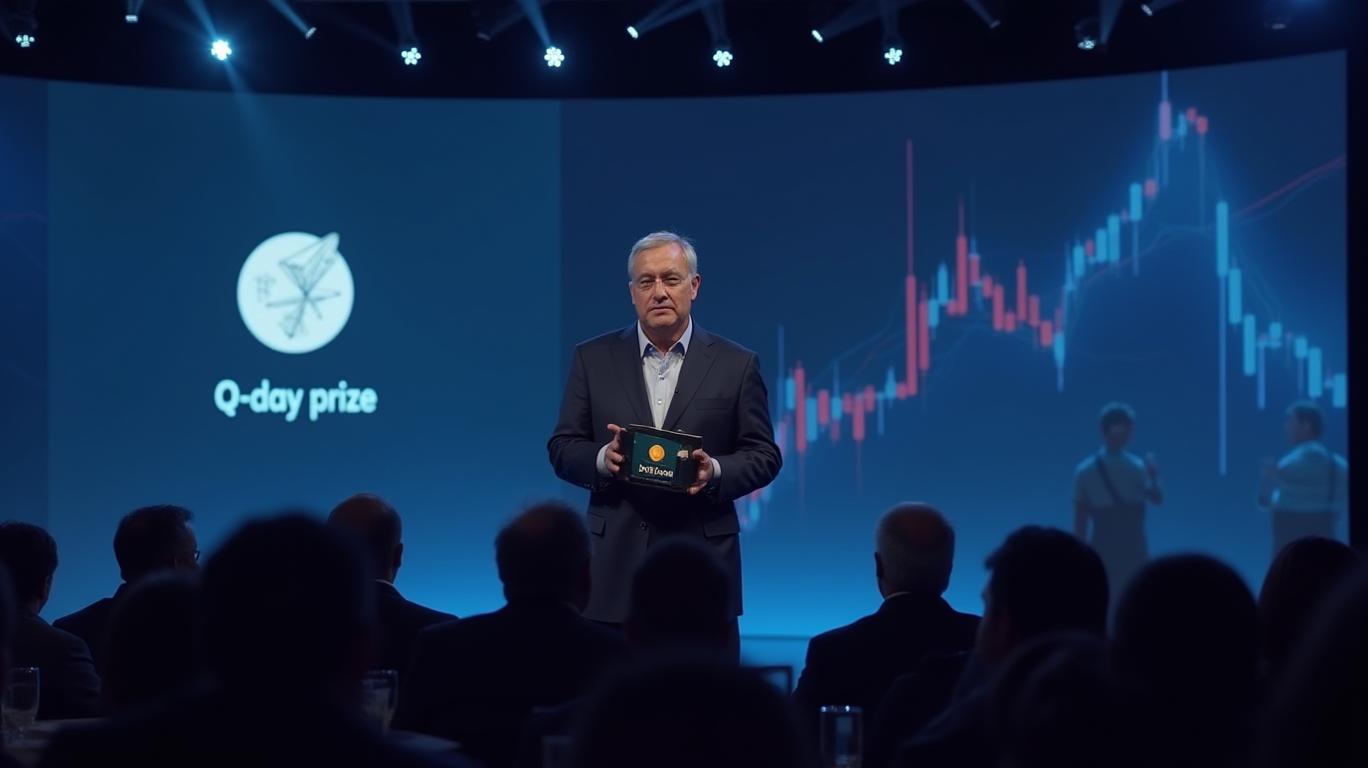
Project Eleven, a quantum computingQUBT-- research firm, has initiated a competition called the Q-Day Prize, aimed at deciphering an elliptic cryptography key (ECK) used in Bitcoin within a year using a quantumQMCO-- computer. The winner of this challenge will be awarded 1 BTC. This initiative is part of an effort to evaluate the real threat posed by quantum computing to Bitcoin and to safeguard the future of the digital asset.
The announcement was accompanied by tweets from the firm, highlighting the significance of the challenge. The first tweet stated that the competition involves cracking a "toy version" of the cryptography used in Bitcoin, with a deadline set for April 5, 2026. The mission is to protect more than 6 million BTC, valued at approximately $500 billion. Another tweet explained that Bitcoin's security relies on elliptic cryptography, which is vulnerable to quantum computersQUBT-- using Shor's algorithm. The goal is to assess the current threat level to cryptocurrency.
Shor's algorithm, developed by Peter Shor in 1994, is designed to efficiently decompose large numbers into prime multipliers. Unlike classical factorization algorithms, Shor's algorithm can perform this task exponentially faster using a quantum computer, potentially jeopardizing the security of modern cryptographic systems, including Bitcoin. Project Eleven representatives noted that the Bitcoin network uses the ECDSA algorithm to sign transactions. Quantum computers using Shor's algorithm could theoretically obtain private keys from public ones, compromising the security of wallets and potentially emptying any address. This would also disproportionately lower the value of BTC.
The company estimates that more than 6.2 million BTC, worth about $500 billion, are at risk. Project Eleven CEO and founder Alex Pruden commented on the firm's initiative, stating that there is no clear understanding of how close the quantum doomsday scenario is to modern cryptography. The Q-Day Prize aims to turn the theoretical threat from quantum computers into a concrete model.
Major tech giants, including AlibabaBABA--, Amazon, Google, and IBM, are actively working on quantum computing projects. In February, Microsoft reported a "significant breakthrough" with its Majorana 1 quantum chip, based on eight topological qubits. Qubits are the basic units of information in quantum systems, similar to bits in classical computing. According to current estimates, about 2,000 logical qubits would be enough to crack a 256-bit ECC key. IBM's Heron chip and Google's Willow are capable of handling 156 and 105 qubits, respectively, which is already a concern. Project Eleven believes that a 2,000-qubit quantum system could be developed within the next decade.
While current quantum computers do not pose an immediate threat to Bitcoin and other popular blockchains, the corresponding risks will increase over time. The Q-Day Prize competition helps the cryptocurrency industry better understand the reality of the threat and prepare for future challenges. This proactive approach allows the industry to assess risks in advance and develop solutions to keep assets safe, which is a positive trend.





Comentarios
Aún no hay comentarios