
Profit-Taking and Macroeconomic Divergence: A Cautionary Outlook for Asian Equities
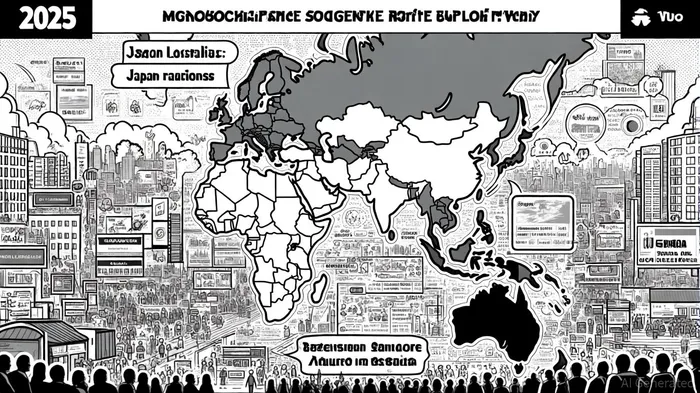
Asian equities have navigated a complex landscape in Q3 2025, marked by a fragile recovery amid unresolved U.S.-Asia trade tensions and divergent macroeconomic policies. While the region's stable inflation and weak U.S. dollar provided temporary relief, the broader risks of tariff escalations and shifting investor behavior are reshaping earnings momentum and asset allocation strategies. This analysis explores how macroeconomic divergence—driven by divergent central bank policies and structural vulnerabilities—is compelling investors to recalibrate their exposure to Asian markets, with a focus on profit-taking and risk mitigation.
Macroeconomic Divergence and Strategic Reallocation
The region's monetary policy landscape is increasingly fragmented. Japan's ultra-low policy rate of 0.50%[1] continues to underpin carry trade strategies, directing capital toward income-generating assets such as multifamily residential properties and logistics centers[1]. Conversely, Australia's 3.85% policy rate[1] and its sensitivity to Chinese economic cycles have spurred demand for defensive industrial assets, particularly in logistics hubs with long-term leasing potential[1]. South Korea, meanwhile, grapples with currency volatility and structural risks in its commercial real estate market, prompting a shift toward stabilized income-producing assets[1].
Singapore's non-rate-centric monetary framework, prioritizing exchange rate stability, has solidified its role as a strategic hub for institutional capital[1]. These divergent policy environments underscore the need for investors to hedge against regional imbalances while capitalizing on localized opportunities.
Earnings Momentum and Waning Risk Appetite
Despite resilient Q1 2025 earnings[1], Asian equities face headwinds from a slowing global tech cycle, weaker external demand, and the IMF's revised growth projection of 3.9% for 2025[2]. The ongoing U.S. tariff threats and countermeasures have introduced volatility, dampening risk appetite and prompting profit-taking in overvalued sectors. Morningstar's Q3 2025 outlook highlights that while Asian companies have demonstrated adaptability, the lack of definitive trade agreements with key U.S. partners remains a critical uncertainty[2].
A Cautionary Outlook
Investors must balance the allure of high-yielding assets with the risks of macroeconomic divergence. For instance, Japan's carry trade benefits are offset by liquidity constraints in its real estate market, while South Korea's structural debt challenges in commercial property demand caution. Similarly, Australia's reliance on commodity cycles and China's economic trajectory introduces asymmetry into asset valuations.
The weak U.S. dollar, though supportive of Asian currencies, may also attract speculative capital inflows that could reverse abruptly if trade tensions escalate. As the IMF notes, the region's growth trajectory hinges on resolving trade disputes and stabilizing external demand[2]. Until then, strategic reallocation toward defensive, income-producing assets—particularly in Singapore and logistics-focused markets—may offer a buffer against volatility.
Conclusion
The interplay of macroeconomic divergence and earnings momentum shifts is redefining the investment landscape for Asian equities. While the region's policy flexibility and inflation control provide a foundation for resilience, the unresolved trade war and structural risks necessitate a cautious approach. Investors should prioritize hedging strategies, regional diversification, and asset classes with stable cash flows to navigate the uncertainties ahead.







Comentarios
Aún no hay comentarios