
How Production Delays at Arq's GAC Facility Are Impacting Valuation and Investor Sentiment
The recent operational setbacks at Arq's Granular Activated Carbon (GAC) facility have sparked a critical debate among investors: do these delays represent a temporary hurdle in a high-growth story, or a fundamental reassessment of the company's long-term potential? With production ramp-up pushed to mid-2026 and financial metrics deteriorating in Q3 2025, the market is recalibrating its expectations. This analysis evaluates the interplay between operational challenges, revised revenue forecasts, and investor sentiment to determine whether Arq's intrinsic value narrative remains intact.
Operational Setbacks and Financial Implications
Arq's GAC facility has faced persistent challenges, including design flaws and feedstock variability, particularly with Corbin waste-derived materials. These issues have delayed the achievement of nameplate capacity, pushing the timeline to mid-2026 and creating significant inefficiencies during the early ramp-up phase. According to a report by Seeking Alpha, the company incurred several million dollars in production-related costs, directly compressing gross margins to 28.8% in Q3 2025, down from 38.6% in the prior year period. The financial impact is stark: Arq reported a net loss of $0.7 million in the quarter, underscoring the strain of scaling a novel production process.
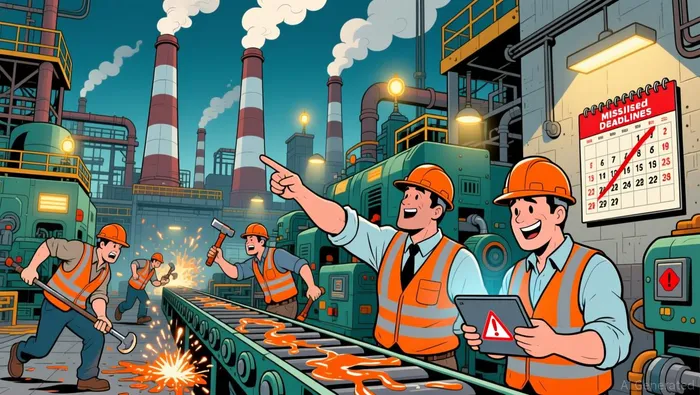 The company's capital expenditures have also surged as it invests in process modifications to address these design issues. While these expenditures are necessary for long-term scalability, they have exacerbated near-term cash flow pressures and raised questions about execution risk.
Revised Revenue Forecasts and Market Reaction
Arq's Q3 2025 earnings results revealed a mixed picture. While the company achieved a 13% year-over-year revenue increase in Q2 2025, driven by higher average selling prices, gross margins contracted to 33.3% due to GAC-related expenses. The Q3 revenue of $35.1 million fell slightly short of expectations, and the EPS miss of 200% triggered a 28.77% premarket stock decline. Analysts at Clear Street adjusted their price target from $9 to $8, reflecting the delayed growth trajectory and increased execution risk, though they maintained a "Buy" rating based on long-term scalability assumptions.
Investor sentiment remains polarized. On one hand, CEO Bob Rasmus' purchase of $341,352 in shares signaled confidence in the company's future. On the other, the production constraints and financial underperformance have heightened concerns about short-term stability. The market's reaction underscores a key tension: while the GAC market's long-term fundamentals remain robust, the path to profitability is now more uncertain.
Long-Term Potential and Strategic Adjustments
Despite the near-term pain, Arq's long-term growth narrative hinges on the successful ramp-up of its GAC facility. Management has outlined a mid-2026 timeline for achieving full nameplate capacity, with a $8–10 million investment in a thermal oxidizer to address feedstock variability. Analysts project that once these challenges are resolved, the GAC line could reach 95% utilization, driving significant revenue scale and margin expansion. The planned second GAC line, pending a final investment decision (FID) by year-end 2025, further signals confidence in the market's demand, particularly as EPA regulations and renewable natural gas applications drive growth.
However, the extended timeline has forced a reassessment of intrinsic value. Fair value estimates, previously hovering around $9.38 per share, now incorporate a higher discount rate to account for execution risk. This adjustment reflects the market's skepticism about Arq's ability to navigate operational complexities while maintaining disciplined capital allocation.
Conclusion: Temporary Hurdle or Structural Concern?
The production delays at Arq's GAC facility are undeniably impactful, compressing margins and delaying revenue growth. Yet, these challenges are largely tied to the inherent risks of scaling a capital-intensive, technology-driven project. The company's strategic investments in process optimization and its aggressive expansion plans suggest a commitment to long-term value creation. For investors, the key question is whether the current valuation adequately discounts these risks.
While the near-term outlook is clouded, Arq's GAC business still holds transformative potential. If the company can achieve its mid-2026 ramp-up target and secure the second GAC line, the path to profitability becomes more tangible. However, the extended timeline and margin compression necessitate a lower discount rate in intrinsic value calculations, reflecting both the opportunity and the risk. For now, ArqARQ-- remains a speculative play, with its success hinging on its ability to execute against a revised but still ambitious growth trajectory.





Comentarios
Aún no hay comentarios