
How Product Recalls Impact Stock Performance: Lessons from Coca-Cola and Implications for Small Businesses
Coca-Cola's 2025 Recall: A Case Study in Crisis Management
In October 2025, Coca-Cola issued a Class II recall for Coca-Cola Zero Sugar, Coca-Cola, and Sprite due to potential foreign material contamination, according to a Fox Business report. The recall, limited to specific regions in Texas, involved approximately 4,228 units and was executed by October 10 as a precaution. The FDA's classification of the recall as low-risk-indicating temporary or reversible health effects-helped contain immediate public panic. Coca-Cola's swift action, including removing products from shelves and communicating proactively with regulators, underscored its commitment to consumer safety.
According to a report by Fox Business, the company emphasized that the affected products were distributed in localized markets, minimizing nationwide disruption. This regional containment likely reduced the recall's financial impact, as broader distribution could have amplified reputational damage.
Stock Market Reaction: Resilience Amid Uncertainty
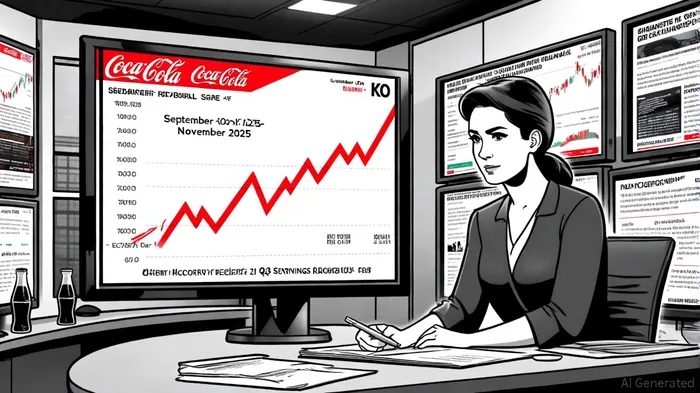
While direct stock price data for Coca-Cola following the recall is not explicitly detailed in recent sources, broader market dynamics suggest resilience. Coca-Cola's Q3 earnings report, released on October 21, 2025, exceeded expectations, , according to a 247wallst forecast. This performance, coupled with the company's diversified product portfolio and global expansion strategies, likely cushioned investor concerns.
Academic research highlights that large corporations often experience short-term stock volatility during recalls but recover quickly if they demonstrate proactive crisis management, as shown in an academic study. For instance, Tesla's software recalls in recent years had minimal long-term impact due to its innovation-driven narrative, according to a . Coca-Cola's strong earnings and transparent communication align with this pattern, suggesting that its stock price may have stabilized post-recall.
Corporate Resilience: Large vs. Small Businesses
Academic studies reveal stark contrasts in how product recalls affect large corporations and small businesses. Large firms, with their brand equity and financial buffers, can absorb recall costs and maintain investor confidence through strategic communication - a point also made in the academic study mentioned above. For example, Coca-Cola's global logistics network and diversified revenue streams (including non-carbonated beverages) provide a safety net during crises, as discussed in the 247wallst forecast.
Small businesses, however, face greater vulnerability. A 2025 report on Minnesota businesses noted that government shutdowns disrupted operations, highlighting how external shocks can destabilize smaller enterprises, according to a Star Tribune article. While no direct studies compare small business recalls to large corporations, research emphasizes that limited resources and media exposure often exacerbate the fallout for smaller firms. For instance, a small food producer facing a contamination recall might struggle to rebuild trust without the marketing budgets of a Coca-Cola.
Implications for Small Businesses: Building Resilience
For small businesses, the lessons from Coca-Cola's recall are clear:
1. Proactive Communication: Transparently addressing issues with customers and regulators can prevent reputational damage - a strategy echoed by the GuruFocus coverage of Tesla's recalls.
2. Diversification: Expanding product lines or markets reduces reliance on a single offering, as seen in Coca-Cola's shift toward water and coffee products, noted in the 247wallst forecast.
3. Strategic Partnerships: Collaborations, like LegalZoom's partnership with Design.com, can provide tools for brand protection and crisis management, as noted in a MarketScreener report.
Investors should also consider the recall strategy of small businesses. Academic studies show that voluntary, proactive recalls are perceived more favorably by stakeholders than mandatory ones, as summarized in a ResearchGate paper. Small enterprises with contingency plans and crisis-response teams are better positioned to navigate recalls without long-term financial harm.
Conclusion: Navigating the Recall Landscape
Product recalls are inevitable in today's market, but their impact on stock performance and business continuity depends on corporate preparedness. Coca-Cola's 2025 recall demonstrates that even large firms must prioritize transparency and swift action. For small businesses, the stakes are higher, but strategic resilience-through diversification, communication, and partnerships-can mitigate risks. Investors, in turn, should evaluate a company's crisis management framework as rigorously as its financial metrics.
As the market prepares for Coca-Cola's upcoming earnings report and broader economic data, the interplay between corporate resilience and investor behavior will remain a critical lens for assessing long-term value.







Comentarios
Aún no hay comentarios