
Procter & Gamble: Navigating Valuation Dislocation Amid Enduring Consumer Resilience
In the third quarter of 2025, Procter & GamblePG-- (PG) has faced a stark contrast between its short-term stock performance and its long-term market fundamentals. While the S&P 500 has surged 18% over the past 12 months, PG's shares have declined by 9.35%, underperforming the index despite the company's robust consumer staples portfolio and operational discipline, according to Statista's profile. This dislocation raises critical questions about valuation misalignment and the enduring strength of P&G's brand-driven business model.
Valuation Dislocation: A Tale of Two Metrics
Procter & Gamble's trailing price-to-earnings (P/E) ratio of 23.11 and forward P/E of 21.55 position it slightly below the S&P 500 Consumer Staples sector's average P/E of 22.85, based on sector P/E data. Meanwhile, its PEG ratio of 5.14-a metric that adjusts for growth expectations-suggests the stock may be undervalued relative to its earnings potential. The sector itself, however, has seen its P/E ratio dip below the 1-year average of 23.38, signaling short-term undervaluation, according to MarketBeat's chart. This creates a paradox: P&G's fundamentals align with sector norms, yet its stock remains out of sync with broader market optimism.
The disconnect may stem from investor skepticism about near-term growth. Despite a 3.94% rebound in October 2025, PG's stock has lagged due to macroeconomic headwinds, including inflationary pressures on consumer discretionary spending and margin compression in its core categories, per MarketBeat. However, the company's five-year total return of 15.53% underscores its resilience in navigating cyclical downturns.
Long-Term Resilience: Brands as Moats
P&G's enduring strength lies in its "House of Brands" strategy, which spans 10 core categories, including Fabric Care, Baby Care, and Personal Health. In 2024, its Fabric and Home Care segment generated $29 billion in net sales, with Tide maintaining its dominance as the top liquid laundry detergent in the U.S., according to Statista. Similarly, the Pampers brand, valued at $17.4 billion, continues to anchor the Baby Care segment, per Statista. These brands, bolstered by decades of consumer trust, act as moats against competitive erosion.
Data from Monexa.ai highlights P&G's commitment to innovation, with a 3% organic sales increase in Q2 2025 driven by product enhancements and sustainability initiatives. The company's $2 billion annual R&D investment-focused on technologies like eye-tracking and EEG to decode consumer behavior-ensures its offerings remain aligned with evolving preferences. Meanwhile, its "Supply Chains 3.0" initiative has optimized cost structures, enabling profitability even in volatile markets.
Balancing the Equation: Investor Implications
The current valuation dislocation presents an opportunity for investors who prioritize long-term fundamentals over short-term volatility. While P&G's stock has underperformed the S&P 500 in the past year, its EV/EBITDA ratio of 15.57 suggests a discount to sector peers like Colgate-Palmolive (P/E of 23.32), according to FinanceCharts metrics. This gap may narrow as macroeconomic conditions stabilize and consumer staples regain favor as defensive plays.
However, risks persist. The company faces intensifying competition in e-commerce and private-label brands, which could erode margins. Additionally, its high PEG ratio indicates that growth expectations are already priced in, leaving limited room for surprise-driven outperformance.
Conclusion
Procter & Gamble's recent underperformance reflects a temporary misalignment between its valuation and its long-term consumer resilience. While the stock trades at a discount to sector averages, its dominant market share, brand loyalty, and innovation-driven strategy position it to outperform in the medium to long term. For investors with a horizon beyond quarterly earnings reports, P&G's enduring appeal lies in its ability to transform staples into sustainable growth engines.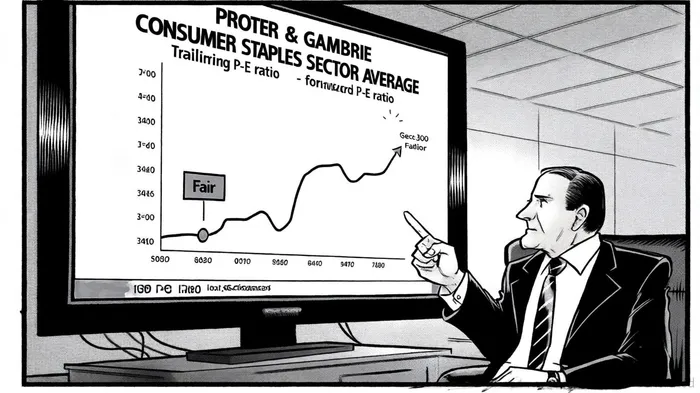





Comentarios
Aún no hay comentarios