
Procore's AI-Driven Construction Revolution: Reshaping Infrastructure Productivity for the 21st Century
The construction industry, long plagued by inefficiencies, labor shortages, and fragmented workflows, is undergoing a seismic shift driven by artificial intelligence (AI). At the forefront of this transformation is Procore TechnologiesPCOR--, a leader in construction management software, which has embedded AI into its platform to redefine productivity, risk mitigation, and decision-making. By 2025, Procore's innovations are not just incremental improvements but foundational pillars of a new era in infrastructure development.
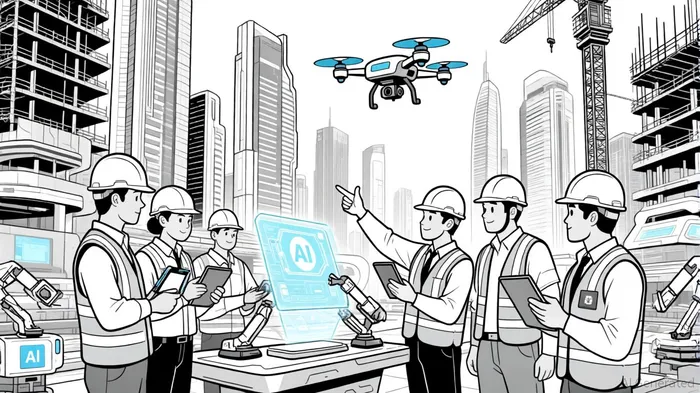
AI as a Catalyst for Productivity Gains
According to Procore's Future State of Construction Report, the industry currently loses 18% of project time searching for data and 28% due to rework. These inefficiencies are being directly addressed by Procore's AI-driven tools. For instance, Procore Copilot, integrated into Microsoft Teams, allows users to retrieve project data via natural language queries, slashing the time spent on manual searches, according to Inside Procore's 2025 Innovation Summit. Similarly, Procore Helix, an intelligence layer launched in 2025, transforms static project data into dynamic insights, proactively flagging issues like spec mismatches and recommending optimization strategies based on real-time factors such as weather, as described in the same blog post.
The impact is measurable: AI-powered agents like the RFI Creation Agent reduce delays by generating RFI content and searching project documents for answers in seconds, as noted in a BizWire announcement. These tools collectively aim to cut administrative overhead by up to 40%, enabling teams to focus on high-value tasks, according to Procore's Product Strategy Guide.
Market Dynamics and Competitive Edge
The AI construction market is projected to grow from $2.1 billion in 2023 to $22 billion by 2032, a trajectory many industry observers have noted. This is a trend ProcorePCOR-- is capitalizing on through strategic product development and acquisitions. Its acquisition of INDUS.AI in 2024, for example, has enhanced predictive analytics capabilities, boosting predictive accuracy by 40% year-over-year, according to that product strategy guide. This positions Procore to dominate enterprise markets, where it aims to increase its client base by 25% annually, as outlined in the same guide.
Procore's competitive advantage lies in its ability to blend automation with human expertise. While 76% of civil and infrastructure builders admit they are not fully leveraging their data, the Future State report shows Procore's tools democratize access to insights. For example, Procore Agent Builder allows users to create custom AI agents for tasks like drafting RFIs and managing submittals, reducing reliance on manual data entry, as highlighted in the BizWire announcement. This aligns with industry trends: 55% of construction leaders expect automation to disrupt the sector within five years, per the Future State report.
Addressing Workforce and Sustainability Challenges
Beyond productivity, Procore's AI tools are tackling two critical industry pain points: labor shortages and sustainability. With 53% of construction workers expected to retire by 2036, Procore is using generative AI to accelerate workforce development. Tools like Procore Assist streamline onboarding and training, while multilingual support and photo intelligence cater to diverse teams, as noted in the BizWire announcement.
Sustainability is another focus area. Procore's green building solutions have captured 25% of the rapidly growing sustainable construction market, leveraging AI to optimize resource allocation and reduce waste, according to the product strategy guide. This aligns with global ESG goals and positions Procore to benefit from regulatory tailwinds.
Risks and the Path Forward
Despite its momentum, Procore faces challenges. Industry fragmentation and resistance to change remain barriers to AI adoption, and data privacy concerns require ongoing mitigation, according to an AIExpert case study. However, the company's emphasis on user-friendly design and continuous refinement of AI tools-such as Procore Helix's real-time analytics-addresses these hurdles, as covered in Procore's innovation summit recap.
For investors, Procore's trajectory is compelling. Its AI-driven platform not only enhances productivity but also aligns with macroeconomic trends, including urbanization, sustainability mandates, and digital transformation. As the construction industry evolves from a labor-intensive model to a data-centric one, Procore's innovations are poised to deliver outsized returns.







Comentarios
Aún no hay comentarios