
Private Equity's Strategic Shift Toward Energy Infrastructure in the AI Era
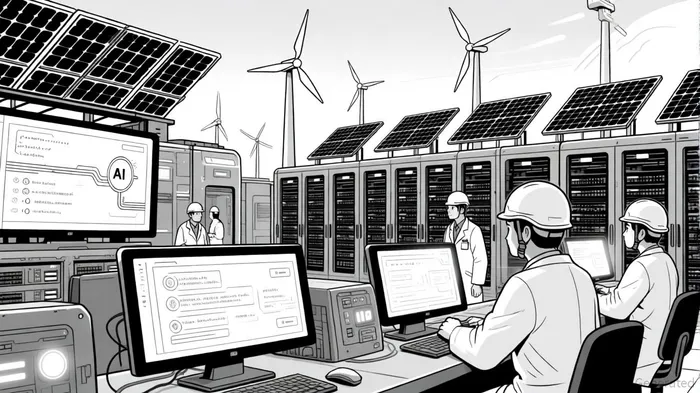
The private equity (PE) sector is undergoing a profound transformation as it aligns its capital allocation strategies with the dual imperatives of the AI revolution and the global energy transition. By 2025, infrastructure assets under management have surged to an all-time high of $1.3 trillion, with a significant portion directed toward decarbonizing utility markets and AI-driven energy infrastructure. This shift reflects a strategic recalibration by PE firms to capitalize on long-term value creation while addressing the urgent need for sustainable energy solutions.
Strategic Capital Reallocation: From Fossil Fuels to Decarbonization
Private equity's pivot toward energy infrastructure is driven by both investor demand and regulatory pressures. Firms like Tikehau Capital, TPG Rise Climate, and Permira are prioritizing investments in renewable energy, battery storage, and carbon-tech platforms such as Persefoni and Watershed, according to a Bain report. These investments are not merely ESG-driven but are increasingly framed as high-growth opportunities. For instance, renewable energy accounted for $500 billion of the $725 billion in global clean energy investments in 2024, with solar energy leading the charge, according to ESG Review.
The shift is also evident in the divestment from high-emission industries. ApolloAPO-- Global Management, for example, has integrated science-based decarbonization targets into its portfolio companies, achieving a median 52-ton reduction in fugitive emissions per $1 million of revenue, a development reported by ESG Review. Such strategies are not only mitigating climate risk but also enhancing operational efficiencies and EBITDA margins.
AI as a Catalyst for Capital Allocation and Grid Optimization
Artificial intelligence is reshaping how PE firms allocate capital in energy infrastructure. The surging demand for AI-driven data centers-projected to consume $50 billion in investments in 2024 alone-has prompted firms like BlackstoneBX-- and BlackRockBLK-- to acquire electric utilities in states like Minnesota and Texas, as noted in the Bain report. These utilities generate returns through regulatory-approved upcharges for grid upgrades, making them attractive to PE investors seeking stable, long-term yields, according to ESG Review.
AI is also optimizing decarbonization outcomes in utility markets. AI-powered predictive tools are being deployed to enhance grid resilience, manage renewable energy variability, and reduce operational costs. For example, a Southeast utility partnered with Slalom to implement an AI-driven capital planning system, boosting capital efficiency by 4%–10% across a $1 billion portfolio, as described in a StartUs Insights article. Similarly, startups like POWERCONNECT.AI are leveraging machine learning to improve energy efficiency and disaster response, aligning with regulatory mandates for carbon neutrality.
Long-Term Value Creation: Financial and ESG Outcomes
The integration of ESG metrics into PE strategies is yielding measurable results. A 2025 Bain & Company study found that private equity-owned companies with science-based decarbonization targets achieved a 26% reduction in Scope 2 emissions between 2021 and 2023. These improvements are translating into financial performance: Apollo's energy efficiency programs, for instance, have accelerated decarbonization goals while enhancing EBITDA, as ESG Review reports.
Case studies further illustrate this trend. Bain Capital's $400 million investment in Hong Kong-based EcoCeres-a biofuels company converting waste biomass into green hydrogen-demonstrates how PE firms are scaling climate solutions with strong ESG and financial returns, according to a KPMG analysis. Similarly, Blackstone's acquisition of Sphera, a SaaS provider for ESG data management, underscores the growing importance of carbon transparency in attracting strategic buyers and public market investors.
Challenges and the Road Ahead
Despite these advancements, challenges persist. Regulatory uncertainty and policy volatility remain top barriers, with 51% of investors citing these as obstacles to energy transition funding, per ESG Review. Additionally, emerging sectors like hydrogen and carbon capture and storage (CCS) have seen investment declines, dropping from $3.9 billion to $800 million for hydrogen in 2024, according to ESG Review.
However, the role of AI in overcoming these hurdles is expanding. AI-driven analytics are enabling more precise risk assessments, supply chain optimization, and predictive maintenance, reducing costs and improving scalability for decarbonization projects, as highlighted by StartUs Insights. As governments increasingly turn to private capital to bridge infrastructure gaps, tailored fund structures and co-investment opportunities are expected to grow, per the BCG press release.
Conclusion
Private equity's strategic shift toward energy infrastructure in the AI era is redefining capital allocation and decarbonization outcomes. By leveraging AI-driven analytics, operational expertise, and ESG-aligned investments, PE firms are not only addressing climate challenges but also unlocking substantial financial returns. As the energy transition accelerates, the convergence of AI and sustainable infrastructure will remain a cornerstone of long-term value creation in utility markets.





Comentarios
Aún no hay comentarios