
Private Equity Risk in Software Acquisitions: Lessons from Anthology's Bankruptcy
The collapse of Anthology, a once-dominant player in educational technology, offers a stark case study of the risks inherent in private equity (PE)-backed software acquisitions. Backed by Veritas Capital, Anthology's 2021 acquisition of Blackboard—a $3 billion merger aimed at creating a “comprehensive EdTech ecosystem”—was structured on assumptions that proved catastrophically flawed. As the company now navigates Chapter 11 bankruptcy in 2025, its story underscores systemic vulnerabilities in PE-driven tech deals: overleveraged capital structures, unrealistic financial modeling, and inadequate due diligence.
The Due Diligence Failures
Anthology's acquisition of Blackboard was predicated on 2021 market conditions: soaring software valuations, near-zero interest rates, and pandemic-driven demand for digital learning tools. According to a Bloomberg report, the deal's financial modeling assumed sustained revenue growth and low borrowing costs, ignoring the risk of macroeconomic shifts. This myopia became evident as interest rates surged post-2023, inflating Anthology's $1.5 billion debt burden and straining its cash flow.
A critical oversight was the lack of contingency planning for declining EdTech demand. As S&P Global Ratings noted, Anthology's free operating cash flow turned negative in 2025, with revenues projected to decline through 2026. The due diligence process failed to account for integration risks, such as the technical complexity of merging Anthology's administrative software with Blackboard's learning management systems. These challenges delayed product synergies, eroding the acquisition's value proposition.
Capital Structure and the Debt Trap
Anthology's capital structure epitomizes the dangers of PE-driven leverage. The 2021 merger was financed with a $1.3 billion first-lien loan and a $500 million second-lien loan, creating a debt-to-EBITDA ratio exceeding 8x—far above industry benchmarks, Bloomberg reported. By 2024, the company had already defaulted on its second-lien interest payments, forcing a restructuring that required Veritas to cede equity to creditors, 9fin reported.
The situation mirrors broader trends in PE-backed tech firms. Data from the Private Equity Bankruptcy Tracker reveals that 56% of large 2024 bankruptcies involved overleveraged PE-owned companies. Anthology's case highlights how aggressive debt financing, while initially attractive in low-rate environments, becomes untenable when rates rise. The company's inability to service its debt—despite cost-cutting measures like a $90 million savings plan—exposed the fragility of its financial model, Bloomberg Law reported.
Lessons for Investors and PE Firms
Anthology's bankruptcy offers three key lessons for stakeholders in PE-backed tech deals:
Reevaluate Financial Assumptions: The 2021 acquisition relied on pandemic-era optimism, assuming perpetual growth in EdTech demand. Investors must stress-test models against realistic scenarios, including market saturation and regulatory shifts.
Balance Leverage with Liquidity: Anthology's debt-heavy structure left it vulnerable to interest rate hikes. A more conservative capital structure, with lower leverage and higher liquidity buffers, could have provided flexibility during downturns.
Prioritize Integration Readiness: Merging two large software platforms requires meticulous planning. Anthology's failure to address technical and operational integration risks delayed value realization, compounding financial strain.
The Path Forward
Anthology's restructuring, now under Chapter 11, may see its assets split and sold to creditors like Nexus Capital Management. While this could yield partial recovery for stakeholders, it underscores the risks of relying on distressed debt strategies. For PE firms, the case reinforces the need for disciplined capital allocation and rigorous due diligence. For investors, it serves as a cautionary tale: software acquisitions, while promising, require careful alignment of financial engineering with market realities.
As the EdTech sector evolves, the Anthology saga will likely influence how PE firms approach tech deals. The key takeaway is clear: in an era of volatile markets and rising borrowing costs, sustainability—not scale—must drive acquisition strategies.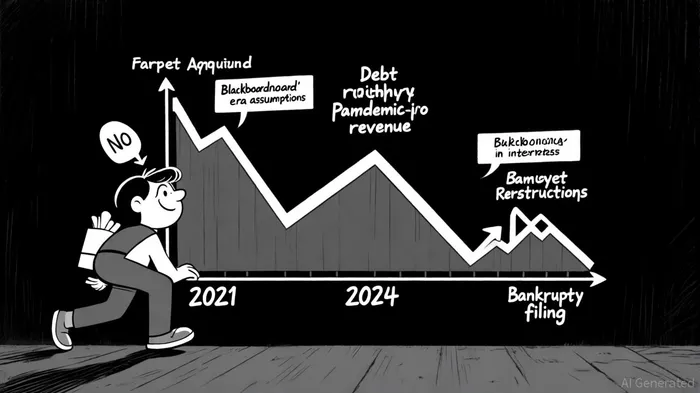







Comentarios
Aún no hay comentarios