
Private Equity's Pivotal Role in Climate-Tech Infrastructure: Strategic Capital Allocation and Decarbonization Gains
The private equity (PE) sector has emerged as a critical force in advancing decarbonization through strategic capital allocation in climate-tech infrastructure. Despite broader market volatility in 2023–2024, PE investments in this space have demonstrated resilience, with a $73 billion deployment in 2024-a post-peak decline from $114 billion in 2021 but still outperforming most other asset classes. This trend reflects a recalibration rather than a retreat, as institutional investors increasingly prioritize climate-aligned opportunities amid regulatory pressures and technological advancements.
A Sector in Transition: Where Capital is Flowing
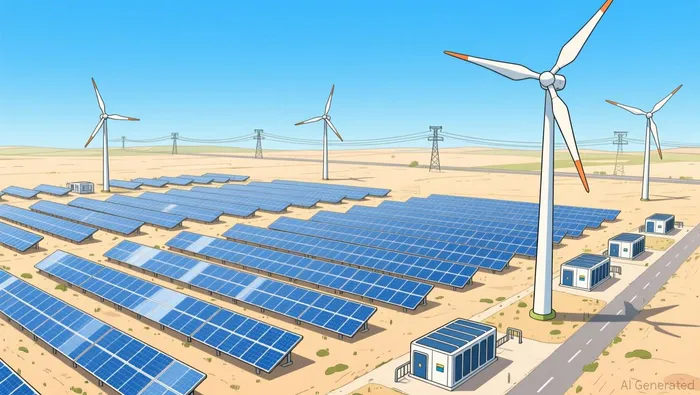
Climate-focused PE fundraising grew by 20% in 2024, even as overall PE fundraising contracted by 18%. This divergence underscores the sector's appeal as a hedge against macroeconomic uncertainty. The energy transition, in particular, has become a focal point, with energy projects accounting for 35% of total climate-tech funding in 2024, driven by hydrogen production, battery storage, and grid modernization. Renewable energy, solar, and EV-charging infrastructure have also attracted significant attention, as technologies in these areas achieve cost parity with traditional alternatives.
The shift is not merely speculative. A 2024 S2G Investments survey found that 46% of institutional asset owners plan to increase climate investments, with pensions like CalPERS expanding their green portfolios. Meanwhile, sovereign wealth funds and insurers are deploying large-scale capital, such as the UAE's $30 billion Alterra fund, to scale decarbonization projects. These moves signal a maturation of the climate-tech market, where capital is increasingly directed toward scalable, revenue-generating solutions rather than early-stage experimentation.
Case Studies: How PE Firms Are Rewriting the Rules
Leading PE firms are innovating beyond traditional venture capital models to address the unique challenges of climate-tech infrastructure. ApolloAPO--, for instance, has deployed $38 billion in next-generation infrastructure since 2022, including partnerships with BP and ADNOC to develop renewable energy platforms and the acquisition of Stream Data Centers to support digital infrastructure. KKRKKR-- is tackling the "digital power problem" by investing in power generation and transmission assets to meet the energy demands of data centers and AI infrastructure (https://www.kkr.com/insights/2025-infrastructure-outlook).
TPG's approach highlights the importance of novel financing structures. Through TPG Rise Climate, the firm partnered with carbon transformation startup Twelve to develop a first-of-its-kind financing model for commercial-scale carbon conversion technology. This strategy bridges the "first deployment challenge" often faced by emerging climate technologies, enabling rapid scaling without relying solely on government subsidies.
These examples illustrate a broader trend: PE firms are leveraging their operational expertise to optimize existing assets while funding high-impact innovations. For instance, infrastructure investors are acquiring legacy energy assets to retrofit them with green technologies, while private equity platforms are building development pipelines for solar farms and hydrogen hubs (https://www.bcg.com/publications/2025/sustaining-the-private-capital-opportunity-in-climate).
The ROI of Decarbonization: Emissions, Efficiency, and Accountability
The financial rationale for climate-tech investments is strengthening. According to a 2025 report by Bain & Company, companies with science-based decarbonization targets and supply chain collaboration on Scope 3 emissions are outperforming peers in operational efficiency and regulatory compliance. Notably, 55% of low-carbon technologies are now cost-competitive, and PE-owned firms disclosing climate impact have seen median Scope 1 and 2 emissions decline significantly since 2021. These reductions translate into tangible benefits, including lower carbon taxes, improved customer retention, and access to green financing.
However, challenges remain. Energy transition deal values grew by just 7% in 2024 compared to 2023, suggesting a plateau in rapid expansion. This plateau may reflect both market saturation in certain subsectors and the technical complexity of scaling projects like carbon capture or advanced nuclear. Yet, as Apollo and KKR demonstrate, PE firms are adapting by focusing on hybrid models that combine development, acquisition, and operational optimization (https://www.apollo.com/insights-news/insights/2025/08/spotlight-financing-the-digital-infrastructure-surge).
Conclusion: A Strategic Imperative
Private equity's role in climate-tech infrastructure is no longer a niche experiment but a strategic imperative for investors seeking long-term value. By aligning capital with decarbonization goals, PE firms are not only addressing climate risks but also capitalizing on trillion-dollar opportunities in energy transition and adaptation. As the sector evolves, the ability to balance environmental impact with financial returns-through innovative financing, operational rigor, and sector-specific expertise-will define the next wave of success.







Comentarios
Aún no hay comentarios