
Private Equity's High-Stakes Gamble in Tech-Logistics Mergers: Uncovering Due Diligence Gaps and Asset Concentration Risks
The logistics technology sector has become a magnet for private equity (PE) capital in recent years, driven by the need for digital solutions to navigate supply chain volatility and trade policy shifts. In 2025 alone, M&A activity in logistics tech surged by 14.8% year-over-year, with 31 transactions completed, many of which involved distressed sellers seeking liquidity. While this frenzy reflects the sector's strategic value, it also exposes a darker undercurrent: systemic due diligence failures and asset concentration risks that threaten to erode returns.
The Due Diligence Blind Spot: When Tech Meets Logistics
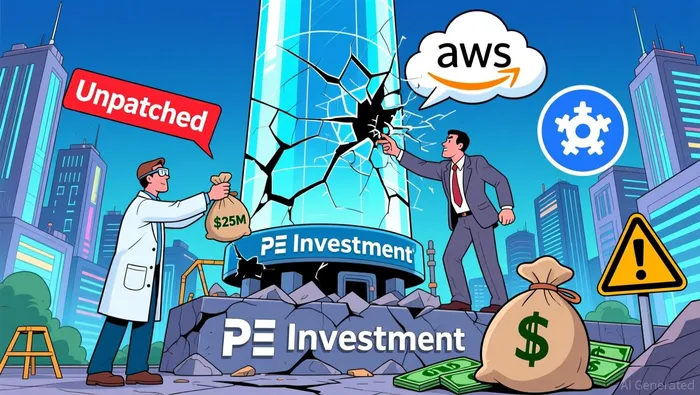
A case study from 2025 illustrates the perils of inadequate due diligence. A mid-sized PE firm acquired a logistics tech startup, LogiTech Inc., for $150 million, betting on its potential to streamline e-commerce supply chains. However, the firm prioritized financial and market analyses over technical scrutiny, overlooking critical flaws in the startup's software architecture. Post-acquisition, the platform's monolithic Ruby on Rails codebase, hosted on a single AWS instance, proved incapable of scaling with demand. Security vulnerabilities, including unpatched third-party libraries and weak encryption, further compounded the problem. Remediation efforts-migrating to a microservices-based Kubernetes setup and implementing cybersecurity upgrades-cost $25 million, or 15% of the acquisition price, and delayed expansion plans by 12 months.
This incident is not an outlier. Data from Capstone Partners indicates that 40% of PE tech deals undervalue IT due diligence, leading to undetected risks in 25% of cases. The logistics sector's reliance on complex, interconnected systems-ranging from warehouse automation to AI-driven route optimization-demands rigorous technical reviews. Yet many PE firms, particularly those with limited in-house expertise, treat IT due diligence as an afterthought, leaving them exposed to costly post-merger surprises.
Asset Concentration: The Double-Edged Sword of Tech-Logistics
While PE firms have increasingly shifted capital from asset-heavy carriers to tech-driven platforms, this transition carries its own risks. In Q2 2025, private equity deal activity in traditional logistics carriers fell by 34% year-on-year, while freight tech and software deal values surged to $468 million. This shift reflects the appeal of asset-light models, which offer higher margins and operational flexibility. However, it also creates concentration risks when multiple portfolio companies rely on shared infrastructure or suppliers.
A hypothetical but illustrative example involves Hudina Partners, a PE firm whose portfolio companies were disrupted by a cyberattack on a critical supplier, PrecilCorp. The attack, which exploited vulnerabilities in PrecilCorp's cloud-based logistics management system, caused operational outages for Hudina's portfolio firms, including a cold-chain logistics provider and a reverse-logistics platform. The incident underscores the systemic risks of over-reliance on a single vendor-a vulnerability that is amplified in tech-logistics ventures, where digital ecosystems are tightly integrated.
Macro Risks: Tariffs, Rates, and the Cost of Capital
Beyond operational and technical risks, macroeconomic factors are reshaping the PE logistics landscape. Rising U.S. tariffs, which ranged from 11% to 50% in 2025, have forced firms to renegotiate or delay transactions, with 30% of deals affected by valuation swings. Meanwhile, elevated interest rates- peaking at 5.25% in 2025-have made debt-driven acquisitions less attractive, squeezing margins for leveraged buyouts.
The electrification of freight infrastructure, while a long-term opportunity, further complicates the calculus. Companies investing in electric vehicle (EV) fleets and charging networks often require partnerships to share capital burdens. Yet these partnerships can introduce governance challenges, particularly when partners have divergent priorities or face regulatory hurdles.
Conclusion: Balancing Innovation and Prudence
The logistics tech boom has created fertile ground for PE value creation, but it also demands a recalibration of risk management. Firms must adopt a dual strategy: deepening technical due diligence to uncover hidden liabilities in software and infrastructure, and diversifying supplier relationships to mitigate concentration risks. As one industry insider notes, "The next wave of PE success in logistics will belong to those who treat technology not as a buzzword but as a liability to be dissected and a dependency to be hedged."
For now, the sector remains a high-stakes game. With global infrastructure investment in logistics reaching $126.3 billion in Q3 2025, the stakes are clear. The question is whether PE firms will learn from past missteps-or repeat them in the pursuit of the next big deal.







Comentarios
Aún no hay comentarios