
Private Equity Value Creation Through Strategic Acquisitions: Tequity's BookNow-ROLLER Deal as a Mid-Market Synergy Case Study
In the evolving landscape of private equity (PE), strategic acquisitions remain a cornerstone of value creation, particularly in mid-market sectors where operational synergies can be leveraged to drive growth. The recent acquisition of UK-based BookNow Software by ROLLER, facilitated by Tequity as the exclusive financial advisor, offers a compelling case study in how cross-border deals can unlock value through market expansion, technological alignment, and operational integration. This transaction, marking Tequity's 28th Salesforce-related acquisition, according to Tequity's announcement, underscores the importance of sector-specific expertise and strategic alignment in mid-market M&A.
Strategic Rationale: Expanding Capabilities and Geographic Footprint
ROLLER, a global all-in-one venue management platform, acquired BookNow to strengthen its presence in Europe and the U.S. while enhancing its ability to serve large, multi-venue enterprises, according to ROLLER's blog post. BookNow's CRM-native booking and operations platform complements ROLLER's existing tools, particularly in SalesforceCRM-- interoperability-a critical differentiator for enterprise clients, as noted in a PR Newswire release. By integrating BookNow's technology, ROLLER gains deeper CRM capabilities, enabling it to deliver personalized, data-driven guest experiences-a key demand in the leisure and attractions sector, as McKinsey notes.
The strategic rationale aligns with broader PE trends emphasizing operational efficiency and digital transformation. As McKinsey notes, pre-acquisition operational diligence is critical to identifying margin expansion opportunities, and this deal exemplifies how acquiring complementary technologies can accelerate innovation. For example, a FasterCapital analysis highlights the importance of post-acquisition operational measurement, and BookNow's European client base and technical expertise in CRM interoperability directly address ROLLER's goal of expanding in-region support for its 2,500+ global venues, according to a PR Newswire statement.
Tequity's Role: Structuring Value for Stakeholders
Tequity's involvement highlights the role of specialized M&A advisors in structuring value creation for PE stakeholders. As a firm with deep experience in B2B SaaS and AI/data transactions, Tequity likely focused on optimizing the deal's structure to maximize post-acquisition synergies. While financial terms remain undisclosed, the firm's track record in Salesforce-related deals suggests a focus on aligning BookNow's CRM capabilities with ROLLER's ecosystem to drive long-term growth, as described in a Third News article.
Tequity's expertise also extends to identifying operational levers for value creation, such as cost synergies from consolidating support functions and revenue synergies from cross-selling opportunities. For example, BookNow's European presence could enable ROLLER to scale its 24/7/365 support model more efficiently, reducing per-customer service costs, according to an EY report. Additionally, Luke Sims, BookNow's founder, now serves as CEO of BookNow under ROLLER, ensuring continuity in technical leadership and client relationships-a critical factor in retaining BookNow's existing customer base, as noted in a Blooloop article.
Synergy Realization: Beyond Financial Metrics
Though specific financial metrics are not publicly available, the acquisition's success can be measured through qualitative and operational indicators. Analysts highlight that synergy realization in M&A often involves revenue growth from expanded market reach and cost savings from operational consolidation, as Wall Street Prep explains. In this case, ROLLER's integration of BookNow is expected to enhance its ability to serve large enterprises, particularly those reliant on Salesforce ecosystems, according to Accounting Insights.
Key performance indicators (KPIs) such as customer retention, product innovation velocity, and regional expansion will be critical in assessing the deal's impact. For instance, ROLLER's commitment to introducing over 100 annual product enhancements, noted in its blog, suggests a focus on leveraging BookNow's technology to accelerate R&D. Similarly, the acquisition's announcement during the IAAPA Expo Europe-a major industry event-signals ROLLER's intent to position itself as a leader in guest experience innovation, as Kiosk Marketplace reported.
Broader Implications for Mid-Market M&A
The BookNow-ROLLER deal reflects a broader shift in PE strategy toward mid-market acquisitions, where specialized expertise and operational improvements can yield outsized returns. As EY notes, sophisticated cash management and cost-reduction strategies are increasingly vital in sustaining liquidity and growth. This transaction demonstrates how PE-backed companies can use strategic acquisitions to address market gaps, such as CRM interoperability in venue management, while embedding operational efficiency early in the value creation process, as discussed in a Growth Equity guide.
Moreover, the deal underscores the importance of cultural alignment in post-acquisition integration. Luke Sims' continued leadership at BookNow, now a ROLLER subsidiary, mitigates the risk of talent attrition-a common challenge in M&A, according to an E2E Deal Insights piece. This approach aligns with ESG (Environmental, Social, and Governance) priorities, as retaining skilled teams and maintaining client trust are increasingly viewed as foundational to long-term value creation, as discussed on the iGlobal Forum blog.
Conclusion
The acquisition of BookNow by ROLLER, guided by Tequity's expertise, exemplifies how strategic mid-market deals can drive value through operational synergies, technological alignment, and geographic expansion. While financial terms remain confidential, the transaction's focus on CRM interoperability, European growth, and enterprise client support positions it as a model for PE-backed value creation in the SaaS sector. As private equity firms continue to prioritize operational improvements over financial leverage, cases like this will become increasingly relevant in shaping the future of M&A strategy. 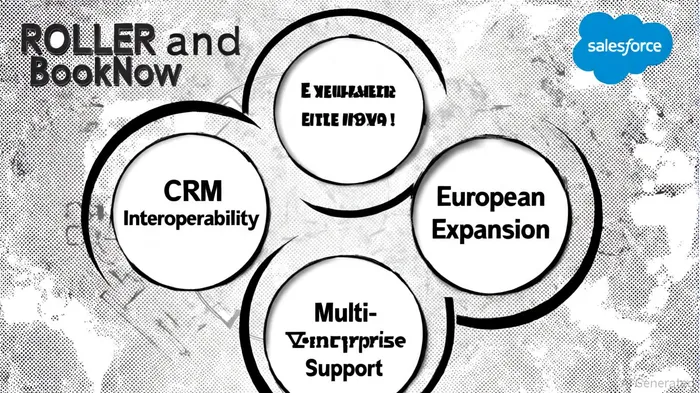





Comentarios
Aún no hay comentarios